
The Topographical Nightmare of the Modern Backyard
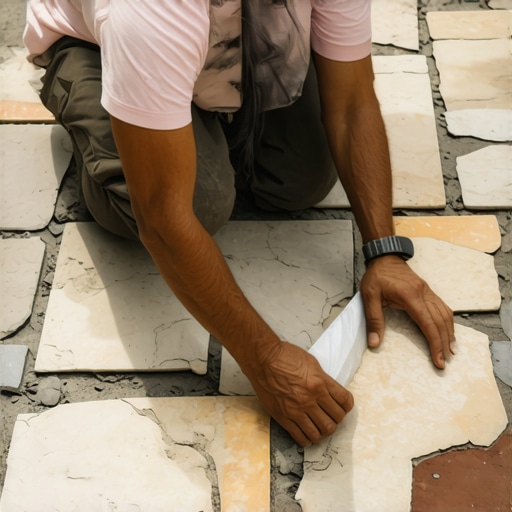
I recently stood on a bluestone patio that had been installed less than three seasons ago. To the homeowner, it was a disaster of wavy stones and tripping hazards. To my forensic eye, it was a textbook case of sub-base incompetence. I took my laser level and a soil probe, and within ten minutes, I found the culprit: the contractor had used ‘crusher run’ with a high plastic-fines content in a region that sees forty freeze-thaw cycles a year. The homeowner thought it was just a hairline crack in the perimeter joint, but when I pulled a stone, I saw the ‘mud’ had turned to a soupy slurry. The stone wasn’t just moving; it was swimming. This is the reality of modern hardscaping where speed is prioritized over the laws of thermodynamics and geotechnical engineering.
The Physics of the Base: Why Your Patio is Sinking
Most patios fail because the installer treats soil like a static object. It is not. Soil is a living, breathing hydraulic system. When we talk about concrete flatwork services or stone setting, the conversation must start four feet underground. In the northern climates, the enemy is the 9% expansion of water. If your sub-base consists of poorly graded aggregate, capillary action draws moisture upward. When that moisture hits the frost line, it forms ice lenses. These lenses exert thousands of pounds of upward pressure, a phenomenon known as frost heaving.
“The durability of any masonry assembly is directly proportional to its ability to manage moisture and accommodate thermal movement without losing structural integrity.” – ASTM C270 Standard Specification
Modern ‘lick-and-stick’ installers often skip the retaining wall geogrid installation even on low-rise tiers. Without that geogrid to provide tensile reinforcement to the soil mass, the lateral earth pressure eventually wins. The wall bows, the patio stones behind it lose their lateral restraint, and the joints open up. Once a joint opens, the ‘tooth’ of the polymeric sand is lost, and the stones begin their slow, inevitable migration.
The Chemistry of the Bond: From Mud to Mortar
When I’m tuckpointing curved walls or performing stone facade restoration, I see the same mistake: using high-strength Portland cement on materials that require flexibility. In historic pointing styles, we used lime-based mortars for a reason. Lime is ‘self-healing.’ Through a process called carbonation, lime mortar absorbs CO2 and can actually seal micro-cracks over time. Modern installers often use Type S mortar for everything, which is far too hard for most natural stone. This creates a ‘cold joint’ where the stone and mortar never truly marry. If you are looking at brick infill panel repair, you have to match the compressive strength of the existing units. If the mortar is harder than the brick, the brick will spall. The face of the brick literally pops off because the moisture can’t escape through the dense mortar and freezes behind the brick’s surface.
Retaining Walls and the Geogrid Factor
A common failure point in modern landscapes is the lack of proper retaining wall installation techniques. Many contractors build ‘gravity walls’ that are far too thin for the surcharge they are holding. In a forensic scene, I look for the presence of geogrid. Retaining wall geogrid installation involves laying high-tenacity polyester grids into the soil backfill. This turns the soil itself into a reinforced mass. Without it, the weight of a wet lawn will push a wall right off its leveling pad. We also see issues with self-leveling masonry lifts where the installer doesn’t account for the ‘slumping’ of the substrate. You cannot ‘butter’ your way out of a bad foundation. If the base isn’t compacted to 95% of its Standard Proctor density, the stone will need realignment within twenty-four months.
Advanced Restoration: Chimneys and Facades
The forensic masonry audit often moves from the ground to the roof. Chimney heat shield installation is a critical safety component that many overlook during a standard stone facade restoration. Heat causes thermal expansion in the masonry flues; if the chimney is tied too rigidly to the house frame without expansion joints, it will crack the exterior veneer. I’ve seen metallic brick colors application used to hide these structural failures, but paint doesn’t stop physics. The same applies to brick infill panel repair on older commercial buildings. If you don’t use a ‘slicker’ to properly compact the joints, you’re just leaving a gateway for driving rain.
“Water penetration is the single greatest threat to masonry durability. Proper flashing and weep holes are not optional; they are the lifeblood of the wall.” – BIA Technical Note 7
The Hardscape Truth: Do It Once or Do It Twice
The ‘wavy’ patio is a symptom of a culture that forgot how to use a hawk and trowel. When we talk about stone facade restoration or concrete flatwork services, we are talking about managing the transition between the built environment and the raw earth. Metallic brick colors application might make a wall look modern, but if the retaining wall geogrid installation wasn’t handled correctly, that wall is a ticking time bomb. You must demand ‘clean’ stone bases, proper drainage ‘chimneys’ behind every wall, and mortar that respects the material it’s holding. In my grandfather’s day, if a soldier course wasn’t perfectly plumb, the whole wall came down. Today, people use plastic ‘paver edgings’ and hope for the best. Don’t be the homeowner who pays for a patio twice. Realignment isn’t a maintenance task; it’s a repair for a job that wasn’t finished the first time. Focus on the base, respect the freeze-thaw cycle, and remember that mud is more than just dirt and water—it’s the chemistry that keeps your world from sinking.