The Forensic Reality: What a Hairline Crack Really Hides
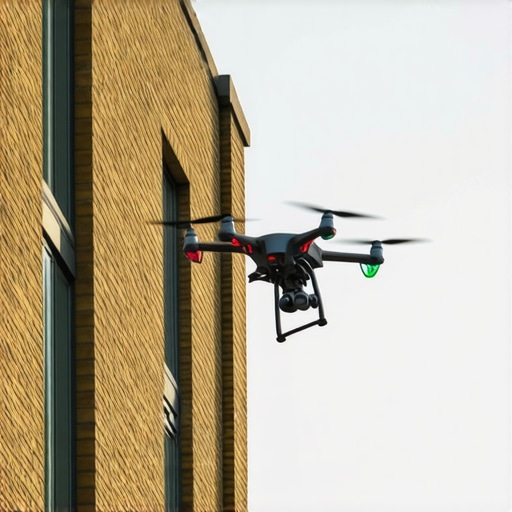
The homeowner thought it was just a hairline crack, a minor aesthetic nuisance running vertically through a third-story soldier course. But when I put my scope inside the cavity and cross-referenced the thermal signatures from a high-resolution drone audit, I saw the structural steel was rusted to dust. That tiny fissure wasn’t just a settlement issue; it was the exhale of a dying wall system. In my forty years of dragging a hawk and trowel across scaffolds, I’ve seen thousands of these ‘minor’ symptoms mask catastrophic failures. Modern masonry, especially in our brutal freeze-thaw climates, is a victim of its own complexity. We aren’t just stacking stones anymore; we are managing moisture, thermal bridges, and gravitational loads that require more than a set of eyes and a ladder. This is where the drone becomes the most important tool in the master mason’s kit.
“Water penetration is the single greatest threat to masonry durability.” – BIA Technical Note 7
The Physics of the Freeze-Thaw War
In the North, we deal with a specific brand of physics that eats buildings alive. Water is a patient predator. When it finds a way behind a hard-fired face brick, it waits for the temperature to drop. As that water transitions to ice, it expands by approximately 9% in volume. If you’ve used a dense, modern Portland cement mortar on a historic building—a common mistake in tuckpointing brick walls—that expansion has nowhere to go. Instead of the mortar compressing, it blows the face right off the brick. We call this spalling. A drone equipped with a 640×512 thermal sensor can spot these moisture pockets long before the brick starts hitting the sidewalk. It detects the ‘thermal lag’ where damp sections of the wall retain heat differently than dry sections. This data is the difference between a minor repair and a total facade failure.
High-Altitude Forensic Analysis and Retaining Wall Batter Correction
I recently inspected a commercial development where the gravity-defying retaining walls looked straight to the naked eye. However, the aerial photogrammetry revealed a 3-degree deviation in the retaining wall batter correction requirements. The wall was leaning, pushed by hydrostatic pressure because the weep holes were clogged with slurry from a lazy ‘mud’ mix. Without the drone’s ability to create a 3D point cloud, we wouldn’t have caught the movement until the entire structure blew out. Whether you are dealing with retaining wall block replacement or modular masonry construction, the geometry must be perfect. A wall that is out of plumb is a wall that is actively fighting gravity, and gravity never loses. The drone allows us to measure that fight in millimeters from three hundred feet in the air.
The Science of Historic Brick Salvage and Material Compatibility
When we talk about historic brick salvage, we aren’t just being nostalgic. We are looking for material compatibility. Old bricks, fired in local kilns a century ago, are softer and more porous than today’s high-strength units. If you slap a Type S mortar—which is hard as a diamond—into a joint between two soft 19th-century bricks, you’ve just signed a death warrant for that wall. The drone helps us map the extent of the deterioration across an entire chimney or parapet, allowing for accurate tuckpointing cost estimation without the massive overhead of erecting pipe scaffolding just for a quote. We look for ‘honeycombing’ in the mortar and ‘slicker’ marks that suggest previous, poor-quality repairs. This forensic approach ensures that when we do go in to grind the joints, we are using a lime-based ‘mud’ that respects the sacrificial principle of masonry: the mortar must be softer than the stone.
“The mortar shall be sacrificial to the masonry unit, allowing for moisture movement and thermal expansion without inducing stress into the units.” – ASTM C270 Standards
Modern Integration: Green Roofing and Fire-Rated Masonry Installation
Today’s masonry is more than just clay and lime. We are seeing a massive surge in green roofing masonry integration. While these systems are great for the environment, they are a nightmare for structural masonry if not handled correctly. The increased moisture load at the roofline requires specialized flashing and fire-rated masonry installation techniques to ensure the building remains a fortress. Drone audits allow us to inspect the ‘cold joints’ where the masonry meets the roofing membrane—the most common failure point for leaks. We also use these aerial tools for commercial masonry maintenance schedules, spotting the early signs of masonry staining which often indicates a failure in the internal drainage or a lack of proper siloxane sealants.
Why Precision Matters in Tuckpointing and Restoration
Many ‘handymen’ think tuckpointing brick walls is just about smearing new mud into a gap. It’s an art form. It requires ‘buttering’ the joint with the right consistency, ensuring the ‘tooth’ of the old brick is clean, and striking the joint with a jointer or slicker to create a water-shedding profile. If the mortar ‘burns’ because it dried too fast in the sun, it will crumble in a year. If it’s too wet, it will shrink and pull away from the brick. A drone audit provides a high-definition map of exactly where the ‘suction’ of the wall is failing, allowing us to target our repairs and save the client thousands. In this business, you either do it once, or you do it twice at triple the cost. Use the tech, respect the stone, and never trust a wall that looks too perfect on the surface.