
The Tragedy of the ‘Lick-and-Stick’ Repair
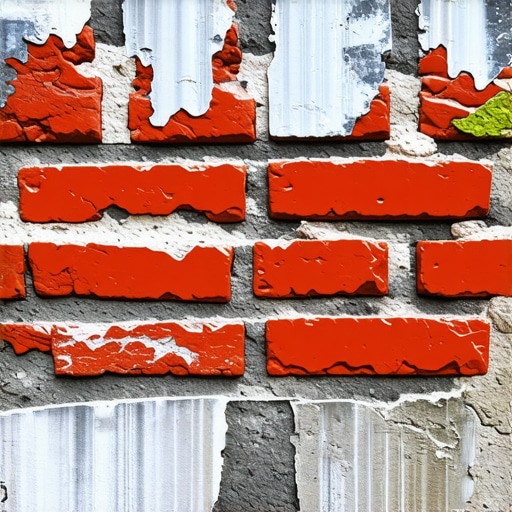
I recently walked past a 1920s Tudor-style home in an old neighborhood where the owner had spent three weekends ‘improving’ his facade. To the untrained eye, it looked ‘clean.’ To me, it looked like a forensic crime scene. He had used a bag of Type S Portland cement—the kind of gray, rock-hard stuff meant for skyscraper footings—on soft, orange-fired clay bricks that were nearly a century old. This isn’t just an aesthetic nightmare; it’s a structural death sentence. When you see a wall where the mortar joints are protruding like swollen veins and the brick faces are beginning to flake off like wet crackers, you’re looking at the aftermath of a DIY tuckpointing disaster. Professional masonry restoration isn’t about making things look new; it’s about understanding the delicate thermal dance between stone and lime.
The Old Master’s Wisdom: The Trowel Test
My mentor, a man who had spent forty years on the business end of a trowel, once handed me a piece of dried mortar he’d scraped from a historic chimney. He didn’t look at it; he smelled it and then rubbed it between his thumb and forefinger. ‘The sand is too round, kid,’ he growled. ‘This mud has no tooth. It won’t grab the brick, and it won’t let the water out.’ He taught me that the mortar is the sacrificial lamb of the wall. It is supposed to be softer than the brick. If the mortar is harder than the clay, the brick will lose every time the temperature swings. This is the fundamental physics that most weekend warriors ignore. They focus on the ‘stick,’ but they forget the ‘breathe.’
“Water penetration is the single greatest threat to masonry durability. The use of mortar with a high compressive strength on older, softer brick units frequently results in irreversible damage to the masonry units themselves during freeze-thaw cycles.” – BIA Technical Note 7
The Physics of the Freeze-Thaw Cycle
In regions where the thermometer drops, the enemy is the 9%. When water freezes, it expands by nine percent. In a wall built with sustainable tuckpointing mortars based on lime, the moisture travels through the porous mortar and evaporates out of the joint. This is known as vapor permeability. However, when a DIYer ‘butters’ the joints with modern, non-breathable high-performance mortar mixes designed for modern concrete blocks, they trap that moisture inside the brick. When the freeze hits, that 9% expansion happens inside the brick. The result? Spalling. The face of the brick literally pops off, leaving the soft, inner core exposed to the elements. Once that face is gone, the brick is an open wound.
The Chemical Mismatch: Portland vs. Lime
Modern Portland cement is a marvel of engineering, but it is the arch-nemesis of historic masonry. Older bricks were fired at lower temperatures, making them significantly softer than modern equivalents. When you use a hard mortar, you create a rigid cage. A wall isn’t a static object; it’s a living thing that expands and contracts with the sun. Without the flexibility of a high-lime mix, the wall cannot accommodate this thermal movement. Instead of the mortar compressing, the brick cracks. This often leads to the need for brick infill panel repair or, in extreme cases, foundation helical pier installation if the resulting water infiltration has undermined the soil’s load-bearing capacity. I have seen concrete pump masonry mixes used in residential repairs where they had no business being, creating cold joints that leak like a sieve within two seasons.
The ‘Band-Aid’ vs. The Cure
Most homeowners reach for tile grouts on masonry or hardware store tubes of ‘brick caulk’ to fix a hairline crack. This is like putting a Band-Aid on a compound fracture. A crack is a symptom, not the disease. Forensic masonry requires looking for the source of the stress. Is it hydrostatic pressure from a failing landscape? If so, you need a retaining wall drainage upgrade, not a prettier joint. Is it thermal stress near the flue? Then a chimney heat shield installation is the only way to stop the masonry from cooking itself to death from the inside out. Even the most advanced robotic masonry repair systems currently being trialed in industrial settings rely on these same basic principles of material compatibility.
“Mortar should always be weaker than the units it binds. The goal of repointing is to restore the integrity of the wall while ensuring that future stresses are absorbed by the mortar, not the masonry units.” – ASTM C270 Standard Specification for Mortar
The Craft of the Joint: Grinding and Striking
The actual labor of tuckpointing is a grueling, tactile process. You don’t just ‘smear’ new mud over the old. You have to ‘rake’ or grind out the old, failing joints to a depth of at least twice the width of the joint—usually 3/4 of an inch. If you don’t create that ‘keyway,’ the new mortar has no mechanical bond. It’s just a thin veneer that will flake off. When we ‘strike’ a joint with a slicker or a jointer tool, we are compacting the mud into the cavity, forcing it into the ‘tooth’ of the stone. This compaction is what creates the weather-shield. A DIYer almost always leaves ‘honeycombing’—small air pockets inside the joint—where water can sit and rot the wall from the inside. They fail to understand ‘suction.’ If the brick is too dry, it sucks the water out of the mortar too fast, ‘burning’ the mix and leaving it brittle. If the brick is too wet, the mortar won’t stick. It’s a goldilocks zone that only comes with years of ‘buttering’ bricks on a hawk.
When to Call the Pros
If you see a stair-step crack climbing your soldier course or notice that your mortar has turned to dust that you can scrape out with a fingernail, do not head to the hardware store for a quick fix. You are looking at a material science problem that requires a forensic solution. A professional will match the aggregate size, the color of the local sand, and the specific lime-to-cement ratio required for your specific era of construction. Anything less isn’t just a waste of time; it’s a destruction of your home’s most important asset. Do it once, or do it twice—the second time will always cost you triple.