
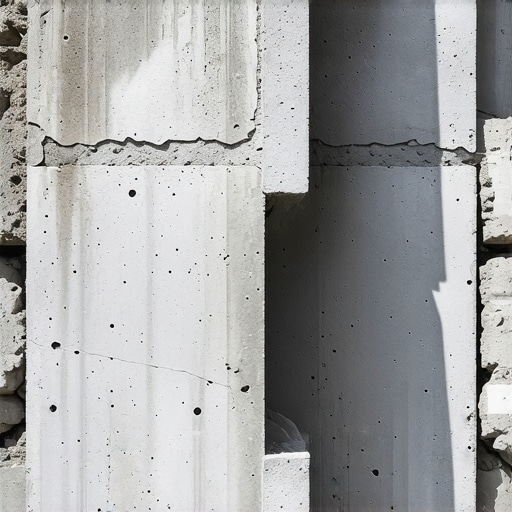
The Anatomy of a Failing Foundation: A Forensic Discovery
The client pointed at a hairline vertical seam in his basement wall, barely wider than a credit card. He thought a bit of caulk and a coat of paint would fix it. I brought out the fiber-optic scope, drilled a half-inch hole through the face of the block, and what I saw inside was a structural graveyard. No rebar, no grout—just forty years of spiderwebs and oxidized scale where the reinforcement should have been. This is the reality of many post-war builds; the exterior looks solid, but the bones are hollow. When we talk about masonry damage assessment, we aren’t just looking at the surface; we are looking for the missing mass that keeps the earth from reclaiming your living room.
The Stair-Step Warning: Reading the Language of Failure
In the world of forensic masonry, cracks tell a story. A horizontal crack across the mid-section of a basement wall is a scream for help; it indicates foundation wall bowing repair is imminent because the wall is literally folding under hydrostatic pressure. But the stair-step crack—that jagged lightning bolt following the mortar joints—is the signature of settlement. Without a proper CMU (Concrete Masonry Unit) block fill, your wall is essentially a stack of dry boxes. It has high compressive strength but zero tensile strength.
“Grout for masonry shall conform to the requirements of ASTM C476. The grout must be fluid enough to flow into the smallest voids without segregation of the constituents.” — ASTM C476 Standard Specification
This fluidity is what we call the ‘slump.’ In a standard concrete pour, you want a low slump to keep it thick. In masonry grout, we want an 8-to-11-inch slump. Why? Because the CMU block is a thirsty beast. The moment that ‘mud’ hits the hollow cell, the porous concrete block begins to suck the moisture out of the grout. This ‘suction’ is vital; it pulls the cement paste into the pores of the block, creating a monolithic bond that turns individual units into a single, reinforced structural member.
The Physics of Hydrostatic Pressure and the Hollow Cell
If you live in the North, the freeze-thaw cycle is your primary antagonist. When the soil saturates, it expands. If your CMU walls are hollow, they have no internal ‘ribcage’ to resist the lateral load. Water seeps through the porous stone sealers people mistakenly slap on the outside, and eventually, the pressure causes the blocks to shift. We see this often in outdoor masonry fountain restoration, where the constant presence of water and the lack of internal reinforcement leads to catastrophic ‘honeycombing’ and eventual collapse. By filling those cells with a high-slump grout and grade 60 rebar, you create a lever. The steel handles the tension—the pulling force—while the grout and block handle the compression. Without the fill, the wall is just waiting for a heavy rain to turn into a heap of rubble.
“Water penetration is the single greatest threat to masonry durability, particularly in unreinforced hollow-cell construction.” — BIA Technical Note 7
Micro-Zoom: The Chemistry of the Bond
When we ‘butter’ a block with mortar, we are creating a bed. But when we pour grout into the cells, we are performing chemistry. As the water leaves the grout and enters the CMU, it leaves behind a dense matrix of calcium silicate hydrate crystals. These crystals grow into the pores of the block. If the contractor waits too long between pours, you get a ‘cold joint’—a weak point where the two layers of mud don’t fuse. This is why we use mechanical vibration. We ‘sting’ the grout with a vibrator to shake out the air pockets. If you skip this, you get ‘honeycombing’—voids in the grout that look like a beehive and offer zero structural support. In modern times, we are even seeing AI masonry assessment tools that use ultrasonic pulse velocity to detect these hidden voids without ever swinging a hammer. This is a far cry from my grandfather’s day, though he could tell a hollow cell just by the ‘thud’ it made when he tapped it with his trowel.
Modern Diagnostics: From Drones to Sustainable Cutting
We’ve come a long way from just staring at cracks. Today, drone chimney inspections allow us to see the ‘soldier course’ at the top of a stack that’s beginning to lean because the internal parging has failed. We use these tools to identify if a chimney needs chimney interior parging to prevent flue gases from eating the masonry from the inside out. Furthermore, sustainable block cutting techniques now allow us to minimize waste on-site, ensuring that every piece of CMU used in a mortarless masonry systems or a traditional build is utilized to its maximum structural potential. Even something as seemingly minor as masonry joint sand repair on a patio can be a precursor to larger structural conversations, as shifting pavers often signal the same poor compaction issues that plague failing foundations.
The Cure vs. The Band-Aid
When I see a homeowner trying to fix a bowed wall with a few ‘slicker’ passes of mortar, I know they’re in trouble. The ‘Band-Aid’ is a surface fix. The ‘Cure’ is structural. If your wall is already bowing, we may need to use carbon fiber straps or helical piers, but the best defense is always a good offense: a fully grouted, rebar-reinforced wall from day one. This isn’t just about code; it’s about the physics of the earth wanting to be where your basement is. Whether you are dealing with a foundation wall bowing repair or just maintaining the aesthetics of an old estate, the principles remain the same. Respect the ‘mud,’ understand the suction, and never trust a hollow wall to do a solid wall’s job.
When to Panic?
If you see a crack that you can fit a nickel into, it’s time to call a pro. If the crack is horizontal and mid-wall, don’t wait. If you see ‘efflorescence’—that white, salty powder—it means water is moving through your blocks and carrying the minerals with it. That is the precursor to the loss of structural integrity. You can’t just seal it away; you have to address the water and the lack of internal fill. Masonry is the oldest building craft we have, but it’s also the most unforgiving of shortcuts. Do it once, or do it twice—the choice is usually written in the mortar. “,