
The Lie of the Immortal Facade
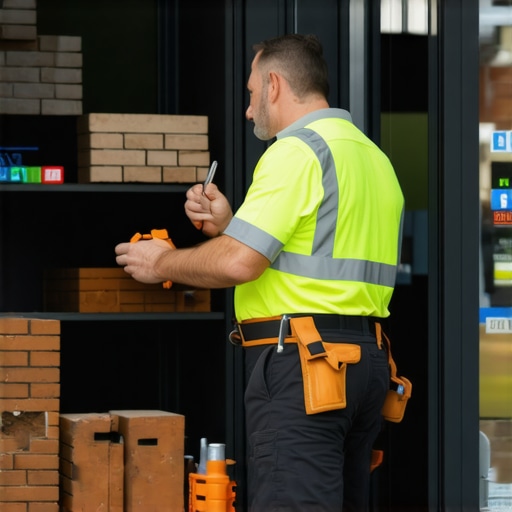
Retail property owners often treat masonry as a ‘set it and forget it’ asset. They see the solid weight of a brick wall or the imposing presence of a stone arch and assume it is impervious to time. That is a dangerous, expensive lie. I have spent thirty years in the mud, following in the footsteps of my father and his father before him, and if there is one thing I have learned, it is that masonry is a living, breathing, and ultimately decaying system. It is a slow-motion chemical reaction between minerals and the atmosphere. When a property manager calls me out to look at what they describe as a ‘small hairline crack’ in a storefront, I don’t just see a line. I see a symptom of hydrostatic pressure, thermal fatigue, or structural rot. [IMAGE_PLACEHOLDER] I once stood before a high-end retail strip where the manager thought a few flakes of brick on the sidewalk were just aesthetic weathering. But when I put my digital scope inside the cavity, I saw that the structural steel lintels were rusted to the point of exfoliation—the steel was literally turning into layers of rust like a puff pastry, expanding and blowing the brickwork apart from the inside. That ‘hairline’ crack was the only warning sign before a three-ton section of the parapet would have inevitably succumbed to gravity.
“Water penetration is the single greatest threat to masonry durability, leading to efflorescence, spalling, and the eventual failure of the structural bond.” – BIA Technical Note 7
The Physics of the Freeze-Thaw War
In the environments where temperatures swing across the freezing point, your retail building is under constant physical assault. The physics are simple but brutal: water enters the microscopic pores of the brick and the mortar through capillary suction. When that water freezes, it expands by approximately 9% in volume. If your building was constructed or repaired with a high-performance mortar mix that is too dense for the surrounding units, that expanding ice has nowhere to go. It doesn’t push into the mortar; it pushes against the face of the brick. This is how you get spalling—the process where the face of the brick literally pops off, leaving a soft, orange core exposed to the elements. This is why historic mortar analysis is not a luxury; it is a forensic necessity. If you have a building from the early 1900s, it was built with lime-based mortar. If a ‘handyman’ comes in and performs full repointing services using modern Portland cement (Type S), he has just signed the death warrant for your facade. The mortar must be the sacrificial element. It must be softer than the brick to allow for moisture movement and thermal expansion. Without this balance, the brick fails, and a brick arch restoration becomes a $40,000 nightmare instead of a $4,000 maintenance task.
The Anatomy of Failure: From Parapets to Concrete Flatwork
Retail properties are unique because they often feature large expanses of concrete flatwork services and complex rooflines with heavy HVAC equipment. I’ve seen outdoor fireplace rebuilds in high-end lifestyle centers fail within three years because the original mason didn’t understand the ‘tooth’ of the stone or the hydration heat required for a proper bond. We often see ‘honeycombing’ in concrete—voids where the aggregate didn’t settle because the contractor was too lazy to vibrate the pour. These voids become reservoirs for chlorides and salts, which eat the rebar from the inside out. Then there’s the chimney. On many retail buildings, the chimney or vent stack is the most neglected element. We perform chimney heat shield installation to prevent thermal shock from cracking the flue tiles. If that heat shield isn’t there, the constant cycling of the heating system creates micro-fractures. Over a decade, these fractures grow until the entire stack becomes a chimney fire risk or a structural hazard to the roof below.
“The architect should ensure that the masonry units have sufficient strength and that the mortar is of a composition that ensures the durability of the whole.” – Vitruvius, De Architectura
Modern Interventions: 3D Printing and Metallic Finishes
Technology is changing the way we handle forensic repairs. We are now utilizing 3D printed masonry repairs for custom ornamental pieces that are too expensive to carve by hand or cast in small batches. This allows us to restore the architectural integrity of a retail storefront with surgical precision. For modern brands looking for a specific aesthetic, metallic brick colors application provides a high-end look, but it requires a master’s touch. You cannot just spray a metallic coating on a brick; you have to understand the surface tension and the pH of the substrate. If the brick is too alkaline, the coating will saponify and peel within eighteen months. It’s about the chemistry of the ‘mud.’ I’ve spent years perfecting the mix, ensuring that the ‘suction’ of the brick matches the moisture content of the mortar. When you ‘butter’ a brick, you aren’t just applying glue; you are creating a mechanical and chemical bridge that must last a century.
The Cost of Neglect vs. The Value of the Slicker
An annual inspection might cost a few hundred dollars, but it identifies the need for mortarless masonry systems or full repointing services before the damage reaches the structural steel. Once the ‘cold joint’—that weak point where two separate pours of concrete or lifts of masonry meet—is compromised, the repair costs escalate exponentially. I’ve watched retail owners go from a simple ‘slicker’ job (running a jointer tool along the joints to compress the mortar) to needing a full-scale excavation because they ignored a ‘wavy’ sidewalk that indicated soil heaving and improper compaction. You can do it once, or you can do it twice. If you do it right the first time, with the proper high-performance mortar mixes and a forensic eye on the drainage, you won’t have to call me in ten years to tell you your building is a liability. It’s about respect for the craft and the physics of the stone. Don’t let a ‘handyman special’ ruin your investment. Hire a mason who knows the smell of a damp basement and the ring of a good brick. Your bottom line will thank you.”,”image”:{“imagePrompt”:”A gritty, close-up forensic photograph of a retail building’s brick facade showing a deep stair-step crack. A weathered hand holding a mason’s trowel is pointing at the gap, where rusted steel is visible behind the masonry. The lighting is harsh, highlighting the texture of the spalling brick and the crumbling mortar.”,”imageTitle”:”Forensic Masonry Inspection of Retail Facade”,”imageAlt”:”A master mason inspecting a structural crack in a brick wall revealing rusted steel lintels.”},”categoryId”:0,”postTime”:””}