
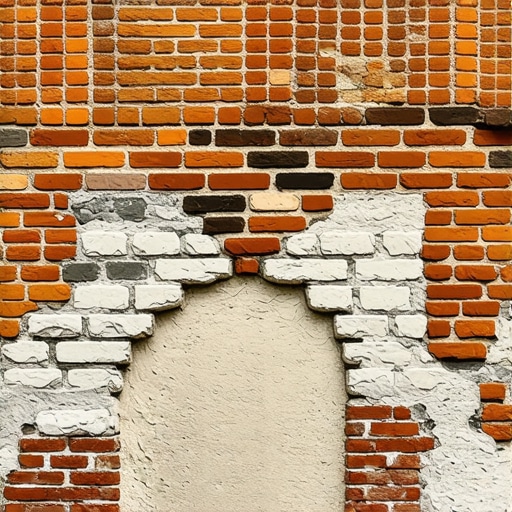
The Forensic Scene: When a Hairline Crack Becomes a Structural Grave
The property manager told me it was just a cosmetic issue—a few hairline fractures running through the mortar joints of a 1920s textile mill. But when I threaded my high-definition borescope into a quarter-inch void near the cornice, the reality was a nightmare. The structural steel lintels were swollen with oxidation, rusted to a state of flaky dust that had expanded to three times its original thickness. This wasn’t just a crack; it was a ‘jacking’ event. The masonry was being pushed outward from the inside. The culprit? A previous contractor had used a non-breathable, film-forming acrylic sealer over the brick, thinking they were ‘waterproofing’ it. Instead, they had built a greenhouse for rot. Moisture had entered through the roofline, got trapped behind the plastic-like coating, and had nowhere to go but into the iron. This is why forensic masonry isn’t just about looking at a wall; it’s about understanding the invisible war between water and thermodynamics.
The Chemistry of Breathability: Why Vapor Permeability is Non-Negotiable
In the world of historic tuckpointing and structural repointing, we live and die by the ‘perm’ rating. Historic masonry—specifically those built with soft-fired clay bricks and lime-based mortars—is a living, breathing system. These materials are naturally porous. They absorb water during a storm and release it through evaporation when the sun hits the facade. This is the ‘suction’ of the brick. When we talk about commercial masonry facade maintenance, the biggest mistake is treating a building like it’s a submarine. If you seal it tight, you kill it.
“Water penetration is the single greatest threat to masonry durability, but the inability for that water to escape is what causes the actual structural failure.” – BIA Technical Note 7
Modern breathable sealants, specifically silanes and siloxanes, operate on a molecular level. They don’t create a ‘skin’ or a film. Instead, they line the capillaries of the mortar and brick with a hydrophobic coating. Imagine a trillion tiny umbrellas inside the pores. Liquid water, which has high surface tension, can’t get in. But water vapor, which is a gas and much smaller, can still escape. This is the holy grail of freeze-thaw damage restoration. By keeping the bulk water out while allowing the wall to ‘respire,’ we prevent the 9% volume expansion that occurs when trapped liquid water turns to ice and pops the face off a million-dollar historic facade.
The Sacred Sacrifice: Mortar Matching Services and the Sacrificial Principle
One of the most frequent sins I see in commercial tuckpointing is the use of high-strength Portland cement on old buildings. A 19th-century brick might have a compressive strength of 1,500 PSI. If you point it with a modern Type M mortar that hits 2,500 PSI, you’ve created a weapon. As the building shifts and thermally expands, the mortar won’t give. The brick, being the softer element, will crush itself against the rigid mortar. We call this ‘spalling,’ and it’s a death sentence for historic aesthetics.
Our mortar matching services focus on the ‘Sacrificial Principle.’ The mortar should always be slightly softer and more permeable than the unit it surrounds. We often use fiber-reinforced mortars specifically designed for restoration, or traditional lime putty mixes. These mortars are ‘self-healing’ to a degree; as water moves through them, it can redistribute unreacted lime into micro-cracks, effectively sealing them. When we ‘butter’ these joints, we are ensuring that the structural integrity of the brick remains the priority.
The Technical Process: From Grinding to the Slicker
The act of historic tuckpointing is an exercise in precision. We don’t just slap ‘mud’ into a hole. First, we must remove the failing mortar to a depth of at least twice the joint width. We use vacuum-shrouded grinders to protect the environment, but the final cleanup is always done with a hammer and chisel to ensure we haven’t ‘polished’ the edges of the brick, which would ruin the ‘tooth’ needed for the new mortar to bond. Once the joint is clean, we pre-hydrate the masonry. If you put dry mortar into a dry historic brick, the brick will suck the moisture out of the mix instantly—a ‘flash set’ that leaves the mortar brittle and unbonded.
Then comes the ‘hawk’ and ‘trowel.’ We pack the mortar in layers, or ‘lifts,’ to prevent shrinkage cracks. Once the mud is ‘thumbprint hard,’ we use a ‘slicker’ or jointer tool to strike the joint. This isn’t just for looks. Striking the joint compacts the mortar, densifying the surface and creating a profile that sheds water effectively. For a true historic tuckpointing finish, we might apply a ‘fillet’ of contrasting color to give that razor-sharp appearance characteristic of the finest 18th-century manors.
The Thermal Reality: Expansion and the Sun
In hot climates, we face the ‘burn.’ If a wall is in direct sunlight, the thermal expansion can be massive. Without proper structural repointing that accounts for this, the wall will develop vertical shear cracks. We must ensure that the mortar repointing services include an analysis of the building’s original movement joints—or lack thereof. Often, we have to integrate subtle control joints that allow the masonry to move without self-destructing. This is also where chimney heat shield installation comes into play. Chimneys face the most extreme thermal cycling of any masonry element, being baked from the inside by flue gases and lashed by wind on the outside. A failure here isn’t just a masonry issue; it’s a fire hazard.
“Mortar shall be specified by either the property specifications or the proportion specifications.” – ASTM C270 Standard Specification for Mortar for Unit Masonry
Deep Cleaning and Final Protection
Before any sealant can be applied, masonry cleaning is mandatory. We don’t use high-pressure washers that can erode the ‘fire skin’ of the brick. Instead, we use low-pressure chemical restorations that lift decades of atmospheric carbon and biological growth without damaging the substrate. Once the wall is clean and the new tuckpointing has cured for at least 28 days (to allow the carbonation process to complete), we apply our breathable siloxane. This is the final armor. It ensures that the commercial masonry facade maintenance cycle is extended by decades rather than years. You do it once, you do it right, and you respect the chemistry of the stone.