
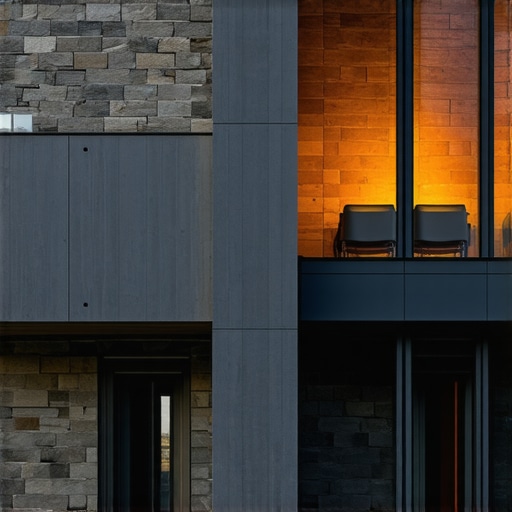
The Forensic Scene: A Ghost in the Wall
The homeowner thought it was just a hairline crack, a minor blemish on the south-facing facade of his high-end brick residence. But when I put my scope inside that 1/16th-inch gap, I saw the structural steel was rusted to dust. This wasn’t a settlement issue. It was a thermal failure. For thirty years, that wall had been breathing in humid air and trapping it against a cold steel beam, a byproduct of poor thermal planning and a lack of understanding regarding how masonry interacts with temperature. As a third-generation mason, I’ve seen this ‘ghost in the wall’ more times than I can count. We talk about energy savings like it’s a new concept, but the old-timers knew something the modern ‘lick-and-stick’ contractors forgot: masonry isn’t just a skin; it’s a thermal battery.
“Thermal mass is the property of a material that enables it to store heat, providing an ‘inertia’ against temperature fluctuations.” – BIA Technical Note 4
The Physics of Thermal Mass: Beyond the R-Value
When you look at a wall, most people see a static object. I see a heat engine. Modern construction is obsessed with R-value—the resistance to heat flow. They stuff fiberglass or foam into thin walls and call it a day. But masonry brings something else to the table: thermal mass. This is the ‘flywheel effect.’ In a hot climate, a thick brick wall or a concrete masonry unit restoration project doesn’t just block heat; it absorbs it. It takes hours, sometimes an entire day, for the sun’s thermal energy to migrate from the exterior face to the interior. By the time the heat reaches the inside, the sun has gone down, and the wall begins to radiate that heat back to the cool night air. This ‘thermal lag’ is the secret to sustainable masonry. It flattens the peak energy demand, meaning your HVAC system isn’t fighting a losing battle at 3:00 PM when the mercury hits triple digits.
Micro-Zooming: The Chemistry of the Joint
Let’s talk about the ‘mud.’ When we perform tuckpointing, we aren’t just filling gaps for aesthetics. We are restoring the thermal integrity of the structure. I’ve watched ‘handymen’ use a tuckpointing machine services rig to blast hard Portland cement into a soft, lime-based historic wall. It’s a death sentence for the brick. High-strength mortar is too dense; it doesn’t allow for the minute thermal expansion and contraction that occurs at the molecular level. When the sun hits a wall, the bricks expand. If the mortar is harder than the brick, the brick has nowhere to go but out. This results in spalling, where the face of the brick literally pops off. In our masonry repair services, we look for the ‘tooth’ of the original material. We use Type N or Type O mortars for restoration because they are sacrificial. They allow the wall to breathe. Without that breathability, moisture gets trapped, and moisture is the ultimate conductor of heat. A damp wall is a cold wall in the winter and a humid oven in the summer.
The Tragedy of Efflorescence and Thermal Bridges
You’ve seen it—that white, salty crust on new brickwork. Most people call it an eyesore. I call it a forensic clue. Brick efflorescence removal isn’t just about scrubbing; it’s about understanding the hydrologic and thermal gradient of the wall. When moisture migrates through the masonry, it carries soluble salts. As the sun heats the wall, the water evaporates, leaving the salts behind. If you have a thermal bridge—a piece of uninsulated steel or a solid concrete header—the temperature differential at that point becomes a magnet for condensation. This is why BIM masonry projects are so critical today. Building Information Modeling allows us to map these thermal bridges before a single brick is laid. We can simulate how a retaining wall reinforcement will react to the soil’s thermal load or how a chimney rebuild services project will handle the localized heat of the flue versus the ambient temperature of the attic.
“Water penetration is the single greatest threat to masonry durability and its thermal performance.” – BIA Technical Note 7
The Chimney: A Vertical Thermal Disaster
Nowhere is thermal performance more misunderstood than in the chimney. I’ve walked onto jobs where the chimney repair services consisted of slapping some mortar over a cracked crown. That’s like putting a Band-Aid on a gunshot wound. A chimney is a massive heat sink. If the flue is unlined or the liner is cracked, you’re losing massive amounts of energy, and worse, you’re risking a house fire. A proper chimney flue liner installation acts as a thermal break, keeping the heat inside the exhaust path and away from the combustible framing of the house. We use clay liners or stainless steel, but the key is the air gap. That gap provides the insulation needed to maintain the ‘draft’—the physics of hot air rising. If the flue gets too cold, the air stalls, creosote builds up, and your energy efficiency goes out the window with the smoke.
The Hard Truth About Modern Veneers
I have a burning hatred for modern ‘lick-and-stick’ stone veneer. They take a perfectly good wall, slap some thin slices of stone on with cheap adhesive, and call it ‘masonry.’ It has zero thermal mass. It has no ‘suction.’ It’s a facade in the worst sense of the word. Real masonry—solid, thick, and properly bonded—is a lifetime investment. When we ‘butter’ a brick, we aren’t just sticking it down; we are creating a continuous thermal path. We are ensuring that the soldier course and the header course are integrated into a single, functioning unit. This is why tuckpointing is an art form. You have to strike the joint—using a slicker or a jointer tool—to compact the mud. This compaction isn’t just for shedding water; it’s to ensure the mortar is dense enough to provide a consistent thermal profile across the entire wall surface.
The Long Game: Restoration vs. Replacement
In this business, you either do it once, or you do it twice. I’ve seen 50-year-old walls that look brand new because they were built with an understanding of thermal expansion and moisture management. And I’ve seen 5-year-old walls that need a full concrete masonry unit restoration because the builder didn’t understand the ‘flash setting’ of mortar in the sun. If you’re in a hot climate like Texas or Arizona, you have to wet your bricks before you lay them. If the brick is too thirsty, it sucks the hydration right out of the mud, and the mortar ‘burns.’ It never achieves its crystalline structure. It becomes a crumbly, sandy mess that offers no structural or thermal value. We are the ‘Crack Whisperers.’ We look at a vertical crack and we don’t just see a hole; we see a wall that was built too long without a control joint. We see the physics of thermal expansion at work, and we fix the root cause, not just the symptom. Sustainable masonry is about the long game. It’s about building a structure that doesn’t just stand for a century but saves energy every single day of that century. That is the old-world way. That is the only way.