
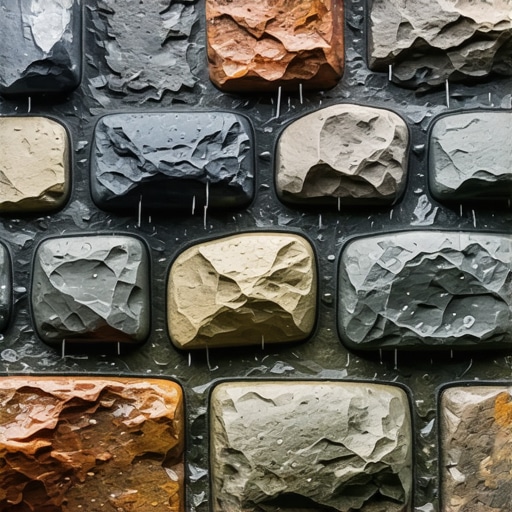
I remember standing on a rickety scaffold in the middle of a November gale, watching my mentor, a grizzled old Italian named Giovanni, handle a pallet of reclaimed North River bricks. He didn’t just look at them; he would strike each one with the edge of his steel trowel. If the brick emitted a dull thud instead of a clear, crystalline ‘ring,’ he’d toss it into the rubble pile without a second thought. ‘That brick is full of water and lies,’ he’d growl. ‘It’ll soak up your mud and spit it back at you the first time the ground freezes.’ He understood something that modern contractors have forgotten: the relationship between masonry and moisture isn’t a battle—it’s a negotiation. In wet climates, if you try to win by force using high-strength Portland cement, you will lose every single time.
The Physics of Breathability and the Portland Fallacy
The industry is obsessed with compressive strength. They think a harder mortar is a better mortar. This is a lethal misconception when dealing with historic tuckpointing or even modern modular retaining walls in high-rain environments. Most modern ‘Type S’ mortars are essentially liquid rock, packed with Portland cement to ensure they set fast so the crew can get home. But in a wet climate, a hard mortar is a trap. Masonry units are porous. They breathe. They take in water and they must be allowed to let it out. When you use a high-strength, non-porous mud, you seal the joints. Moisture gets trapped behind that hard ribbon of cement. When the temperature drops, the water expands by 9%, and because it can’t escape through the joint, it forces its way through the face of the brick. This is how you get spalling—the tragic sight of a 100-year-old facade shedding its skin like a dying snake. Sustainable, lime-based mortars, specifically Natural Hydraulic Lime (NHL), work on the sacrificial principle. The mortar should always be softer and more permeable than the masonry unit itself.
“The selection of mortar should be based on the properties of the masonry units and the environmental exposure, rather than simply seeking the highest compressive strength.” – ASTM C270 Standard Specification for Mortar
Hydrostatic Pressure and Foundation Waterproofing Realities
When the soil is saturated, it exerts immense hydrostatic pressure against a structure. I’ve seen emergency masonry repair calls where the basement wall was literally bowing inward like a sail in the wind. This is where the ‘sustainable’ approach merges with geotechnical reality. We are seeing a rise in self-healing concrete foundations that utilize crystalline admixtures. These work by reacting with incoming water to grow microscopic crystals that plug leaks. However, if your foundation waterproofing is failed, no amount of ‘smart’ concrete will save you. You need a drainage plane. You need to relieve the pressure. If you’re building modular retaining walls, you better have a minimum of 12 inches of clean, angular 57-stone behind that wall, wrapped in a geotextile fabric. If you skip the drainage, you aren’t building a wall; you’re building a dam, and gravity always wins the long game.
The Chemistry of Carbonation in Wet Climates
Micro-zooming into the mud, the magic of sustainable lime mortar lies in the carbonation cycle. Unlike Portland cement, which cures through a relatively fast chemical hydration, lime mortars cure by absorbing $CO_2$ from the atmosphere over months, even years. In wet climates, this process is slowed, which is actually a benefit. It allows for autogenous healing. If a hairline crack develops due to settlement, the moisture in the wall dissolves a bit of the free lime (calcium hydroxide) and carries it into the crack. As the water evaporates and reacts with carbon dioxide, it precipitates as calcium carbonate—literally growing new stone to fill the void. This is the ‘soul’ of historic pointing styles. You aren’t just filling a gap; you’re installing a living system that adapts to the building’s movements. When we talk about freeze-thaw damage restoration, we are usually just undoing the damage caused by some handyman who thought a tube of caulk and a bag of Quikrete was the answer.
The High-Tech Frontier: From Chimneys to Robots
Even the most traditional masonry requires modern vigilance. Take chimney crown repair or chimney flashing repair. The crown is the most abused part of any building. It takes the full brunt of rain and ice. If you use a standard mud for the crown, it will crack in two seasons. I advocate for a reinforced, fiber-modified lime mix that can handle the thermal shock of a hot flue meeting a cold rain. And then there is the future: robotic masonry repair. I’ve watched these machines in testing labs. They can rake out a joint with surgical precision, but they lack the ‘eye’ for suction. A robot doesn’t know if a brick is ‘ringing’ or if it’s ‘thirsty.’ It doesn’t know how to butter the head joint just right to ensure there’s no honeycombing in the core. They are tools, not masters.
“Water penetration is the single greatest threat to masonry durability and the primary cause of masonry deterioration.” – BIA Technical Note 7
Execution: The Master’s Method
If you’re going to do this, do it once. When performing historic tuckpointing, you don’t just slap mud on the surface. You grind out the old, failing joint to a depth of at least twice its width. You wash the dust out—suction is your enemy during the application. You want the brick damp (SSD – Saturated Surface Dry) so it doesn’t rob the mud of its moisture too fast. This ‘flash setting’ or burning the mud leads to a brittle, crumbly joint that will fail by spring. You use a hawk and a slicker to pack the mud in layers, or ‘lifts.’ This isn’t just about aesthetics; it’s about compression. By striking the joint firmly, you consolidate the particles, making the surface denser and more resistant to the driving rain. Whether you are dealing with a soldier course over a window or a cold joint in a new pour, the principles of physics remain. Respect the water, understand the chemistry, and listen to the ‘ring’ of the stone. Anything less is just a handyman special waiting to crumble.