
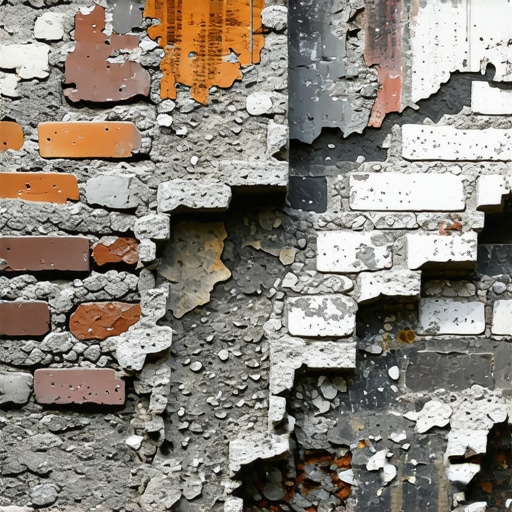
The Death of a Facade: Why Sandblasting is Masonry Murder
I remember the first time I saw Silvio, my mentor and a man who had more lime in his lungs than blood in his veins, walk up to a row of 19th-century tenements in Philly. He didn’t look at the cracks first. He walked up and ran his calloused thumb over the surface of a bright, clean-looking red brick. He shook his head and spat on the ground. He told me, ‘A brick is like a loaf of bread, kid. The kiln gives it a crust. This idiot just cut the crust off with a sandblaster. Now the bread is going to turn to mush.’ He was right. That building, once a proud monument to industrial masonry, was essentially a dead man walking. Within five years, the faces of those bricks were pocking and shedding like a mangy dog. Here is the technical reality of why mechanical abrasion is the single worst thing you can do to historic clay.
“Cleaning methods should be the gentlest means possible. Abrasive cleaning methods, such as sandblasting, should not be used. These methods can cause permanent damage to the masonry units.” – BIA Technical Note 20
The Physics of the Vitrified Skin
When we talk about historic brick, we aren’t talking about the uniform, extruded blocks you see at big-box stores today. These were fired in coal or wood-burning kilns where temperatures fluctuated. This process created a vitrified ‘fire-skin.’ During the firing, the outer layer of the clay chemically fuses into a hard, glass-like barrier. This skin is the brick’s only defense against the elements. It’s what handles the hydrostatic pressure of driving rain and the expansion of the freeze-thaw cycle. When a contractor brings in a compressor and starts blasting grit at 100 PSI, they are physically stripping away that protective shell. What’s left behind is the ‘heart’ of the brick—a soft, porous, under-fired core that was never meant to see the light of day. This core has massive capillary suction. It drinks water like a sponge, leading to catastrophic failure. Unlike modern self-healing concrete foundations that use crystalline tech to bridge gaps, once you kill a brick’s skin, it’s gone for good.
The Efflorescence Nightmare and Chemical Migration
One of the most common reasons people turn to sandblasting is for brick efflorescence removal. They see those white, powdery salts and think they can just grind them off. Big mistake. Efflorescence is a symptom, not the disease. It’s the result of soluble salts being carried to the surface by moisture. When you sandblast, you open the ‘pores’ of the brick, making it ten times more absorbent. Now, every time it rains, the wall sucks in more water, dissolves more salts from the mud (mortar) or the soil, and pushes them to the surface. You end up in a vicious cycle where the wall looks like it’s covered in snow every spring. If you don’t address the moisture source—perhaps through chimney flashing repair or fixing retaining wall capstone replacement issues—the salts will eventually crystallize inside the pores (subflorescence), expanding and blowing the brick to pieces from the inside out.
Gentle Facade Cleaning: The Forensic Approach
If you want to restore the beauty of an old building, you don’t use a hammer when a scalpel is required. Professional facade cleaning involves low-pressure water (under 400 PSI) and specific chemical detergents tailored to the type of carbon or biological growth present. You have to respect the tooth of the material. If you’re dealing with a vertical surface, you start from the bottom and work up to prevent streaking. For horizontal issues, like a brick paver driveway repair, you have to be careful not to wash out the bedding sand or you’ll end up needing a full patio stone realignment. The goal is to remove the dirt without disturbing the patina or the fire-skin.
“The use of abrasive cleaning should be avoided because it can remove the protective outer coating of the brick, exposing the more porous inner core to accelerated weathering.” – ASTM C270 Standards Commentary
Repointing: The Sacrificial Principle
Once the wall is clean, the next step is often repointing. This is where most modern ‘handymen’ fail. They’ll go buy a bag of high-strength Portland cement and butter the joints. This is a death sentence for old brick. Historic mortar was high in lime, making it softer and more breathable than the brick. It was designed to be ‘sacrificial.’ If the wall moves or moisture gets in, the mortar should crack or erode, not the brick. When you use hard modern cement, the brick becomes the weakest link. Under thermal expansion, the hard mortar won’t budge, so the soft brick crushes against it and spalls. You need to match the brickwork pointing styles of the original—whether it’s a flush joint, a struck joint, or a grapevine joint—using a Type O or K mortar that allows the building to breathe. If you see honeycombing in the mortar joints, it’s a sign of poor mixing or ‘burning’ where the water evaporated too fast during the set.
Protection Without Suffocation
After a proper cleaning, people often ask about porous stone sealers. In the forensic masonry world, we are very careful here. If you use a ‘film-forming’ sealer, you’re just trapping moisture inside. The water gets behind the sealer, freezes, and pops the face off the brick in one big sheet. If you must seal, you use a silane-siloxane penetrating water repellent that is 100% vapor permeable. It lets the liquid water stay out but allows water vapor to escape. This is critical for everything from an outdoor kitchen masonry build to a historic facade. You have to let the masonry ‘breathe’ or you are just building a slow-motion explosion. Do it once, do it right, and respect the craftsmanship of the men who laid these units a century ago. Anything less isn’t restoration—it’s vandalism.