
The Tragedy of the Blasted Brownstone
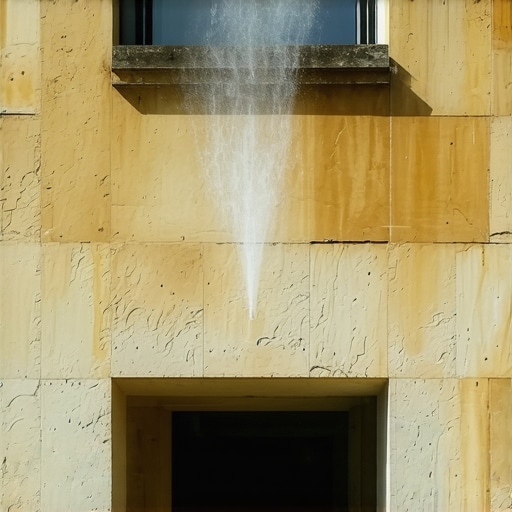
I remember standing on a scaffold in the rain, looking at a 19th-century facade that had been ‘cleaned’ by a handyman with a 4,000-PSI power washer. The man thought he was doing the homeowner a favor by stripping away the soot. Instead, he had literally skinned the building. The protective patina—the ‘quarry sap’ that hardens over a century—was gone. What remained was a weeping, fuzzy mess of exposed quartz grains. My old mentor used to run his thumb over a stone and tell you exactly how many winters it had left. He’d say, ‘The stone talks to you, boy, but if you shout at it with a pressure washer, it just dies.’ That building didn’t need a blast; it needed a surgical intervention. When we talk about structural repointing and cleaning delicate sandstone, we aren’t just washing a wall; we are managing the decay of a geological specimen.
“Water penetration is the single greatest threat to masonry durability, leading to efflorescence, spalling, and the eventual loss of structural integrity.” – BIA Technical Note 7
The Micro-Physics of Sandstone Decay
Sandstone isn’t a solid block of rock; it’s a collection of mineral grains—mostly quartz and feldspar—held together by a binder of silica, calcium carbonate, or iron oxide. It’s a respiratory system. It breathes. When grime, carbon crusts, and biological growth settle on the surface, they don’t just sit there. They trap moisture. This is where the crumbling mortar joint repair becomes critical. If the ‘mud’ in the joints is too hard, the water is forced into the stone itself. In freezing climates, that water expands by 9%, and the internal pressure of that ice will blow the face of a stone right off. This is the ‘spalling’ we see on every neglected city block.
We have to look at the ‘tooth’ of the stone. Sandstone is highly porous, and its capillary action is aggressive. If you apply harsh acids or high-pressure water, you drive those contaminants deeper into the substrate. You aren’t cleaning; you’re injecting poison. The goal of cleaning a facade is to remove the deleterious crust without disturbing the ‘matrix’—the glue that holds those sand grains together. This is why historic brick salvage and stone restoration require a light touch, often using nebulous water mists that run for hours or even days to slowly soften the grip of the soot.
The Restoration Reality: Why ‘Mud’ Matters
You can’t talk about cleaning without talking about tuck pointing services. Often, once the grime is gone, you realize the structural repointing is the only thing keeping the wall standing. In the old days, we used lime putty. It was soft, flexible, and sacrificial. If the building moved, the mortar cracked, not the stone. Modern contractors love to slap Type S Portland cement into these joints. It’s a death sentence. The cement is harder than the sandstone. When the wall expands in the summer heat, the sandstone has nowhere to go, so it crushes itself against the hard cement. We call this ‘rifling.’ We mix our ‘mud’ with a high-performance mortar mixes strategy that prioritizes vapor permeability over sheer compressive strength.
“The architect should ensure that the mortar is never harder than the stone it joins, for a wall that cannot breathe is a wall that will soon return to the earth.” – Vitruvius, De Architectura
When we perform brick column repair or work on a concrete block foundation repair, we are looking at the load-bearing physics. But with a facade, we are looking at the skin. If you’re dealing with a stone coping installation on the roofline, that coping is your first line of defense. If it’s cracked or improperly pitched, water gets behind the stone veneer and starts the slow walk toward structural failure.
The Process: Striking the Joint and Buttering the Stone
Proper cleaning starts with a ‘Hawk’ and a ‘Slicker.’ We don’t just spray and pray. We evaluate the crumbling mortar joint repair needs first. If the joints are open, the cleaning water will saturate the interior wall, causing concrete block foundation repair issues in the basement months later. We use ‘tuckpointing machine services’ only for the heavy lifting of grinding out hard modern mortars, but for the delicate stuff, it’s all hand-work. We ‘butter’ the back of the repair pieces with a lime-rich mix, ensuring 100% coverage to avoid voids where water can pool.
For those looking for a specific aesthetic, we’ve even seen metallic brick colors application used on modern accents, but on historic sandstone, the goal is always invisibility. You want the repair to look like it’s been there since the Great Depression. This involves color-matching the ‘mud’ using natural aggregates and oxides, not just liquid dyes that will fade in three summers. The ‘slicker’ tool is then used to profile the joint, ensuring water sheds away from the stone rather than sitting on a ledge.
The ‘Cold Joint’ and Other Hidden Dangers
One of the biggest mistakes I see during a stone coping installation or facade wash is the creation of a ‘cold joint.’ This happens when new mortar is applied to a dry, thirsty stone. The stone sucks the moisture out of the ‘mud’ before it can properly hydrate. The result? A bond that’s about as strong as wet crackers. We pre-wet the stone—what we call ‘controlling the suction’—to ensure the high-performance mortar mixes can actually cure through the hydration process, forming a crystalline bond with the original masonry.
If you see a contractor bring a ‘tuckpointing machine’ to a delicate 1880s sandstone job without first checking the hardness of the existing mortar, fire them. Those machines are for production work on warehouses, not for surgical restoration. The vibration alone can shake the historic brick salvage loose from the backing. This is a game of patience, not power. When we finish, the facade shouldn’t look ‘new.’ It should look ‘clean and healthy,’ with the natural grain of the stone visible and the tuck pointing services providing a crisp, protective frame for each block.