
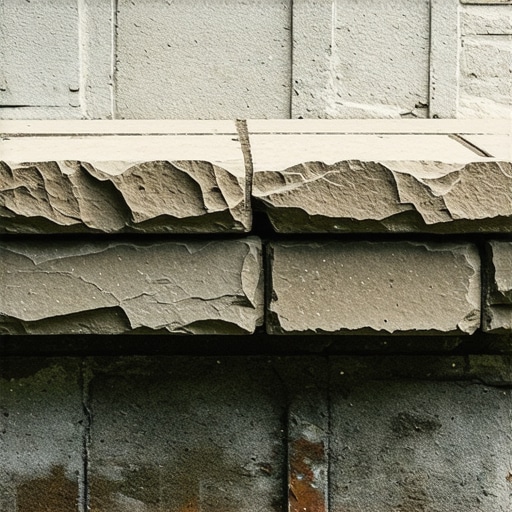
The Anatomy of the Invisible Umbrella
I remember watching my old man on a job site back in the late seventies. He didn’t use a tape measure for the overhang on a limestone cap; he used his thumb. He told me that if the water didn’t have at least two fingers’ width of space to fall clear of the wall, the building was already dead—it just didn’t know it yet. That’s the reality of stone coping installation. Most modern contractors treat it like a decorative lid, a piece of trim that finishes a wall. They’re wrong. In the world of forensic masonry, the coping is the most critical structural component of a freestanding wall or parapet. It is the primary defense against the relentless physics of gravity and liquid migration.
“Water penetration is the single greatest threat to masonry durability. Proper coping design is essential to prevent moisture from entering the core of the wall.” – BIA Technical Note 7
The Physics of the Drip Edge: Gravity vs. Surface Tension
Let’s talk about the ‘tooth’ of the stone and the ‘suction’ of the mud. When you’re performing a masonry damage assessment, the first place you look isn’t the cracks in the middle of the wall; it’s the underside of the stone coping. Water has a nasty habit called surface tension. It likes to cling. Without a properly cut drip edge—a deep groove on the underside of the stone—water will travel horizontally across the bottom of the cap and then soak directly into the face of your brickwork. In northern climates, this is a death sentence. Water expands 9% when it freezes. If that water is trapped behind the face of a hard-fired brick because the coping failed to shed it, the face of the brick will ‘spall’ or pop off like a scab. I’ve seen thousand-dollar soldier courses turned into red dust in three winters because of a missing quarter-inch groove.
The Restoration Reality: Why Your Mortar Is Killing Your Brick
When I’m called in for mortar repointing services on a historic property, I usually see the same crime: some ‘handyman special’ used Type S Portland cement on a wall built with 1920s lime-based brick. It’s a fundamental misunderstanding of material science. Old bricks are soft; they need to breathe. The mortar must be the ‘sacrificial’ element. It needs to be softer than the brick so that when the wall moves—and it will move—the mortar cracks, not the masonry. If you butter your bricks with a hard, brittle mix, the brick becomes the weakest link. During commercial masonry maintenance, we specify Type N or even Type O lime putties to ensure the ‘mud’ has enough flexibility to handle the thermal expansion of a 100-foot run of wall. If you don’t respect the ‘breathability’ of the assembly, you’re just trapping moisture that will eventually lead to a failing retaining wall repair that costs five times the original build.
The Hidden Danger: Structural Brick Ties and Corrosion
Sometimes the coping looks fine, but the wall is bowing. That’s when we pull out the scope for a structural brick ties replacement investigation. In many older buildings, the ties connecting the brick veneer to the structural backup are made of untreated carbon steel. If the stone coping is cracked or the joints aren’t sealed with a high-quality porous stone sealer, water enters the cavity. That steel doesn’t just rust; it expands as it oxidizes. This ‘rust jacking’ can actually lift entire courses of brick, creating horizontal cracks that signal a total structural failure. We see this often in foundation transitions where the hydrostatic pressure from the soil meets the moisture coming down from the top. It’s a pincer movement on your building’s integrity.
“The use of compatible materials in restoration is not a suggestion; it is a requirement for the survival of the structure.” – ASTM C270 Standards
Hardscape Truths: From Coping to Driveways
The same principles apply to the ground. A brick paver driveway repair isn’t just about making things level again; it’s about the base. Most guys throw down four inches of gravel and call it a day. But if you don’t account for the compaction physics and the drainage, those pavers will be ‘wavy’ within two seasons. Whether it’s a metallic masonry finish on a modern commercial facade or a simple stone cap on a garden wall, you have to manage the ‘run-off.’ You can’t fight water; you can only guide it. If you’re seeing white crusty salt (efflorescence) on your walls, that’s the building crying. It’s the mineral deposits being pulled out by moisture migration. It means your ‘umbrella’ is leaking.
The Fix: Do It Once, or Do It Twice
If you’re looking at a failing retaining wall repair, don’t just patch the cracks. Check the coping. Ensure the joints are raked out to at least twice the width of the joint and refilled with high-bond ‘mud’ that matches the stone’s expansion coefficient. Use a slicker tool to compress the joint and create a ‘concave’ profile that sheds water. And for the love of the craft, don’t skip the sealer. A high-quality silane-siloxane sealer won’t change the color, but it will stop the ‘suction’ of the stone. Masonry is meant to last centuries, not decades. But it only reaches that age if you respect the physics of the pour and the power of the drip. Stop treating your masonry like it’s a ‘lick-and-stick’ project and start treating it like the forensic science it is.