
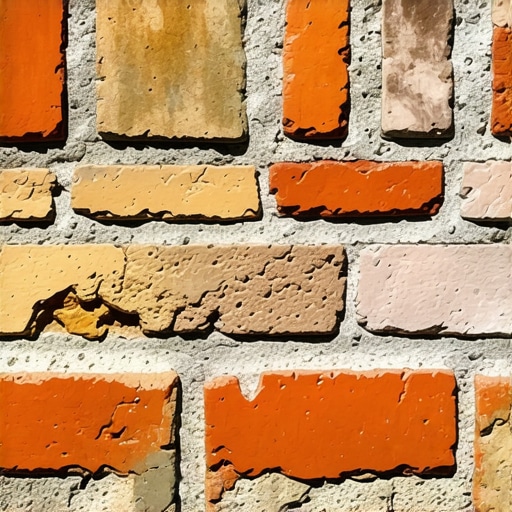
My first mentor, a man who had more limestone dust in his lungs than oxygen, used to tell me that a brick wall is just a giant sponge held together by chemistry. He would take his hawk and a trowel full of mud, strike a joint, and then throw a bucket of water at it. If the water didn’t bead and roll, he’d make us grind the whole course out and start over. He knew what modern contractors have forgotten: the shape of the mortar joint, the pointing style, is the only thing standing between a dry home and a structural catastrophe. When we talk about brick wall restoration, we aren’t just talking about making things look pretty. We are talking about hydraulic physics and the relentless nature of water penetration.
“Mortar joints should be finished to provide a surface that is dense and sheds water. The most effective joints for this purpose are the concave and V-shaped joints.” – BIA Technical Note 7B
The Physics of the Strike: Why Shape Matters
In the world of forensic masonry, we see the same failures over and over. A homeowner calls me because their brick veneer installation is peeling away or their interior plaster is bubbling. Nine times out of ten, some “handyman” used a raked joint because they liked the shadow line. A raked joint creates a literal shelf for water to sit on. When water sits on that ledge, it doesn’t just evaporate; it uses capillary suction to pull itself deep into the core of the wall. In a freeze-thaw climate like the Northeast, that trapped moisture expands by 9% when it hits 32 degrees Fahrenheit. That expansion is what causes spalling—where the face of the brick literally explodes off the wall.
To prevent this, we look at high-performance mortar mixes and the geometry of the strike. The Concave Joint is the undisputed heavyweight champion of durability. By using a curved slicker to compress the mud into the joint, you are doing two things: you are creating a shape that naturally sheds water downward and outward, and you are densifying the surface of the mortar. That compaction is critical. It closes up the micro-pores that water loves to exploit. The V-joint follows closely behind, offering a sharp profile that breaks the surface tension of water droplets, forcing them to shed before they can find a way in.
The Chemistry of the Mud: Beyond Portland Cement
Modern commercial masonry facade maintenance often relies on hard Portland-based mortars, but for brick wall restoration, especially on pre-war buildings, that’s a death sentence. Old bricks are soft. They need to breathe. If you butter those bricks with a mortar that is harder than the brick itself, the brick will be the first thing to crack when the building moves. This is why sustainable tuckpointing mortars, often based on Natural Hydraulic Lime (NHL), are making a massive comeback. These mortars are “sacrificial.” They allow moisture to migrate out through the joint rather than the brick, and they possess a modulus of elasticity that accommodates the natural heaving of the earth.
“The hardness of the mortar should always be less than that of the masonry units to ensure the mortar acts as the sacrificial element in the assembly.” – ASTM C270 Standards
We are also seeing a shift toward AI masonry assessment tools. I’ve started using high-resolution drone thermography to spot heat signatures that indicate moisture trapped behind the facade. This isn’t just gadgetry; it’s about catching a cold joint before it leads to a total failure. If the AI shows a thermal bridge, we know the foundation waterproofing has likely failed or the chimney flue liner installation was botched, allowing condensation to rot the masonry from the inside out.
The Process: Striking for Longevity
When we are performing a high-end brick wall restoration, the process is surgical. We don’t just slap mud in a hole. We grind out the old, failing joints to a depth of at least 3/4 of an inch, ensuring we have a clean “tooth” for the new mortar to grab. We then pre-wet the masonry—what we call “controlling the suction.” If you put wet mud into a dry brick, the brick sucks the moisture out of the mortar instantly, causing it to “flash set.” This results in a brittle, crumbly joint that will fail within a season. We apply the mortar in lifts, buttering the back of the joint first, then striking the finish with a slicker to ensure that vital compaction.
Modern Innovations: 3D Printing and Aesthetics
While I’m a stickler for the old ways, I can’t ignore where the industry is heading. 3D printed masonry repairs are becoming a reality for complex, ornamental pieces that would cost a fortune to hand-carve. We are also seeing metallic brick colors application used in modern architectural designs, which requires a very specific type of non-staining, high-performance mortar to prevent the metallic salts from leaching and staining the facade. Whether you are dealing with a historic chimney or a new-build veneer, the principle remains the same: manage the water, or the water will manage you. Don’t let a slick-talking contractor sell you on a “flush” or “struck” joint because it’s faster. If you want the wall to stand for a century, you want a concave strike, a proper lime-mix, and a mason who knows the difference between a job done and a job done right.