
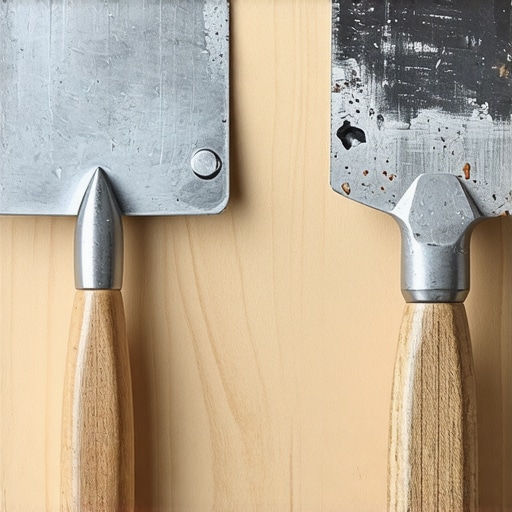
The Anatomy of Steel: Why Your Tool Choice is a Forensic Decision
Most folks walking onto a job site see a trowel and think it is just a piece of metal on a stick. They are wrong. To a third-generation mason, that piece of high-carbon steel is a diagnostic instrument, a surgical scalpel, and a heavy-duty shovel all rolled into one. If you are standing in front of a crumbling 19th-century facade, the difference between a pointing trowel and a margin trowel isn’t just about ergonomics; it is about whether that building will stand for another century or shed its skin like a diseased snake within five winters. In the world of historic masonry preservation, your tool determines the ‘tooth’ you leave in the joint and the density of the mud you can pack into the void.
My old mentor, a man who had more lime in his lungs than blood in his veins, used to take a new trowel and drag it across a piece of dry granite. If the steel didn’t ‘sing’ with a high-pitched, metallic ring, he would tell me the tempering was off. ‘A soft trowel makes for a soft joint,’ he’d growl. He knew that the vibration of the steel influenced how the mortar—the mud—settled against the brick. This wasn’t superstition; it was physics. The way the steel releases the mortar dictates the suction and the bond strength, especially when performing historic tuckpointing where the margin for error is measured in millimeters.
The Pointing Trowel: The Scalpel of the Facade
The pointing trowel, with its characteristic diamond or elongated triangular blade, is the undisputed king of precision. When we are talking about historic masonry preservation, we are usually dealing with narrow joints, sometimes as thin as 1/8th of an inch. A pointing trowel allows you to place a small amount of mortar—just a butter—on the tip and guide it deep into the joint without fouling the face of the brick. This is critical because facade cleaning after a sloppy job often involves harsh chemicals or abrasive techniques that can strip the protective fire-skin off an old brick, leading to rapid decay.
“Water penetration is the single greatest threat to masonry durability. The precision of the mortar joint profile is the primary defense against this intrusion.” – BIA Technical Note 7
In the North, where the freeze-thaw cycle is a relentless predator, the pointing trowel is your primary weapon. When water enters a poorly struck joint, it expands by roughly 9% upon freezing. This internal pressure is enough to blow the face off a hard-fired clay brick. By using a pointing trowel to achieve a proper ‘weathered’ or ‘v-joint’ finish, you are engineering a shed for that water. You are essentially directing the physics of the wall to work for you rather than against you.
The Margin Trowel: The Workhorse of the Mix
Then we have the margin trowel. It’s a rectangular, flat-nosed beast. If the pointing trowel is a scalpel, the margin trowel is the utility knife. It is designed for emergency masonry repair and for reaching into the tight corners of a hawk to scrape up every last bit of mud. When I’m performing spalled concrete steps repair, I reach for the margin trowel. Its flat edge allows me to create clean, 90-degree internal corners that a rounded trowel simply cannot touch. It is also the tool of choice for cleaning out old, failing mortar from a joint before you begin the repointing process. It has the heft to act as a pry bar in a pinch, though my grandfather would have took a slicker to my knuckles if he saw me using it that way.
The margin trowel is also indispensable when calculating concrete pump masonry mixes. You use it to check the ‘slump’ of the mud in the bucket. If the mix is too wet, it won’t hold the weight of the course above it; if it is too dry, it won’t achieve the necessary chemical bond with the substrate. In retaining wall block replacement, where the blocks are often heavy and the tolerances are tight, the margin trowel helps you butter the vertical joints (the head joints) with a consistency that prevents honeycombing—those nasty air pockets that eventually fill with water and cause the wall to heave.
The Forensic Reality of Spalling and Failure
Why do we care so much about these tools? Because of the physics of failure. Take spalled concrete steps repair for example. Most handymen will just slap some ‘patch’ over the top. But a forensic inspector looks at the cold joint created between the old and new material. Without using a margin trowel to properly undercut the repair area, providing a mechanical key for the new material, the repair is doomed. The same applies to chimney flashing repair. If you don’t use the right trowel to tuck the mortar under the lead or copper flashing, you’re just creating a shelf for water to sit on.
In chimney sweep and repair, we often find that the chimney flashing has failed because the mortar used was too hard—a high-Portland mix on an old lime-based chimney. The chimney expands when it gets hot, the hard mortar doesn’t budge, and something has to break. Usually, it’s the brick. This is why we use specific masonry birdsmouth cuts to ensure structural integrity around openings, and we always match the mortar’s compressive strength to the brick’s. The mortar must be the ‘sacrificial’ element. It’s easier to replace mortar than it is to replace a structural brick wall.
“Mortar should always be weaker than the masonry units it binds, acting as a flexible cushion that accommodates thermal expansion and structural movement.” – ASTM C270 Standard Specification for Mortar
The Physics of the ‘Mud’ and the Heat
In hotter climates, the enemy isn’t ice; it’s the ‘flash set.’ When the sun is beating down on a soldier course, the bricks can get hot enough to cook an egg. If you try to apply mortar to a hot, dry brick, the brick will suck the moisture out of the mud instantly. This ‘burns’ the mortar, preventing the hydration of the cement or lime. The result? A joint that looks fine but has the structural integrity of a stale cracker. A master mason knows to ‘condition’ the wall, wetting it down to satisfy the brick’s thirst before the steel ever touches it. Whether you’re doing historic tuckpointing or laying a new retaining wall block replacement, moisture management is the difference between a legacy and a lawsuit.
The Tool as a Diagnostic Device
When I am called in for an emergency masonry repair, my trowel is the first thing I use to ‘sound’ the wall. Tapping the brickwork with the handle of a margin trowel tells me everything I need to know. A dull thud means the internal core is saturated or the bond has failed. A sharp ‘clink’ means the wall is still tight. This is the forensic side of the craft. We are looking for the honeycombing, the cold joints, and the evidence of past ‘handyman’ sins.