
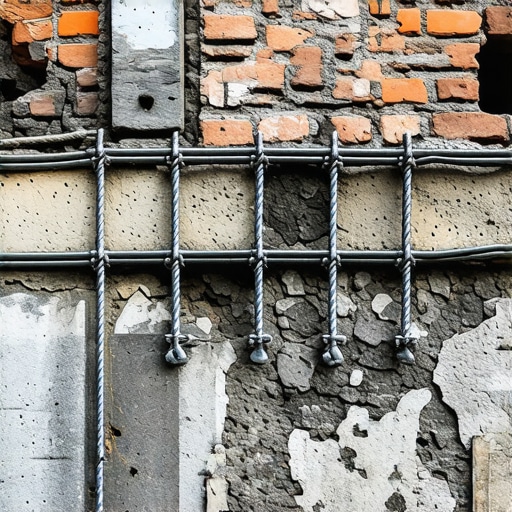
The homeowner thought it was just a hairline crack. But when I put my scope inside that 1920s textile mill’s facade, I saw the structural steel was rusted to dust. That’s the reality of forensic masonry. You look at a wall and see a surface; I look at it and see a war zone where physics, chemistry, and time are constantly trying to tear the building down. When we talk about reinforcing older brick infill panels, we aren’t just talking about aesthetic brick wall restoration. We are talking about the life-support system of a structure that was likely built when lime was the king of binders and ‘breathability’ wasn’t a buzzword—it was a survival mechanism.
The Anatomy of Failure: Why Infill Panels Scream
In the early 20th century, we transitioned from load-bearing masonry to steel and concrete frames. The brick became an ‘infill’—essentially a heavy curtain. But these panels are stubborn. They don’t just sit there. They expand. They contract. And most importantly, they trap moisture if you don’t treat them right. The most common failure I see in commercial parapet wall repair or facade restoration is ‘rust jacking.’ When water gets behind that brick and hits the steel shelf angle or the column, the metal oxidizes. Iron oxide occupies up to ten times the volume of the original steel. That expansion exerts thousands of pounds of pressure, literally blowing the face off the brick. This is where high-performance mortar mixes often fail if they are too hard; they don’t give, so the brick breaks instead.
“Water penetration is the single greatest threat to masonry durability.” – BIA Technical Note 7
When I’m performing a forensic structural inspection, I’m looking for the ‘tooth’ of the original mortar. If a previous contractor used modern Portland-heavy mud on a soft 19th-century brick, the brick is going to lose every time. The mortar must be the sacrificial lamb. It needs to be softer and more permeable than the masonry units themselves. This brings us to the science of historic masonry preservation.
The Physics of Mortar Matching Services
You can’t just grab a bag of Type S from a big-box store and call it a day. That stuff is a death sentence for old clay. We use mortar matching services that utilize petrographic analysis. We need to know the ratio of sand, lime, and cement. If you’re working on a building pre-1940, you’re likely looking at a high-lime mix. Lime doesn’t just ‘set’; it carbonates. It takes in CO2 from the air over decades, slowly turning back into stone. This creates a pore structure that allows water to move out of the wall. If you ‘butter’ a joint with a modern, dense mix, you create a dam. Water gets trapped, freezes, and you get spalling. In northern climates, where the freeze-thaw cycle is a seasonal hammer, that 9% expansion of water is a wrecking ball.
Advanced Reinforcement: Helical Ties and Robotic Masonry Repair
When a panel has detached from the backup, we don’t always have to tear it down. We use stainless steel helical ties. We drill a pilot hole, drive the tie through the brick and into the substrate—whether that’s concrete, wood, or another wythe of brick—and the fins of the tie ‘bite’ into the material. It’s a mechanical connection that allows for some thermal movement. Recently, I’ve seen robotic masonry repair systems being used to navigate tight cavities, but a robot is only as good as the mason who programmed it. You still need that tactile sense—the ‘ring’ of the brick—to know if the substrate is sound enough to hold a tie. For buildings with severe settling, we look toward foundation underpinning. If the feet of the building are moving, the face will never stay still.
“The use of mortar with a high compressive strength in a wall of low-strength units can lead to the destruction of the units themselves.” – ASTM C270 Standards
The ‘Lick-and-Stick’ Scourge: Stone Veneer Over Brick
I’ve walked onto too many jobs where a ‘handyman’ suggested stone veneer over brick as a quick fix for a tired facade. It’s a disaster waiting to happen. You take a breathing brick wall and slap a non-permeable layer of lick-and-stick stone on top with a thick bed of polymer-modified mortar. You’ve just built a moisture sandwich. The original brick will rot underneath, and the ‘veneer’ will eventually peel off in one giant sheet. True stone facade restoration requires stripping back the failures, addressing the structural cracks, and using sustainable masonry materials that respect the original vapor drive of the building.
The Restoration Process: A Master’s Workflow
First, we grind out the old joints to a depth of at least 1 inch—never use a circular saw if you can help it; use a vibrating blade to avoid nicking the ‘skin’ of the brick. Next, we wash the joints. You need that ‘suction’ to be just right. If the brick is too dry, it sucks the water out of your mud before it can hydrate, leaving you with a ‘burnt’ joint that crumbles. We then ‘point’ the joints in lifts, packing the mud in tightly with a slicker. No ‘shmearing’ the face. We keep the joints damp for days—’damp curing’—to ensure the chemical bond is solid. This is how you achieve a repair that lasts 100 years instead of 5.
Closing the Case
Whether it’s commercial parapet wall repair or intricate brick wall restoration, the goal is the same: work with the physics of the building, not against them. Use the right mud, respect the expansion joints, and never trust a hairline crack. Masonry is a living thing. Treat it with a bit of respect, or it’ll bury you in rubble. Do it once, or do it twice—the choice is yours, but the mortar never lies.