
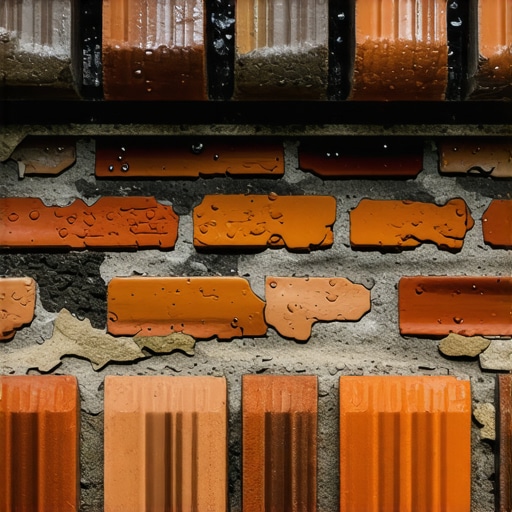
The Exposed Vulnerability: Why Parapets Fail First
In the world of masonry forensics, the parapet wall is the most abused piece of real estate on any building. It sits above the roofline, naked to the elements, taking a beating from wind, rain, and snow on three sides. While the main walls of a structure are protected by the building’s thermal envelope and often an overhang or gutter, the parapet is an island of masonry that must endure extreme temperature swings and constant moisture cycles. I have spent thirty years climbing scaffolds to look at these structures, and I can tell you that a failing parapet is never a single-issue problem; it is a systemic failure of physics and material selection.
The Lesson of the Thirsty Brick
My old man, a master who could lay a thousand bricks before lunch without breaking a sweat, used to make me carry a bucket of water and a brush. He wouldn’t let me lay a single course until I tested the ‘suction’ of the clay. He would splash a few drops on a brick; if the water vanished instantly, he’d say that brick was ‘screaming for a drink.’ If we didn’t soak those bricks before applying the mud, they would suck the moisture right out of the mortar before the bond could even begin to form. This leads to what we call a ‘flash set,’ where the mortar looks hard but has zero structural integrity. I saw the result of ignoring this rule last year on a multi-million dollar commercial tuckpointing job. The previous contractor had ‘buttered’ dry bricks in ninety-degree heat. Two years later, you could pull the mortar out with your bare fingers. It had no ‘tooth,’ no grip. It was just dried-out dust sitting in the joints.
The Physics of Capillary Action and Freeze-Thaw Destruction
To understand water infiltration, you have to look at the microscopic level. Brick is not a solid mass; it is a network of tiny capillaries. When rain hits a parapet, the brick acts like a sponge, pulling water deep into its core. In northern climates, this is where the real nightmare begins. As that water freezes, it expands by roughly 9%. This expansion creates internal pressure that can reach thousands of pounds per square inch. If the mortar is too hard—specifically if someone used a high-Portland cement mix on historic brickwork—the pressure has nowhere to go. Instead of the mortar compressing, the face of the brick literally explodes. We call this spalling. When you see those red flakes of clay on the sidewalk, you’re looking at a building that is slowly digesting itself because someone didn’t understand the sacrificial principle of mortar.
“Water penetration is the single greatest threat to masonry durability.” – BIA Technical Note 7
In modern commercial tuckpointing, we often see failures where the original lime-based mortar was replaced with a Type S mortar that is far too rigid. The mortar must always be softer than the brick. This allows the mortar to act as a relief valve for the stresses of thermal expansion and moisture movement. If you get this wrong, you aren’t just doing a repair; you are setting a timer for the total destruction of the facade. This is why historic brickwork repointing requires a forensic analysis of the original materials to match the compressive strength and vapor permeability of the 100-year-old ‘mud.’
The Modern Challenge: Green Roofing Masonry Integration
One of the most complex issues I deal with today is green roofing masonry integration. Everyone wants a garden on their roof, but they don’t realize that a green roof turns the base of the parapet into a permanent reservoir of moisture. If the flashing isn’t handled with surgical precision, that moisture migrates into the masonry through a process called hydrostatic pressure. You can’t just slap some tar on the back of the brick and call it a day. You need a BIM masonry projects approach to map out how that water will travel. Without proper drainage mats and weep holes at the base of the parapet, you are effectively drowning the brick. I’ve seen failing retaining wall repair techniques applied to parapets because the lateral pressure from wet soil and vegetation began to push the brick courses out of alignment. If you’re going green, your masonry needs to be bulletproof.
The Forensic Scene: Beyond the Hairline Crack
The homeowner or building manager usually calls me when they see a cracked brick wall repair is needed, thinking a little bit of caulk will fix it. I remember one job where the parapet had a slight lean, maybe half an inch. The owner thought it was just ‘settling.’ But when I got my hawk and slicker out and started raking back the joints, I found that the steel wall ties were gone. They hadn’t just rusted; they had vanished into a streak of orange dust. The only thing holding that wall up was gravity and hope. When water gets behind the veneer, it creates an alkaline environment that eats steel for breakfast. This is why re-pointing services must be more than just cosmetic. We have to ensure the structural ties are intact, or the entire soldier course could end up on the sidewalk.
“The selection of mortar should be based on the strength of the masonry units to ensure the mortar remains the sacrificial element.” – ASTM C270
The Process of True Restoration
Fixing a parapet isn’t about speed; it’s about the ‘strike.’ When we perform re-pointing services, we grind out the old, failing mortar to a depth of at least twice the width of the joint. We don’t use high-speed wheels that chew up the brick edges; we use precision tools to keep the ‘tooth’ of the masonry clean. Then comes the masonry cleaning. You have to get the dust out, or the new mud won’t bond. I use a low-pressure wash to clear the pores without driving water three inches into the wall. When we ‘butter’ the joints, we do it in lifts. We don’t fill the whole three-quarters of an inch at once. We do it in layers, letting each one reach a ‘thumb-print hard’ stage before adding the next. This minimizes shrinkage cracks. Finally, we use a jointers tool, or ‘slicker,’ to compress the mortar. This compaction is what creates the weather-shedding surface. If the joint is ‘shiners’ or ‘ragged,’ water will find a way in.
The Hardscape and Veneer Connection
We often see the same moisture issues when people try stone veneer over brick on parapets. It’s a disaster waiting to happen. The veneer traps moisture between the stone and the original brick, creating a ‘cold joint’ where ice can form. It’s the same logic we use in patio stone realignment; if the base isn’t permeable and the drainage isn’t clear, the surface will heave. For failing retaining wall repair, we look for ‘honeycombing’ in the concrete or mortar, which indicates that the mix was too dry or wasn’t vibrated properly. The same applies to the core of a parapet wall. If the internal wythes of brick aren’t fully bedded in mud, you have voids where water can collect and cause chaos.
Final Forensic Conclusion: Do It Once
In this trade, you either do it right or you do it twice. A ‘handyman special’ with a bucket of premixed mortar from a big-box store will only accelerate the decay. A forensic approach to commercial tuckpointing and parapet repair respects the original chemistry of the building. It understands that a wall needs to breathe, that mortar is sacrificial, and that water is a patient enemy that never stops trying to get inside. When you look at your parapet and see efflorescence—that white powdery salt—don’t just wash it off. That is the building’s way of screaming that water is moving through the core and pulling minerals out. Listen to the building. Invest in the craft. Stop the water before the water stops the building dead in its tracks.