The Red Snow of Failure: A Forensic Look at Spalling
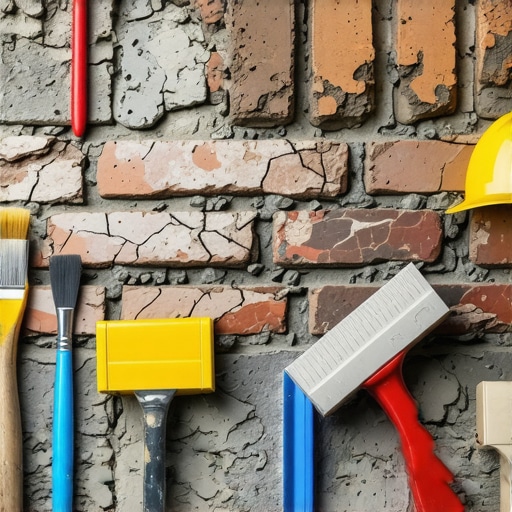
You walk out to your driveway in March and see it: a fine, terracotta-colored dust coating the concrete. Some call it ‘brick rot,’ but in the trade, we call it a death sentence for your facade if you don’t act. I remember my old mentor, Silas, a man who had more lime in his lungs than blood in his veins. He used to drag the edge of a steel trowel across a pallet of new arrivals; if the brick didn’t ‘sing’ with a high-pitched metallic ring, he’d send the whole truck back to the yard. He knew that a ‘punky’ brick, one fired too low or with too much sand, was just a sponge waiting to commit suicide during the first hard freeze. That ‘red snow’ on your walkway is the face of your home literally exploding under the pressure of physics. This is not a cosmetic issue. It is a structural warning that your masonry damage assessment is long overdue.
“Water penetration is the single greatest threat to masonry durability. When water within the masonry units freezes, the resulting expansion can cause the face of the brick to separate or spall.” – BIA Technical Note 7
The Physics of the Pop: Why Bricks Shed Their Skin
To understand how to stop the powder, you have to understand the micro-porosity of clay. A brick is not a solid block; it is a network of microscopic capillaries. In a healthy wall, moisture enters these pores and leaves as vapor. But when you apply those cheap, film-forming porous stone sealers from a big-box store, you trap the liquid behind a plastic curtain. When the temperature drops, that trapped water undergoes a phase change, expanding by 9% in volume. It exerts thousands of pounds of pressure per square inch against the internal ‘bridge’ of the clay. Since the hard-fired outer ‘skin’ of the brick is less flexible than the softer core, the face simply pops off. We call this spalling. If your home has brick quoin repair needs at the corners, the problem is compounded by the structural load these decorative elements often carry. A spalled quoin isn’t just ugly; it’s a weakening of the building’s ‘shoulder.’
Tuckpointing Weatherproofing: The Sacrificial Lamb Principle
The biggest mistake I see in stone facade restoration is the use of modern Portland cement on historic units. Before 1940, bricks were often fired at lower temperatures, making them softer and more breathable. If you slap a Type S mortar—which is harder than a funeral home heart—into the joints of a soft-brick wall, you have created a mechanical mismatch. The mortar must be the ‘sacrificial lamb.’ It should be softer than the brick so that when the wall shifts or expands, the mortar cracks, not the brick. When we perform tuckpointing weatherproofing, we ‘butter’ the joints with high-lime ‘mud’ that allows for autogenous healing—the ability of the mortar to actually reseal hairline cracks over time through carbonation. Using the wrong mud is like putting a steel bolt through a piece of balsa wood; something is going to break, and it won’t be the steel.
“Mortar should be weaker than the masonry units so that any cracks will occur in the mortar joints, where they can be easily repaired, rather than in the units.” – ASTM C270 Standard Specification
Beyond the Face: Retaining Walls and Foundation Physics
If you are looking at a failing retaining wall repair, the enemy isn’t just the freeze-thaw; it’s hydrostatic pressure. I’ve seen 12-inch thick stone walls bowed out like a sail because the weep holes were clogged with silt. The soil behind that wall acts like a giant battery, holding moisture that pushes with relentless force against the masonry. This is where masonry joint sand repair and proper drainage systems become the difference between a wall that stands for a century and one that ends up as a pile of rubble. For concrete flatwork services, the logic is the same. Without air-entrainment—microscopic bubbles cooked into the concrete to give the ice room to expand—your driveway will flake away just like a spalled brick. We use a slicker to finish the joints, but the real work is happening in the sub-base compaction and the chemistry of the mix.
The Restoration Checklist: Reclaiming Your Masonry
When the damage goes deep, you’re looking at more than just a surface fix. Sometimes the structural brick ties replacement is the only way to save a veneer that has detached from the framing. If the ties have rusted to dust, the brick is literally a ‘floating’ wall of heavy units held up by nothing but gravity and luck. For stone veneer repair, we often have to strip back the ‘lick-and-stick’ garbage and install a proper drainage plane. Don’t let a handyman ‘mud’ over your problems with a hawk and trowel. A true forensic repair requires matching the original unit’s absorption rate and the mortar’s compressive strength. Do it once, or do it twice—the choice usually comes down to whether you respect the physics of the stone or try to fight it.