
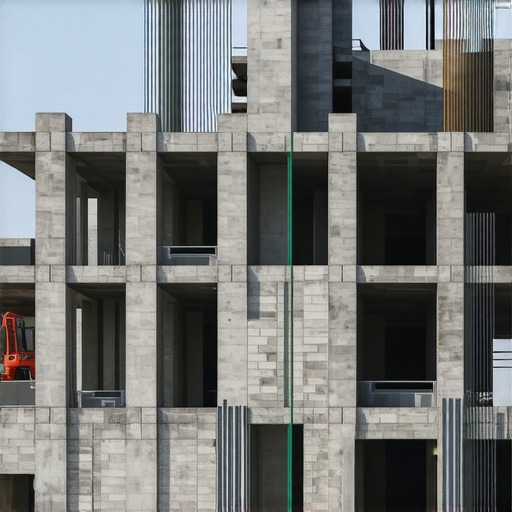
The Price of the ‘Guesstimate’ in Modern Masonry
I once walked onto a commercial job site—a massive distribution center—where the masonry contractor had ordered 40,000 extra bricks ‘just in case’ for a complex soldier course detail. That wasn’t just a waste of clay; it was a $30,000 logistical nightmare that sat in the mud, soaking up ground salts and developing brick efflorescence before the first pallet was even broken open. This is the rot of the modern industry: the ‘extra 10%’ rule that hides poor planning and kills profit margins. Building Information Modeling (BIM) isn’t some tech-bro fantasy; it is the digital evolution of the master mason’s blueprint, designed to eliminate the ‘slop’ from tuckpointing cost estimation and structural material procurement.
“Masonry units and mortar are not inherently waterproof; rather, the performance of a masonry wall depends on the management of moisture within the system.” – BIA Technical Note 7
The Forensic Reality of Material Waste
When I inspect a failing commercial structure, I’m not just looking for cracks; I’m looking for the fingerprints of bad math. In modular masonry construction, the precision required is absolute. If your layout is off by even a fraction of an inch because you didn’t account for the ‘tooth’ of the mortar or the suction of a dry-pressed brick, that error compounds over a 200-foot wall. BIM allows us to simulate the exact coursing, ensuring that every advanced masonry adhesive and every bag of ‘mud’ is accounted for before the first trowel is even buttered. This is especially critical during commercial parapet wall repair. These walls are the most exposed elements of a building, facing wind-driven rain and extreme thermal shifts. Without digital modeling to predict the expansion and contraction, contractors often over-order flashing and caps, only to find the fit is ‘off’ due to field conditions they could have predicted.
Micro-Zooming: The Physics of the Freeze-Thaw Cycle
In northern climates, the enemy is the 9% expansion of water as it turns to ice. When we deal with masonry water damage repair, we are fighting a battle at the molecular level. BIM modeling helps us map out the thermal bridges and potential points of failure in a wall’s ‘breathability.’ If you use a high-strength Portland cement on an old, soft-fired brick, you’ve created a trap. The hard mortar won’t give, so the brick face pops off—spalling. We use modeling to determine the exact volume of breathable lime-based mortars needed for tuckpointing, ensuring the sacrificial principle of the joint is maintained. We aren’t just ‘filling holes’; we are engineering a pressure-relief system for the building’s skin.
The Hidden Depths: Foundation Underpinning and Crack Repair
Nothing turns a stomach like a stair-step crack in a load-bearing commercial wall. Most handymen see a crack and reach for a tube of caulk. That’s a ‘band-aid’ on a gunshot wound. Foundation crack repair requires understanding hydrostatic pressure—the weight of water-saturated soil pushing against the masonry. BIM allows us to model the soil-structure interaction, which is vital when performing foundation underpinning. We can calculate the exact load-bearing requirements for helical piers or push piers. This prevents the ‘over-ordering’ of steel and concrete, focusing the budget on where the physics demands it most. When the steel is rusted to dust inside a wall, the modeling shows us the failure points long before we have to open the cavity with a masonry saw.
“Differential movement between the masonry veneer and the structural frame must be accommodated to prevent distress.” – ASTM C1194
Advanced Systems: Chimneys and Heat Shields
Even at the roofline, the logic of precision holds. Chimney cap replacement and chimney heat shield installation are often treated as afterthoughts. But in a commercial setting, a poorly sized cap leads to internal flue degradation. We use BIM to ensure the ‘drip edge’ is mathematically sufficient to shed water away from the masonry facade, preventing the saturation that leads to brick efflorescence removal needs later on. The hawk and the slicker are only as good as the data guiding them. By integrating advanced masonry adhesives into the digital model, we can ensure that high-heat areas are bonded with materials that share the same coefficient of thermal expansion as the brick itself, preventing the ‘cold joint’ failures that plague lower-bid jobs.
The Verdict: Precision Over Pallets
The goal is to do it once. Whether it’s modular masonry construction or a complex restoration of a 50-year-old facade, the ‘extra pallets’ are a sign of fear—fear of the unknown. BIM removes that fear. It allows us to see the honeycombing in the grout before it’s poured and to estimate labor with a precision that ‘guesstimates’ can’t touch. We aren’t just laying bricks; we are managing a structural ecosystem. In the world of commercial masonry, if you aren’t using data to drive your mud, you’re just throwing money at the wall and hoping it sticks. Stop the waste. Respect the craft. Use the tech.