
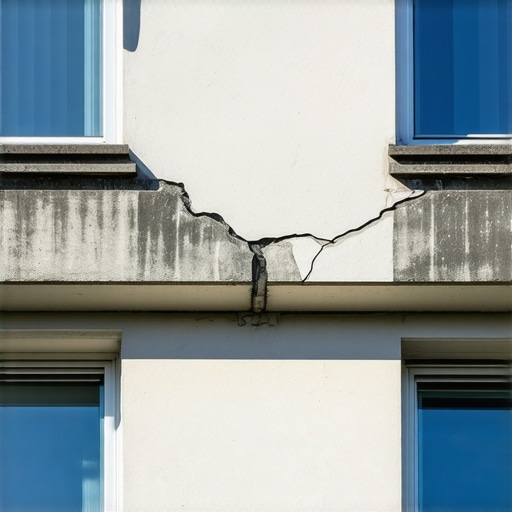
The Forensic Scene: A Whisper in the Brickwork
The homeowner stood on their driveway, pointing at a hairline fracture that traced a jagged path through the mortar joints above their living room window. They thought it was a minor settling issue, perhaps something a quick smear of caulk could fix. But when I pulled my borescope from the truck and slid the fiber-optic lens into a small gap in the head joint, the reality was far more sinister. The structural steel lintel—the hidden horizontal beam holding up thousands of pounds of masonry—was no longer a solid piece of iron. It was a bloated, flaky mass of orange scales. The steel was rusting to dust, and as it oxidized, it was expanding with a slow, silent violence that was literally tearing the face of the house apart. This wasn’t just a crack; it was the onset of a structural collapse.
“Water penetration is the single greatest threat to masonry durability. When steel lintels are not properly protected by flashing and weeps, the resulting corrosion can lead to significant structural displacement.” – BIA Technical Note 31B
The Anatomy of the Window Lintel
To understand why these failures occur, you have to understand the physics of the opening. In a standard brick veneer wall, you have a soldier course or a running bond pattern suspended over a void. Gravity wants that brick to fall. The lintel is typically an L-shaped angle iron that sits on the masonry ‘jambs’ on either side. In a perfect world, this steel is protected from the elements. But in the real world of masonry repair services, we see that most builders forgot the golden rule: water always gets in. The goal is to give it a way out. Without proper flashing and weep holes, moisture sits on that steel shelf, initiating a chemical reaction that changes the very molecular structure of the metal.
Micro-Zooming: The Physics of Oxide Jacking
When we talk about lintel failure, we are talking about ‘oxide jacking.’ This is a process rooted in the chemistry of corrosion. When iron atoms are exposed to oxygen and water, they undergo an electrochemical reaction to form hydrated iron(III) oxide. The kicker? Rust occupies significantly more volume than the original steel—sometimes up to ten times the thickness. As that steel beam ‘grows’ within the tight confines of the masonry bed, it exerts an upward pressure that exceeds the tensile strength of the brick and the compressive strength of the mud. We are talking about pressures reaching upwards of 10,000 PSI. This is why you see the ‘stair-step’ cracks. The masonry is literally being lifted and pushed out of its original plane. If you ignore this, the next stage is retaining wall block replacement logic applied to your house—total removal and reconstruction.
The Early Warning Signs: What to Look For
Before the bricks start falling onto your brick patio restoration project, the house will whisper its distress. First, look at the corners. Are the bricks ‘kicking out’ at the ends of the lintel? This lateral displacement is a classic sign of expansion. Second, look for ‘spalling.’ This is when the face of the brick pops off, revealing the raw, porous interior. This happens because the pressure from the rusting steel is so great it shears the brick in half. Third, check the window frame itself. Is it getting harder to open? Is the frame bowing downward? That’s the weight of the masonry crushing the window because the lintel is no longer rigid. Often, people try to hide these issues with metallic masonry finishes or thick paint, but that only traps the moisture further, accelerating the rot.
The Tuckpointing Fallacy
A common mistake I see ‘handyman specials’ make is trying to solve a lintel issue with tuck pointing services. They grind out the joints and ‘butter’ them with new mortar, thinking they’ve fixed the problem. But if the steel is still rusting underneath, you’ve just put a Band-Aid on a bone fracture. Within one freeze-thaw cycle, that new mortar will pop right out. In northern climates, water gets into those cracks, expands by 9% when it turns to ice, and the cycle of destruction moves even faster. Real tuckpointing is a decorative and protective finish for stable walls; it is not a structural adhesive for failing steel. You have to address the ‘tooth’ of the masonry—the mechanical bond—and you can’t get a bond on a moving target.
“All steel members used in masonry should be hot-dip galvanized after fabrication to provide a protective zinc coating of at least 1.5 ounces per square foot, ensuring longevity against atmospheric corrosion.” – ASTM A123 Standards
Foundation Waterproofing and Rising Damp
Sometimes, the moisture destroying your lintels isn’t coming from the rain—it’s coming from the ground. Through capillary action, water can travel up through a brick wall like a wick. If your foundation waterproofing is failing, that moisture can reach the first-floor lintels. This is why I always check the basement while I’m looking at the windows. While modern self-healing concrete foundations are great for new builds, older homes rely on a functional drainage system. If you have modular retaining walls nearby that are directing water toward the house rather than away from it, you’re essentially bathing your window lintels in a constant supply of corrosive moisture. Proper masonry repair services must take a holistic view of the entire structure’s hydrology.
The Cure: Proper Lintel Replacement
Fixing a failing lintel isn’t a DIY job. It requires ‘shoring’—supporting the masonry above the window with temporary braces while you cut the old steel out. We use a slicker and a hawk to manage the new mortar, but the real work is in the preparation. We install new, hot-dip galvanized steel. But more importantly, we install a flashing membrane over the steel that directs water to the outside through weep holes. We might even look into fire-rated masonry installation techniques if the opening is near a property line. Every soldier course we relay is ‘buttered’ with a mortar that matches the original’s compressive strength. If it’s an old lime-based wall, we use Type O or Type N mud; if it’s a modern high-strength wall, we adjust accordingly. The goal is to ensure the new work can ‘breathe’ and move without cracking.
The Forensic Verdict
Masonry is a living thing. It expands in the sun, contracts in the cold, and breathes moisture in and out. When you introduce a foreign element like steel, you have to respect the physics of that relationship. Don’t wait until you’re looking at a pile of rubble like a failed modular retaining wall. If you see a crack over your window, get a pro who knows the difference between a cosmetic blemish and a structural failure. Do it once, or do it twice—the choice is yours, but the bricks don’t lie.