The Anatomy of Basement Decay
Walk into any pre-war basement in the humid sprawl of the Northeast or the river-fed valleys of the Midwest, and you will smell it before you see it. It is a sharp, mineral scent—the smell of a building slowly dissolving. When you look at the base of the walls, you see it: a pile of fine, sandy grit. This is not just dirt. This is the structural binder of your home returning to the earth. For a third-generation mason like me, that pile of dust is a crime scene. My uncle Silas, a man who had more lime in his veins than blood, used to say that a wall ‘cries’ before it dies. He would walk into a dark cellar, wet his thumb, and press it against a bed joint. If that thumb left a divot, or if the mortar felt like wet sugar, he would look at the homeowner and say, ‘She’s losing her teeth.’ Silas knew what modern ‘handyman’ contractors don’t: the mortar is the sacrificial lamb of the masonry system. If it is crumbling, it is usually because it is doing its job—or because some idiot replaced it with the wrong material fifty years ago. In the world of forensic masonry, we see the results of ‘lick-and-stick’ repairs daily, and in a damp basement, those shortcuts are a death sentence for the foundation.
The Physics of the Sacrifice
To understand why your mortar is turning to powder, you have to understand the chemistry of breathability. Old-world masonry—the kind built with massive clay bricks or fieldstone—was designed to be porous. These walls are dynamic, not static. They breathe moisture in and out. The mortar used in these structures was typically a mix of lime and sand, sometimes with a touch of volcanic ash or crushed brick for a pozzolanic kick. This lime mortar is softer than the brick. It is designed to be the weakest point in the wall. Why? Because buildings move. They settle, they expand with heat, and they contract with cold. If the mortar is soft, it absorbs that movement. If water gets into the wall, it travels through the mortar, not the brick. When that water evaporates, the salt minerals it carries—a process known as efflorescence—crystallize in the mortar joints. Over decades, this constant cycle of wetting and salt-loading causes the lime to break down. This is the ‘sacrificial principle.’ It is far cheaper to repoint a joint than to replace a shattered brick.
“The use of mortar with a higher compressive strength than the masonry units can lead to the deterioration of the units themselves.” – ASTM C270 Standard Specification for Mortar for Unit Masonry
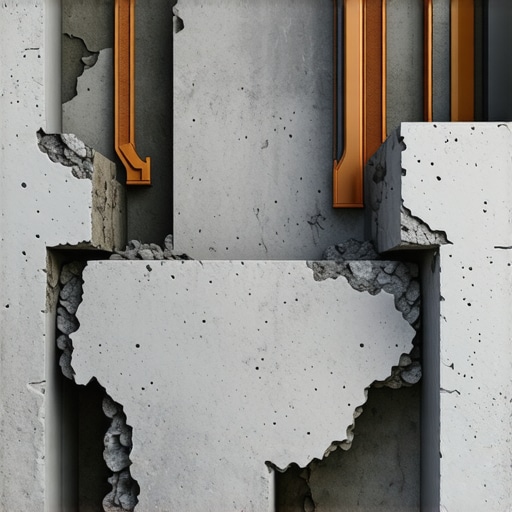
This is where the tragedy of modern Portland cement comes in. I often see ‘restored’ basements where a contractor has used a high-strength Type S or Type M mortar to patch a lime-based wall. This is a structural disaster. The new cement is hard as glass and completely impermeable. When moisture enters the wall, it can no longer escape through the mortar. Instead, it gets trapped behind the hard cement face, building up hydrostatic pressure until it forces its way through the face of the brick itself. This is called spalling, and it turns a $5,000 repointing job into a $50,000 foundation failure.
AI Masonry Assessment and the Forensic Method
In the modern era, we don’t just rely on Silas’s thumb test. We are now deploying AI masonry assessment tools that can analyze the crack patterns in a foundation to determine if the failure is caused by simple moisture or deeper structural settlement. While drone chimney inspections help us identify the entry point of water from the top down, the basement is where the symptoms manifest. When we are called for a masonry rescue after disaster—like a major flood—we have to look at the ‘tooth’ of the stone and the ‘suction’ of the brick. If the brick has been submerged, the pore structure is likely saturated with silt and salts. We use high-resolution thermal imaging to see where the water is ‘perched’ inside the wall. Often, the crumbling you see at the bottom is caused by ‘capillary rise,’ where the wall acts like a giant wick, pulling groundwater up three or four feet into the structure. This is often exacerbated by poor external drainage, like a failing retaining wall capstone replacement that is allowing water to dump directly against the foundation. If your stone coping installation on the exterior isn’t shed-ding water away from the house, your basement mortar doesn’t stand a chance.
The High-Performance Mix: Rebuilding the Bond
When it comes time to fix the mess, you can’t just buy a bag of Quikrete and call it a day. We have to talk about high-performance mortar mixes that respect the historic chemistry of the building. For damp basements, I typically move toward a Type O or a specialized lime-putty mix. Type O is a ‘high-lime’ mortar that remains flexible and breathable while providing enough compressive strength for residential loads. The process starts with ‘raking’ or grinding out the old, dead mud to a depth of at least one inch. You never ‘butter’ over the top of old mortar—that’s just a cosmetic Band-Aid that will pop off in two seasons. You have to get back to solid material. Once the joints are cleaned, we ‘pre-hydrate’ the wall. If you put dry mud into a dry brick wall, the brick will suck the moisture out of the mortar instantly, causing it to ‘flash set.’ This prevents the chemical hydration process and leaves you with brittle, unbonded joints. We want a slow cure. We want that lime to carbonate over weeks, not hours. We use a hawk and a slicker to tightly pack the new mud into the joints, ensuring there are no ‘honeycombing’ voids where water can sit. The choice of brickwork pointing styles is also critical. In a basement, I prefer a ‘weathered’ joint or a ‘flush’ joint. You want to avoid any ledge that can trap falling condensation.
“Moisture in the liquid state is the primary agent of decay in masonry structures.” – BIA Technical Note 7
Beyond the Mud: Modern Interventions
Sometimes, the damage is so far gone that simple historic tuckpointing isn’t enough. If the foundation stones have shifted, we might look at mechanical stabilization. But I caution homeowners against the trend of stone veneer over brick in basement settings. Slapping a non-breathable decorative stone over a damp foundation is like wrapping a wet foot in plastic—it’s going to rot. I’ve seen ‘metallic masonry finishes’ used to try and ‘seal’ basement walls, but unless that sealer is vapor-permeable, it will eventually bubble and peel as the hydrostatic pressure pushes from the outside in. The goal is always to manage the water, not just hide it. This means looking at the soldier course at the ground level and ensuring the grade is sloping away. It means checking the stone coping installation on your porch to ensure it isn’t channeling rain into your crawlspace. If you do it once with the right ‘mud’ and the right technique, that wall will stand for another hundred years. If you do it twice with cheap cement, you’re just waiting for the collapse.