
The Forensic Scene: When the Dust Settles
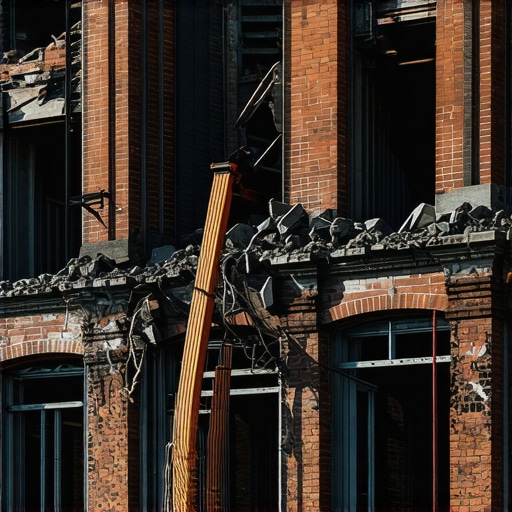
The homeowner thought it was just a hairline crack. But when I put my scope inside, I saw the structural steel was rusted to dust, and the gas explosion had turned the internal brick wythes into a pile of unbonded rubble. Standing in the skeleton of a 1920s brownstone after a gas ignition isn’t like a normal inspection; it’s an autopsy of a living organism that’s had its heart ripped out. The air still carries the acrid scent of charred timber and pulverized lime. While the fire department sees a hazard, I see a casualty of physics. The shockwave of a gas explosion travels through masonry differently than any other force. It moves through the mud—the mortar joints—searching for the path of least resistance. In a historic building, that path is often the soft, lime-based bedding that has kept the structure breathing for a century.
“The primary function of mortar in historic masonry is to provide a level bedding for the masonry units and to allow for movement and moisture evaporation without damaging the units themselves.” – BIA Technical Note 20
When the overpressure hits, it doesn’t just crack the brick; it breaks the bond between the masonry and the frame. This is where foundation crack repair begins. We aren’t just looking at the surface; we are looking for displacement of the footings and the shearing of the header courses. If the foundation has shifted, we look into modern interventions like self-healing concrete foundations for the reinforced sections, where crystalline additives react with moisture to bridge micro-fissures before they become structural failures. But in the historic core, we stick to the old ways.
The Physics of the Blast Wave on Masonry Bonds
Modern ‘lick-and-stick’ veneers would have been stripped clean by the blast, but old-world masonry has ‘tooth.’ The suction of a high-quality hand-molded brick draws the lime deep into its pores, creating a mechanical lock. During an explosion, this bond is tested to its absolute limit. We look for honeycombing in the mortar, a sign that the vibration has shaken the sand and binder apart. If the internal wythes have separated, the wall is no longer a monolithic structure; it’s a stack of loose cards. This requires tuckpointing machine services to deeply rake out the failed joints—sometimes up to two inches deep—to prepare for a structural repointing that restores the shear strength of the wall.
We have to be careful with the chemistry here. If we use a high-strength Portland cement in a restoration where the original bricks are soft, we create a ‘hard point.’ When the building tries to settle after the trauma, the hard mortar won’t give. Instead, it will crush the face of the brick, a process called spalling. We use Type O or lime putty mortars, which act as the sacrificial lamb, absorbing the stress so the brick stays intact. This is the ‘Sacrificial Principle’ of masonry restoration.
Restoring the Ornate: Stone Balustrade and Chimney Forensic
Look up at the stone balustrade restoration. The explosion often shears the pins that hold these heavy decorative elements in place. If a limestone rail has shifted even a fraction of an inch, it’s a guillotine waiting to fall. We don’t just glue them back. We use stainless steel pins and lead-free setting blocks. The same goes for chimney crown repair. The chimney acts like a giant lever during an explosion; the whip-effect at the top can shatter the crown and shift the soldier course of bricks at the rim. We perform a full chimney sweep and repair to ensure the flue tiles aren’t cracked, which could lead to a secondary fire or carbon monoxide poisoning once the building is re-occupied.
“Water penetration through the chimney crown is a leading cause of masonry deterioration in cold climates, exacerbated by structural movement.” – ASTM C1283
After the structural work is done, we address the aesthetics. Fire and smoke leave a ghost on the stone. We use masonry staining to blend the new, repaired sections with the soot-stained original masonry, ensuring the repair is invisible to the naked eye. We aren’t painting—paint is a death sentence for brick because it traps moisture. Staining is a chemical bond that allows the brick to remain ‘breathable.’
Weatherproofing the Trauma: Sealers and Tuckpointing
Once the tuckpointing weatherproofing is complete and the joints have been struck with a slicker to a perfect concave finish, we have to protect the wounded skin of the building. The explosion often creates micro-cracks in the stone that are invisible but highly absorbent. We apply porous stone sealers—silane-siloxanes that don’t form a plastic film. These sealers penetrate the ‘pore structure’ and change the surface tension so water beads off, but vapor can still escape from the inside out. This is critical because if moisture gets trapped behind the face of a stone that’s been stressed by an explosion, the first freeze-thaw cycle of winter will pop the face right off.
On the ground level, retaining wall capstone replacement is often necessary where debris or the blast wave has unseated the heavy stones. We ensure the new caps have a proper ‘drip edge’ to keep water from running down the face of the wall and into the fresh mud. It’s about managing the ‘suction’ and the ‘wicking.’ If you don’t control the water, the masonry is just a slow-motion pile of rubble.
Conclusion: The Master Mason’s Verdict
Salvaging a building after an explosion isn’t about speed; it’s about forensic patience. It’s about knowing when to ‘butter’ a brick and when to tear a wall down to the footings. You can’t fake this with a ‘handyman special.’ You need to understand the carbonation of lime, the thermal expansion of the ‘cold joint,’ and the structural reality of a hawk and trowel. When we finish, that building isn’t just standing; it’s stabilized for the next hundred years. Do it once, or do it twice—I prefer to do it once.