
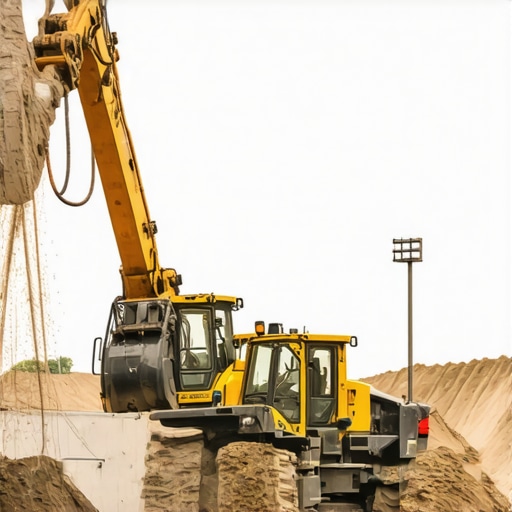
The Sound of Impending Disaster
I was standing on the 22nd floor of a commercial retrofit project when the pump line started to dance. Most guys would have just stepped back, but I put my hand on that steel pipe. I could feel the rhythmic thrum-thud of the pistons, but it was off-beat. It didn’t have that smooth, hydraulic heartbeat of a well-behaved slurry. It felt like a heart attack in progress. When I put my ultrasonic scope to the coupling, I saw the truth: the mix was segregating. The aggregate was locking up, and the friction was skyrocketing. A second later, the safety valve blew, coating a hundred thousand dollars of BIM masonry projects equipment in grey sludge. The contractor thought he could save a few bucks by skimping on the lubricant. He was wrong. In this business, if the ‘mud’ doesn’t flow, the money stops.
The Physics of the Friction Tax
High-reach pumping isn’t just about pushing wet rock up a hill; it is a violent battle against gravity and internal pipe friction. When you are dealing with commercial smokestack repair or tall building infills, the pressure inside that line can exceed 1,000 PSI. If your mix design is off by even a fraction, the water separates from the solids—a process we call bleeding. Once that water escapes, you are no longer pumping a fluid; you are trying to jam a dry rock sandwich through a four-inch straw. This is where fiber-reinforced mortars become a double-edged sword. While the fibers provide incredible tensile strength once cured, they act like a thousand little anchors in the pipe if the ‘tooth’ of the mix isn’t perfectly balanced. You need enough ‘cream’—that fine cement paste—to coat every single fiber and aggregate particle to ensure they slide rather than collide.
“Consistency and uniformity of the concrete mix are essential for successful pumping; any variation in the proportions of the ingredients can lead to blockages and equipment failure.” – ASTM C94 Standard Specification for Ready-Mixed Concrete
The Micro-Zoom: Why Aggregates Lock Up
We need to talk about the ‘void ratio.’ Imagine a jar filled with marbles. There is a lot of air between them. Now add sand. The air disappears. Now add water and cement. That is your matrix. In commercial masonry maintenance, especially when we are doing brick infill panel repair, we often use smaller aggregates to navigate tight reinforcement. If those aggregates are too angular—what we call ‘sharp’ stone—they lock together under pressure like a jigsaw puzzle. For high-reach pumping, you want rounded river stone or manufactured aggregates with a low friction coefficient. If you’re doing a masonry birdsmouth cuts detail on a high-elevation ledge, your mortar needs to be sticky enough to stay in the joint but fluid enough to get to the hawk. When the mix is too dry, it ‘burns’ in the sun, especially in high-rise environments where the wind strips moisture faster than a kiln.
The Restoration Reality: From Chimneys to Smokestacks
It’s a different beast when you move from new construction to chimney repair services or crumbling mortar joint repair. You aren’t usually pumping 30 stories high for a residential chimney, but the principle of material flow remains the same. If you are using mortar matching services to find the right lime-to-sand ratio for a historic restoration, you have to account for the ‘suction’ of the old brick. An old, dry brick will suck the water out of your mud instantly, causing a cold joint. I’ve seen patio stone realignment jobs fail because the installer didn’t understand the compaction physics of the base. They ‘buttered’ the stones with a mix that was too stiff, and within one season, the freeze-thaw cycle popped them loose. Water expands 9% when it freezes; if your mortar isn’t dense enough to repel that water but breathable enough to let vapor out, you are just building a ticking time bomb.
“Water penetration is the single greatest threat to masonry durability, and the selection of mortar type must prioritize the bond and flexibility over mere compressive strength.” – BIA Technical Note 7
Avoiding the Clog: A Forensic Checklist
To avoid a blow-out on a high-reach job, you have to be a chemist and a physicist. First, check your slump. But don’t just trust the cone; look for the ‘sheen.’ If the mix looks dull, it’s thirsty, and it will clog. Second, check your pump’s priming. I never start a pour without a ‘slicker’—a chemical lubricant or a slurry of neat cement and water to coat the pipes. Third, monitor the temperature. If the pipe is sitting in the sun, it’s a frying pan. It will cook the hydration right out of your mix. This is especially critical for commercial smokestack repair where the height adds massive head pressure. You need to use retarders to slow down the ‘flash set’ or you’ll be jackhammering your pump line by noon. Remember, there is no such thing as a ‘minor’ clog in a high-reach system. There is only a disaster waiting for a pressure spike.