
The Forensic Scene: When a Crack is Never Just a Crack
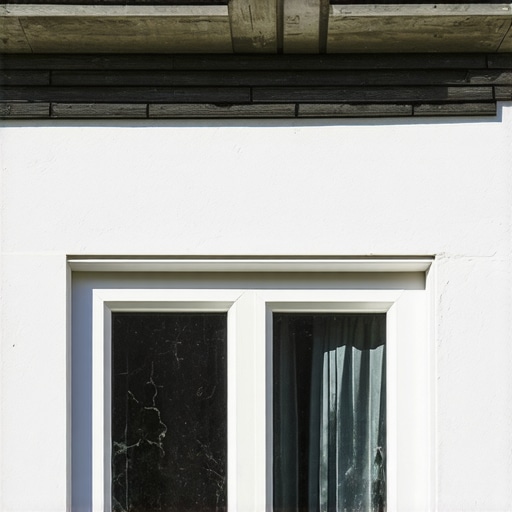
The homeowner thought it was just a hairline crack. They called me out to ‘smear some mud’ in the gap and make it look pretty for a house sale. But when I put my scope inside the cavity through a weep hole, I saw the structural steel was rusted to dust. The lintel—the horizontal beam carrying the weight of several thousand pounds of brick above that window—wasn’t just tired; it was exfoliating. In the trade, we call this ‘rust jacking.’ As that steel oxidizes, it expands up to ten times its original thickness, acting like a slow-motion hydraulic jack that heaves the brickwork apart. This isn’t a cosmetic issue; it’s a structural emergency that no amount of ‘lick-and-stick’ repair can fix.
The Physics of the Sag: Why Gravity is Winning
When you look at a window, you aren’t just looking at glass. You are looking at a hole in a load-bearing wall. To bridge that hole, masons use a lintel. In modern modular masonry construction, this is usually an L-shaped steel angle. Gravity exerts a constant downward force, and the brickwork above creates a ‘triangle of loading’ that the lintel must support. If the lintel fails, that load shifts. You’ll see the first signs in the soldier course—those vertical bricks standing like sentries above the window. When they start to lean or the mortar joints between them open up like a parched mouth, the lintel has lost its temper.
“Steel lintels in masonry walls must be protected from corrosion, as the expansive force of rust can cause significant displacement of the surrounding masonry.” – BIA Technical Note 31B
This displacement is particularly violent in Northern climates. When water gets behind the brick and hits a cold, rusted lintel, the freeze-thaw cycle takes over. Water expands 9% upon freezing. If that moisture is trapped because someone used a hard, non-breathable Portland cement for a crumbling mortar joint repair, the face of the brick will simply pop off. This is spalling, and it is the death knell for a facade.
Micro-Zooming: The Chemistry of Mortar and Metal
To understand why your window is sagging, we have to look at the ‘tooth’ of the mortar. In professional masonry restoration, we don’t just grab a bag of premix from the big-box store. We look at the existing masonry. If we’re dealing with concrete masonry unit restoration or older brickwork, the chemistry of the ‘mud’ is everything. We often utilize fiber-reinforced mortars today because they offer superior tensile strength and crack resistance, preventing the micro-fissures that lead to lintel rot. When we perform a brick quoin repair or replace a lintel, we are managing the ‘suction’ of the brick—the rate at which the clay pulls water out of the mortar. If the brick is too dry, it steals the water from the mortar before it can hydrate, leading to a cold joint that has no structural integrity. You might as well be stacking bricks on sand.
“Mortar shall be specified by either proportion or property specifications… The selection of mortar should be based on the properties of the masonry units used.” – ASTM C270 Standard Specification
We use self-leveling masonry lifts for larger structural elements to ensure that the new steel is perfectly bedded. Without a level base, the load won’t distribute evenly, and you’ll be back to square one with a diagonal stair-step crack within two seasons.
The Restoration Reality: Beyond the Band-Aid
Replacing a lintel is a surgical procedure. It involves temporary shoring—often using ‘needles’ through the wall—to hold the building up while we cut out the old, rusted iron. This is where sustainable block cutting techniques come into play; we want to preserve as much of the original material as possible while removing the cancer of the rust. We also look up. Often, a sagging window is just the symptom. I’ve performed drone chimney inspections where the real culprit was a failed chimney crown repair three stories up. Water was entering at the top, running down the internal cavity, and pooling on the lintel. If you don’t fix the leak at the crown, the new lintel will be rusted out before the mortgage is paid off. Once the new steel is in, it must be properly flashed. We ‘butter’ the bricks with fresh mud, ensuring a full bed joint, and strike the joints with a slicker to compress the mortar and shed water. This isn’t a job for a handyman with a ladder and a tube of caulk. This is forensic work that requires an understanding of hydrostatic pressure and thermal bridging.