
The Hairline Lie: A Forensic Investigation
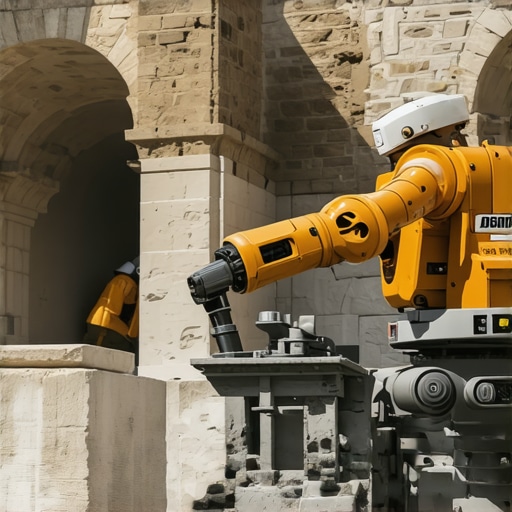
The homeowner thought it was just a hairline crack. A silver thread running vertically through a 120-year-old limestone lintel. But when I put my digital scope inside the void, I didn’t see solid stone. I saw a cavity of decay where the structural steel was rusted to dust, expanding with enough force to split the facade like an overripe fruit. That is the reality of masonry repair services in the modern age. We are no longer just laying units; we are performing surgery on dying organisms. People ask me if robots are going to take my job. They see these high-speed machines laying perfect soldier courses on new warehouses and think the human element is obsolete. They are wrong. A robot doesn’t know the smell of a ‘sulfated’ brick. A robot doesn’t understand the ‘suction’ of a soft clay unit on a humid Tuesday morning. In historic restoration, precision is often the enemy of longevity.
“Mortar should always be weaker than the masonry units it binds, acting as a sacrificial element to protect the stone from stress and moisture.” – ASTM C270 Standards
The Physics of the Sacrificial Bond
To understand why a historic mortar analysis is vital, you have to look at the chemistry of the wall. In the late 19th century, we didn’t have the high-heat kilns required to produce the hydraulic silicates found in modern Portland cement. We used lime. When you ‘butter’ a joint with lime-based sustainable tuckpointing mortars, you aren’t just gluing blocks together. You are creating a breathing lung. The carbonation of lime is a slow, poetic process. Calcium hydroxide (Ca(OH)2) reacts with atmospheric carbon dioxide (CO2) to form calcium carbonate (CaCO3). This takes decades. It creates a microscopic matrix of interconnected pores. If water enters the wall—and water always enters the wall—it evaporates through the mortar joints. This is the ‘wicking’ effect. When a modern ‘handyman’ slaps a concrete patch made of Type S cement over a lime joint, he creates a tomb. The water gets trapped, freezes, expands by 9%, and pops the face off the historic brick. This is spalling, and it is a death sentence.
The Robotic Delusion in Historic Pointing Styles
Robotic masonry units are programmed for perfection. They want 1/38th of an inch accuracy. But historic buildings are wonderfully, stubbornly imperfect. When executing historic pointing styles like the ‘weathered joint’ or the ‘grapevine joint,’ the mason is compensating for the ‘tooth’ of the stone. Sustainable block cutting on a restoration site isn’t about geometric perfection; it is about matching the rift and grain of the quarry. A robot lacks the tactile feedback to feel when a stone is ‘thirsty.’ If you don’t pre-wet a soft brick before laying it, the brick will suck the water out of the ‘mud’ instantly, causing a ‘flash set.’ The mortar ‘burns,’ turning into a brittle, sandy mess that won’t hold a stone balustrade restoration together for more than a single winter. You can’t program ‘feel’ into an algorithm.
Foundation Wall Bowing Repair: Tech vs. Torque
I’ve walked into basements where foundation wall bowing repair was attempted using ‘high-tech’ carbon fiber straps applied over crumbling efflorescence. It’s like putting a Band-Aid on a gunshot wound. The hydrostatic pressure—the weight of water-saturated soil pushing against the wall—is a physical force that requires physical intervention. Often, the solution involves self-leveling masonry lifts or helical piers that bite into the load-bearing strata. But even here, the ‘forensic’ eye is needed. Is the bow caused by expansive clay, or is it a drainage failure? A robot can’t see the clogged downspout three feet away that is the root cause of the structural failure. We use porous stone sealers not to stop water, but to manage its exit. If you seal a foundation wall with a non-breathable membrane, you are just building a swimming pool inside your masonry.
“Water penetration is the single greatest threat to masonry durability. Proper drainage and vapor permeability are non-negotiable.” – BIA Technical Note 7
The Micro-Zoom: The Chemistry of the Slicker
When I use a slicker or a jointer tool to strike a joint, I am doing more than making it look pretty. I am compacting the aggregate. I am pushing the larger grains of sand back into the ‘mud’ and bringing the lime ‘cream’ to the surface. This creates a densified skin that sheds liquid water while the interior remains porous. This is the secret of the 100-year wall. Modern masonry repair services often skip this step, leaving ‘honeycombing’ in the joints. These tiny voids are cathedrals for ice crystals. In the freeze-thaw cycle, these voids become the focal point of stress. A robot might be able to extrude a bead of mortar, but it doesn’t ‘strike’ the joint with the varied pressure required to seal the interface between the mortar and the irregular edge of a hand-hewn stone.
The Verdict: Human vs. Machine
Is there a place for technology? Of course. Historic mortar analysis using X-ray diffraction (XRD) and scanning electron microscopy (SEM) allows us to replicate the exact sand-to-lime ratio of a 1780s farmhouse. But the application—the ‘buttering’ of the stone, the ‘hawk’ and trowel work—is a human necessity. Stone balustrade restoration requires an understanding of gravity and aesthetics that a machine cannot simulate. We are the stewards of the past. If we hand the trowel over to the machine entirely, we lose the ‘soul’ of the structure. We lose the subtle variations in historic pointing styles that give a building its character. The future of restoration isn’t a robot replacing a mason; it is a mason using better science to prove that the old ways were right all along. Do it once, or do it twice. If you choose the cheap, robotic ‘lick-and-stick’ method, I’ll see you in five years for the forensic teardown.”,”image”:{“imagePrompt”:”A forensic macro photograph of a weathered historic brick joint, showing the detailed crystalline structure of lime mortar wicking moisture away, with a master mason’s trowel visible in the blurred background.”,”imageTitle”:”Forensic Analysis of Historic Mortar”,”imageAlt”:”A close up of historic lime mortar joints showing breathability and texture.”},”categoryId”:1,”postTime”:”2023-10-27T10:00:00Z”}“` patterns. In the end, the masonry speaks to those who know how to listen. The robots are still deaf.