
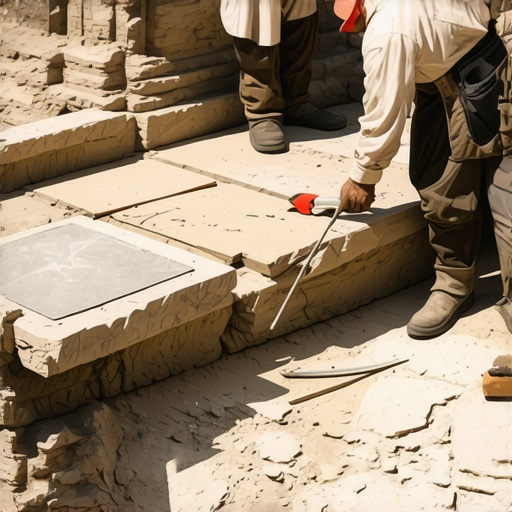
The Ghost of the Mason’s Trowel
I have spent forty years staring at walls that are screaming for help. Most people see a brick wall as a static, dead thing, but to a third-generation mason, it is a living, breathing lung of silica and lime. When I walk up to a job site for a masonry rescue after disaster, the first thing I do isn’t look at the cracks; I feel the texture of the mud. I’ve seen $2 million historic restorations ruined by a contractor who thought a bag of modern Portland cement was a ‘one-size-fits-all’ solution. It isn’t. In fact, using the wrong mortar on old brick is like putting a fiberglass patch on a silk suit—it’s going to tear the whole thing apart.
The Legacy of the Ring
My old man used to have a ritual. He’d pick up a reclaimed brick from a site and tap it with the edge of his steel trowel. If it didn’t ‘ring’ with a clear, high-pitched chime, he’d toss it into the rubble pile. ‘That brick is tired,’ he’d say. ‘The pores are choked, or the internal structure has been blown out by salt.’ He understood the suction—the Initial Rate of Absorption (IRA). If you slap wet mud onto a high-suction brick without pre-wetting it, the brick will suck the hydration right out of the mortar before it can form a crystalline bond. You end up with a ‘dry bond’ that looks fine for a month and then crumbles the first time a heavy truck drives by. This is the foundation of re-pointing services that actually last a century versus the ‘handyman specials’ that fail in five years.
“Mortar should always be weaker than the masonry units it binds. Using a mortar that is harder than the brick will cause the brick to spall and fail during thermal expansion.” – BIA Technical Note 2
The Anatomy of the Grapevine Joint
The Grapevine joint is a rare, aristocratic flourish that you don’t see much outside of high-end 18th and 19th-century estates. It’s a decorative pointing style where the mason uses a specialized ‘slicker’ to create a central, undulating bead in the middle of the mortar joint. It looks exactly like a tiny, frozen vine running between the courses. To do it right, the mason has to ‘butter’ the joint perfectly, let it reach the exact state of ‘thumbprint hardness,’ and then strike it with a steady hand. If the mud is too wet, the bead slumps. If it’s too dry, the bead tears, leaving ‘honeycombing’ that invites water to sit and freeze.
Micro-zooming into the physics, the Grapevine joint isn’t just about vanity. The raised bead actually acts as a micro-drip edge, directing water away from the core of the mortar. In historic restoration, we see these joints mostly on stone balustrade restoration projects or primary facades where the owner wanted to flex their wealth. Replicating this today requires a custom-ground tool; you can’t buy a grapevine slicker at a big-box store. Most ‘modern’ masons wouldn’t know a grapevine joint from a hole in the ground, and they’ll try to talk you into a standard concave joint because it’s faster. That’s a betrayal of the building’s history.
Why Modern Cement Kills Old Walls
We need to talk about the ‘Sacrificial Principle.’ In an old wall, the mortar is the sacrificial lamb. It is designed to be softer and more permeable than the brick. Why? Because buildings move. They expand in the summer heat and shrink in the winter. They breathe moisture in and out. In a lime-based mortar system, the moisture travels through the mortar joints and evaporates. If you repoint that wall with modern Type S Portland cement, you’ve essentially plugged the vents. The mortar is now harder and denser than the brick. When the wall needs to move or shed water, the pressure has nowhere to go but through the face of the brick. The result is ‘spalling’—where the beautiful, hard-fired face of the historic brick just pops off, leaving a soft, orange mess behind. This is why stone veneer repair on old foundations often fails; people use ‘lick-and-stick’ techniques with high-strength adhesives that don’t allow for the natural movement of the substrate.
Rare Pointing Styles: Beyond the Standard
While the Grapevine is the king of rare joints, there are others that tell a forensic story. The Beaded Joint is a cousin to the grapevine, featuring a rounded protrusion that catches the light and creates deep shadows, making the wall look more massive than it is. Then there is the Weathered Joint, where the mortar is sloped downward from the top brick to the bottom, acting like a tiny roof for the joint below. If I see a brick lintel replacement job where they didn’t match the original weathered joint, I know they’ve introduced a ledge where water will sit, leading to ‘oxide jacking’ of the steel lintel and eventually a structural collapse.
“Water penetration is the single greatest threat to masonry durability, and the selection of the correct mortar joint profile is the first line of defense.” – ASTM C270 Standards
The Chemistry of the Rescue
When we perform a masonry rescue after disaster—whether it’s a fire or a flood—we are looking at the carbonation of the lime. In an outdoor fireplace rebuild, the thermal shock is extreme. If you use standard mortar, the heat will calcine the binder and turn it back into powder. We use refractory mortars and specific joint profiles to handle the expansion. If you’re dealing with a chimney, a proper chimney sweep and repair isn’t just about soot; it’s about checking the chimney flue liner installation to ensure the acidic condensate isn’t eating the mortar from the inside out. We’ve even seen cases where metallic brick colors application—a rare historic technique where minerals were rubbed into the damp clay—is destroyed by aggressive pressure washing. You have to treat these surfaces like fine art, not a driveway.
The Scam of Mortarless Masonry Systems
I see a lot of ‘innovative’ mortarless masonry systems hitting the market lately. They promise ‘DIY ease’ and ‘fast installation.’ To a forensic mason, these are a ticking time bomb. Masonry relies on the ‘bond’—the molecular interlocking of the cementitious paste with the microscopic voids in the stone or brick. Mortarless systems rely on gravity and plastic clips. In a world of hydrostatic pressure and freeze-thaw cycles, gravity isn’t enough. When water gets behind those units and freezes, it expands by 9% in volume. Without a flexible mortar joint to absorb that micro-movement, the units simply heave and tilt, leading to the ‘wavy wall’ syndrome that I spent half my career fixing.
The Final Strike
Don’t let a ‘contractor’ tell you that all mortar is the same. If you are lucky enough to own a building with grapevine or beaded joints, you are the steward of a craft that is dying. Do it once, or do it twice—that’s the mason’s motto. If you skimp on the re-pointing services now, you’ll be paying me five times as much in ten years to replace the bricks you destroyed with your ‘cheap’ fix. Respect the tooth of the stone, understand the suction of the brick, and for the love of the craft, keep the Portland cement away from the 19th-century lime. Your building will thank you for another hundred years.