
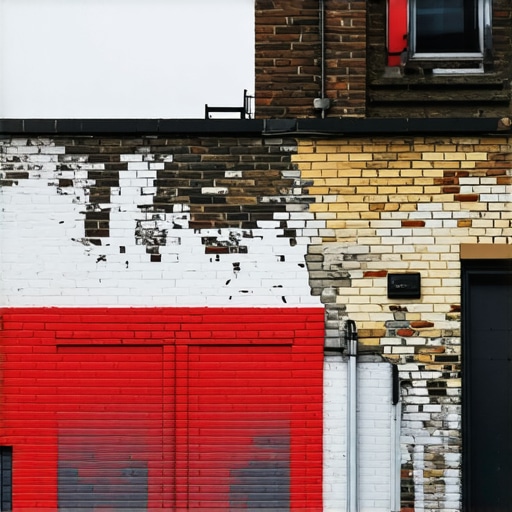
The Scent of a Dying Wall
Walk into any 19th-century commercial warehouse that hasn’t been touched by a professional in fifty years and you will smell it before you see it. It is the scent of deep-earth minerals, wet dust, and the slow, agonizing decay of clay. I was standing in a textile mill from the late 1880s recently, looking at what the owner called ‘a bit of peeling paint.’ When I touched the brick, my thumb sank a quarter-inch into the face of the unit. The homeowner thought it was just a hairline crack and some cosmetic flaking. But when I put my scope inside the core, I saw the structural steel was rusted to dust and the interior wythes of the wall were behaving like a giant, vertical sponge. This is the reality of rising damp—a silent structural assassin that turns solid masonry into a mushy slurry.
The Physics of the Capillary Climb
To understand how we stopped the rot in this century-old wall, we have to talk about the physics of the ‘pore.’ Most people think of brick as a solid block. It’s not. It’s a network of microscopic tubes. Through a process called capillary action, water from the water table is sucked upward against the force of gravity. In a properly functioning historic wall, this moisture evaporates through the mortar joints. But when a modern ‘handyman’ comes in and slathers the wall with waterproof paint or, heaven forbid, a hard Portland-based metallic masonry finish, he traps that water. The moisture rises higher and higher, looking for an exit, until it reaches the interior plaster or the structural timber.
“Water penetration is the single greatest threat to masonry durability. Moisture can travel through porous masonry materials by capillary action, often reaching several feet above the ground level.” – BIA Technical Note 7
The Portland Poison: Why Modern ‘Mud’ Kills Old Walls
The biggest mistake in historic masonry preservation is the use of modern Type S or Type M mortar. In the old world, we used lime and sand. Lime is ‘breathable’ and, more importantly, it is softer than the brick. In the hierarchy of the wall, the mortar must be the sacrificial lamb. If the wall moves or the water freezes, the mortar should crack, not the brick. When you use a high-strength Portland cement on a 100-year-old wall, you are creating a ‘cold joint’ of such rigidity that the soft, historic bricks become the weakest link. As the water freezes and expands 9% in volume, it can’t push through the hard mortar. Instead, it blows the face off the brick—a process we call spalling. For this commercial wall, we had to perform tuckpointing weatherproofing using a custom-mixed Type O mortar, which mimics the low-compressive strength of the original 1880s lime putty.
Step-By-Step Forensic Rescue
Our masonry rescue after disaster began at the footer. Because the original foundation was settling under the weight of the water-logged masonry, we had to implement foundation underpinning to stabilize the soil. Once the building stopped moving, we addressed the damp. We didn’t just ‘patch’ it; we installed a chemical damp-proof course (DPC). We drilled into the mortar line at the base of the wall and injected a silane-based cream that creates a hydrophobic barrier, effectively cutting off the capillary tubes. Next came the ‘mud’ work. We ground out the failing joints to a depth of at least one inch, ensuring we didn’t ‘nick’ the brick edges. We ‘buttered’ the joints with a lime-rich mix, using a slicker to pack the material tight. This wasn’t a ‘lick-and-stick’ job. We had to match the tile grouts on masonry details used in the original decorative soldier courses.
“Mortar for repointing should be softer than the masonry units and should have a high lime content to allow for moisture vapor transmission.” – ASTM C270 Standards
The Chimney Connection: Above-Grade Failure
While the rising damp was attacking from the bottom, the chimney flashing repair and chimney cap replacement were failing at the top. On this project, the chimney was acting like a giant funnel. A cracked cap meant water was pouring into the flue, saturating the masonry from the inside out. We performed a chimney damper repair to seal the throat and replaced the cap with a custom-poured concrete crown that has a proper ‘drip edge’ to shed water away from the brick face. This is where most tuckpointing cost estimation fails—contractors look at the eye-level cracks but ignore the ‘wet head’ of the building.
The Hard Truth About Restoration
At the end of the day, you can’t trick physics. If you have a century-old wall, you are the steward of a breathing organism. If you choke it with plastic coatings or hard cement, it will die. We saved this commercial wall because we respected the suction of the brick and the chemistry of the lime. We stopped the rising damp not with magic, but with a deep understanding of how water moves through stone. When you’re looking at a structural crack, don’t ask how much it costs to fill it. Ask why it’s there in the first place. Anything else is just a Band-Aid on a bullet wound. Do it once, or do it twice—the stone doesn’t care about your budget, it only cares about the truth of the craft.