
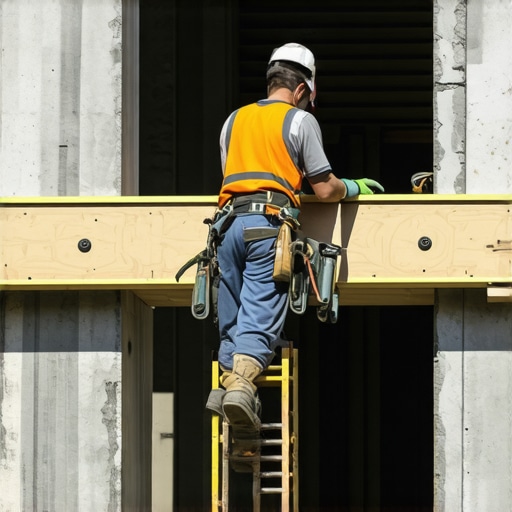
The Forensic Scene: Behind the Hairline Crack
I once stood on a narrow scaffold in the biting wind, staring at what a homeowner described as a ‘minor cosmetic crack’ above a sprawling window. I slid my borescope into the cavity, and what I saw was a graveyard of structural integrity. The steel lintel, once a sturdy piece of carbon steel, had been reduced to a swollen, orange husk of flaking rust. This wasn’t just a crack; it was oxide jacking in its most aggressive form. When steel oxidizes, it can expand to ten times its original thickness, exerting thousands of pounds of upward pressure on the brickwork above it. The real nightmare? This building was framed with such tight tolerances that there wasn’t a single inch of header space to fit a standard angle iron. This is where modern ‘handyman’ logic fails and true masonry forensics begins.
“Water penetration is the single greatest threat to masonry durability. Steel components within masonry walls must be protected from corrosion to prevent catastrophic structural failure.” – BIA Technical Note 7
The Physics of the ‘No Space’ Lintel
In a standard repair, you have the luxury of space—a few inches of play between the top of the window frame and the structural floor joists or headers. But in many mid-century and historic commercial builds, the window is tucked right against the underside of the floor assembly. When the lintel fails, you can’t just ‘butter’ some new mud in there and call it a day. You are fighting a battle of millimeters. You need a solution that offers the structural ‘tooth’ required to hold up a soldier course of brick without encroaching on the window frame or the interior floor. In these cases, we move away from standard L-shaped angle irons and toward custom-milled plate steel or low-profile stainless steel assemblies. This is critical in commercial tuckpointing and maintenance where the scale of the masonry can lead to massive gravity loads over a single opening.
The Solution: Plate Steel and Needle Shoring
Replacing a lintel with zero header space requires needle shoring. This isn’t for the faint of heart. We have to punch holes through the brickwork above the opening, slide heavy timber or steel ‘needles’ through, and support them with jacks on both sides of the wall. This suspends the entire brick facade in mid-air. Once the weight is transferred, we surgically remove the rusted lintel. To solve the space issue, we often use a 1/2-inch thick A36 steel plate that is through-bolted into the structural framing or pinned into the adjacent masonry. This provides a flat, ultra-low-profile surface to lay the new brick. Before we lay a single brick, we apply brickwork sealants to the steel itself—cold galvanizing compounds or coal tar epoxies—to ensure we aren’t back here in twenty years doing the same job. If you’re dealing with spalled concrete steps repair or retaining wall geogrid installation nearby, the same rules of moisture management apply: water is the enemy, and drainage is your only friend.
Chemistry in the Joints: Why Your ‘Mud’ Matters
You can’t just throw any off-the-shelf bag of Type S mortar into a structural repair like this. If you’re working on an older building, the bricks are likely softer than the hard, portland-heavy mortars sold at big-box stores. This is the Sacrificial Principle. The mortar must be slightly softer than the brick so that the mortar fails—not the brick—when the building moves. For these tight lintel replacements, I prefer a Type N lime-heavy mix. It has better ‘suction’ and allows the masonry to breathe. When you’re tuckpointing around a new lintel, you have to ‘butter’ the ends of the bricks (the head joints) with precision. If you leave a cold joint or a void, water will find it. That water will sit on the new steel, freeze, expand by 9%, and pop the face right off your new work. This is the same reason why chimney flue liner installation and chimney heat shield installation are so vital; you’re managing the thermal and moisture-related stresses that want to tear the masonry apart from the inside out.
“Mortar should be designed to be weaker than the masonry units it binds, ensuring that stresses are relieved through the joints rather than through the units themselves.” – ASTM C270 Standard Specification for Mortar
Modern Horrors: Stone Veneer and the Death of Breathability
I often see contractors trying to hide structural lintel failure by slapping stone veneer over brick. This is a death sentence for the wall. Stone veneer, or ‘lick-and-stick’ stone, acts as a vapor barrier. It traps moisture against the original brick. In a freeze-thaw climate, that trapped moisture turns the brick into mush. I’ve seen commercial masonry maintenance projects where the entire facade had to be stripped because someone thought veneer was a ‘shortcut’ to a new look. The same applies to chimney sweep and repair; if you don’t have a functional chimney flue liner, the acidic condensation from gas or wood fires will eat the mortar from the inside out, leading to the same structural collapse we see with failed lintels. Do the work once. Do it right. Use the hawk and the slicker to pack those joints tight, and never skip the flashing. If you don’t provide a path for water to exit—via weep holes above the lintel—you’re just building a very expensive vertical aquarium.
The Final Strike: Striking the Joint for Longevity
The last step in a lintel replacement is the strike. Using a jointer tool to compress the mortar into a concave shape isn’t just about looks; it’s about compaction. Compaction reduces the porosity of the ‘mud’ and creates a tighter bond with the brick’s ‘tooth.’ Whether you are performing commercial tuckpointing on a skyscraper or spalled concrete steps repair on a residential porch, the goal is the same: density. A loose, sandy joint is an invitation for water. A dense, well-struck joint is a shield. When there’s no header space, every millimeter of that shield counts. You’re not just a mason; you’re a forensic engineer with a trowel, fighting a war against gravity and time. Don’t let the ‘handyman specials’ convince you otherwise—proper masonry is a science of moisture and pressure, and there are no shortcuts when the weight of the building is over your head.