
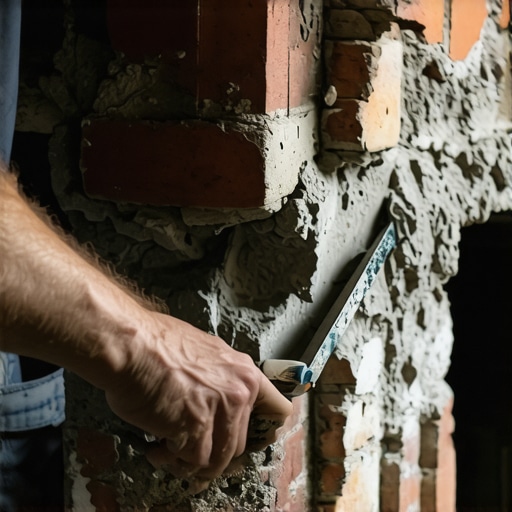
The Forensic Scene: A Ghost in the Firebox
The homeowner thought it was just a hairline crack. A minor annoyance, perhaps a bit of dust on the hearth every morning. But when I put my scope inside the void where the mortar had turned to sand, I saw a nightmare: the structural wood framing behind the masonry was charred to charcoal. It wasn’t just a repair job; it was a race against a house fire. This is the reality of fireplace neglect. As a third-generation mason, I’ve seen thousands of these ‘minor’ issues. Most people think a fireplace is a solid, indestructible block of stone. It’s not. It’s a precision instrument of thermal management, and when the ‘mud’—the mortar—starts to fail, the whole system becomes a liability. I’ve spent my life looking at the ‘tooth’ of the stone and the ‘suction’ of the brick, and I can tell you that the crumbling you see on the surface is often just the tip of the iceberg.
The Physics of Thermal Expansion: Why Mortar Turns to Dust
In the world of historic brickwork repointing, we deal with the slow crawl of time. In a fireplace, we deal with the violent expansion of heat. When you light a fire, the internal temperature of the firebox can soar to 1000°F in minutes. Masonry is dense, but it is also elastic in ways the layperson doesn’t see. The bricks expand. If the mortar is too hard—like the modern Portland cement ‘handyman specials’—the bricks have nowhere to go. They crush themselves. If the mortar is too soft or has lost its chemical bond, it simply turns back into the sand it came from. This is why high-performance mortar mixes are non-negotiable. We aren’t just slapping mud between bricks; we are engineering a sacrificial joint that can breathe and move.
“The use of improper mortar in a high-heat environment leads to accelerated spalling and potential structural failure of the firebox.” – BIA Technical Note 19
The Chemistry of the Mud: Beyond Standard Portland
Micro-zooming into the mortar joint, we see a battlefield of chemistry. For a firebox, you cannot use Type N or Type S from the big-box store. You need refractory mortar. This stuff is packed with fireclay and calcium aluminate. Unlike standard mortar that hardens through a carbonation process that can take decades to fully mature, refractory mud undergoes a ceramic bond when heated. It vitrifies. If your mason shows up without a high-performance mortar mix specifically rated for ASTM C199, fire him on the spot. Without that ceramic bond, the joint has no ‘tooth’—no mechanical grip on the refractory brick. It will simply fall out the first time you get a real blaze going.
The Tools of the Trade: Hawk, Slicker, and Chisel
When I start a historic brickwork repointing job on a hearth, I don’t reach for a power grinder first. Power tools are for the lazy and the destructive. They jump, they scar the brick, and they create a cloud of silica that stays in your lungs forever. I use a hammer and a narrow cape chisel. I want to feel the mortar. If it falls out like dry flour, I know the moisture was sucked out of the mud too fast during the original build—a classic case of failing to manage ‘suction.’ Once the joint is cleaned out to a depth of at least one inch, I prep my hawk. This is the flat metal plate that holds the mud. I take my slicker—the jointer tool—and I ‘butter’ the joint. You have to pack it tight. No voids. If you leave a pocket of air, that air will expand when heated and blow the joint right back out. It’s a tactile process. You feel the resistance. You hear the ‘ring’ of the brick if it’s still soundly bonded to the backup wall.
“Refractory mortar must be used in all firebox construction to ensure the integrity of the thermal barrier.” – ASTM C199
The Modern Sins: Lick-and-Stick and Fake Finishes
I have a burning hatred for stone veneer repair on fireplaces where the original mason used ‘lick-and-stick’ methods. They take a beautiful piece of thin-set stone and slap it on with a prayer. When the fireplace heats up, the stone and the substrate expand at different rates. The result? Stones falling off onto the hearth. If you’re dealing with stone veneer repair, you have to treat it like a structural element. You need mechanical ties and a mortar bed that can handle the shear stress of thermal movement. The same goes for stone coping installation on the chimney top. If that coping isn’t pitched to shed water, that moisture travels down the flue, hits the firebox, and creates brick efflorescence removal nightmares. You’ll see white, salty stains appearing on your beautiful fireplace—that’s the building telling you it’s drowning from the inside out.
The Forensic Inspection: Is It Just the Mortar?
Sometimes, the crumbling joint is a symptom of a deeper cancer. This is where AI masonry assessment and forensic scoping come in. If I see a horizontal crack, I’m not thinking about mortar; I’m thinking about foundation slab jacking. If the house is settling, it’s pulling the chimney away from the structure. You can repoint that fireplace until you’re blue in the face, but if the foundation is moving, those joints will snap like glass. I’ve seen homeowners waste thousands on chimney repair services that only addressed the aesthetics while the base of the chimney was sinking into expansive clay. You have to look at the whole ‘body’ of the building, not just the ‘skin.’
The Process: A Master’s Step-by-Step
First, we perform a deep chimney sweep and repair to clear the soot. You can’t bond new mud to old creosote. Next, we address any brick efflorescence removal using a mild acetic acid wash—never muriatic acid on interior fireplaces, as the fumes will eat your appliances. Then comes the mechanical cleaning of the joints. We damp the bricks down—this is the ‘suction’ management. If the brick is dry, it steals the water from the mortar, and the ‘mud’ dies before it can live. We pack the refractory mix in layers, ‘striking’ the joint with the slicker to compress the aggregate. Finally, if the old bricks look tired, we might perform masonry staining to match the original patina, ensuring the repair is invisible to the eye but invincible to the heat.
The Verdict: Do It Once, or Do It Twice
In this age of ‘handyman apps’ and DIY videos, people have forgotten that masonry is a trade of centuries. You can’t learn the ‘tooth’ of a stone from a screen. Whether it’s historic brickwork repointing or a complex stone coping installation, the physics don’t lie. You either respect the heat and the moisture, or they will destroy your work. Don’t settle for a ‘cold joint’ where the new mortar doesn’t bond to the old. Hire someone who knows the difference between a soldier course and a header, someone who understands that the fireplace is the heart of the home, and if the heart is crumbling, the rest of the body isn’t far behind. Don’t wait for the scope to show you charred framing. Fix the mud before the fire finds a way out.