
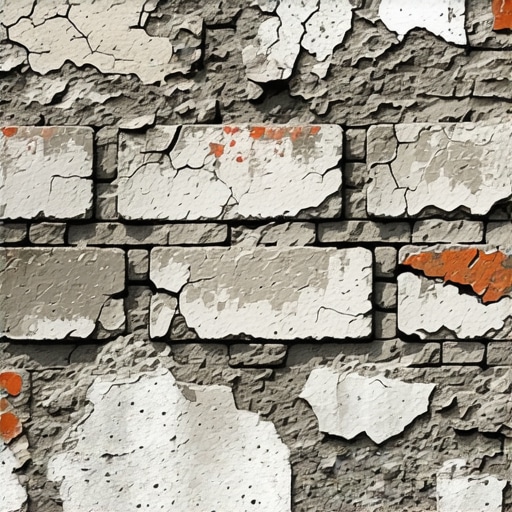
The Ghost in the Wall: Why Your Mortar is Screaming
You don’t need a degree in structural engineering to see a wall that’s already on the ground, but you need a sharp eye and a bit of dirt under your fingernails to catch the decay while it’s still quiet. I’ve spent forty years smelling the damp rot of failing foundations and watching beautiful 19th-century facades get choked out by the very people trying to save them. It starts with a whisper—a fine white powder on the brick, a hairline fracture in the chimney crown, or a slight softening of the joint. By the time the bricks move, you aren’t looking at a repair; you’re looking at a recovery mission. My uncle, a man who could tell the density of a batch of mud just by the sound of the shovel hitting the mixing tub, used to tell me that a brick is only as good as the bed it sits in. He’d take a piece of reclaimed red clay and press his thumb against it; if the moisture didn’t draw into the unit immediately, he’d swear the suction was gone and the bond would never take. That’s the level of micro-physics we’re dealing with. If the mortar can’t breathe, the brick dies. Period.
“Mortar should always be weaker than the masonry units it binds to ensure that any stress-induced cracking occurs in the mortar joints where it can be easily repaired, rather than in the masonry units themselves.” — ASTM C270 Standard Specification
The Chemistry of Decay: Why Harder Isn’t Better
The biggest mistake I see from the “lick-and-stick” crowd—those weekend warriors and cut-rate contractors—is the obsession with strength. They think that because modern Type S cement can hold up a skyscraper, it’s perfect for a 100-year-old chimney crown repair. They’re wrong. Old-world masonry is a living, breathing thing. Historic brick wall restoration requires understanding the sacrificial principle. In the North, where we deal with brutal freeze-thaw cycles, water is the enemy. Water expands approximately 9% when it turns to ice. If you’ve stuffed a soft, porous Victorian brick with hard, impermeable Portland cement, that water gets trapped. Instead of escaping through the mortar joint (which is what it’s supposed to do), the pressure builds until it pops the face right off the brick. We call that spalling, and it’s a death sentence for the facade. When we look at sustainable masonry materials, we’re often looking backward to lime-based mortars that allow for autogenous healing—a process where the lime actually migrates into small cracks and recarbonates, sealing the breach naturally over decades.
Forensic Indicators: The Screwdriver and the Salt
Before you even think about brick lintel replacement or calling in a crew for a retaining wall installation, you need to perform a basic forensic audit. Take a flathead screwdriver and drag it across a mortar joint. If it leaves a deep gouge or the mud crumbles like stale cake, the binder has failed. The chemical bond between the sand and the lime has been washed away by decades of acidic rain. Next, look for efflorescence—that white, salty staining. That’s not just a cosmetic issue; that’s the sound of the wall’s internal organs failing. It means water is migrating through the core, dissolving minerals and depositing them on the surface. If you see this near your foundation, you’re likely dealing with hydrostatic pressure that will eventually lead to a total structural collapse if the drainage isn’t addressed. We are now seeing the rise of AI masonry assessment tools that can scan these patterns to predict failure points, but nothing replaces the tactile feel of a slicker hitting a joint and feeling the ‘tooth’ of the aggregate.
“Water penetration is the single greatest threat to masonry durability, and the chimney is the most vulnerable point of entry.” — BIA Technical Note 19
The Anatomy of Repair: From Lintels to Patios
When the decay reaches the steel, the game changes. Brick lintel replacement is a common necessity when the iron angle above a window begins to oxidize. As steel rusts, it expands up to ten times its original thickness. This “oxide jacking” lifts the masonry, causing classic stair-step cracks. For those attempting tuckpointing tools for DIY, remember: you’re not just filling a hole; you’re restoring a structural system. You need a hawk to hold your mud, a slicker to compress the joint, and the patience to avoid ‘burning’ the mix by letting it dry too fast in the sun. If you’re dealing with spalled concrete steps repair, you’re fighting the same battle against rebar corrosion. We often use self-leveling masonry lifts in modern hardscaping to combat soil heaving, but in a vertical wall, it’s all about the bond. For those looking at green roofing masonry integration, you have to account for the massive increase in moisture retention, which requires a specialized drainage plane to prevent the mortar from being perpetually saturated.
The Hard Truth of Modern Masonry
We live in an era of shortcuts. I’ve seen retaining walls fail because the contractor didn’t understand the physics of a cold joint or skipped the weep holes. If you’re building a new wall or restoring an old one, the base is everything. It’s about compaction and chemistry. If you don’t respect the materials, the materials won’t respect your house. Whether you’re looking into sustainable masonry materials to reduce your carbon footprint or trying to save a crumbling chimney, the rules of the old masters still apply. Do it once, do it right, or stay off the scaffold. Don’t let a handyman with a bag of premix turn your architectural heritage into a pile of rubble.