
The Ghost in the Wall: Why Aesthetics Require Forensic Foundations
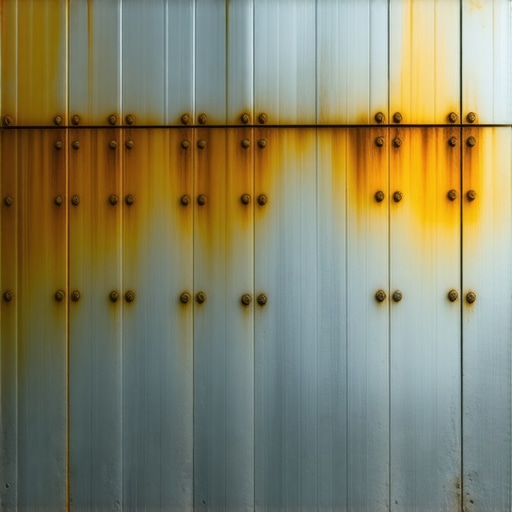
My first mentor, a man who had more lime in his lungs than blood in his veins, used to take a scrap of copper flashing and scrape it against a fresh-fired brick. If the brick didn’t bite back, he’d say the ‘skin’ was too tight. He understood something that most modern designers miss: a wall is a living, breathing lung of mineral and moisture. When people talk about getting an ‘industrial look’ with metallic masonry stains, they think they are just picking a color. They aren’t. They are engaging in a chemical alteration of a structural substrate. If you don’t respect the physics of suction and the chemistry of silicate bonding, that expensive metallic sheen will be peeling off in sheets before the next freeze-thaw cycle hits.
The industrial aesthetic—raw, cold, and shimmering—is often sought for commercial masonry facade maintenance projects where an old warehouse is being converted into a high-end loft or a modern retail space. But you can’t just ‘butter’ a wall with metallic pigment and hope for the best. You have to understand the ‘tooth’ of the masonry. Whether you’re dealing with a stone coping installation or a massive vertical expanse, the preparation is where the battle is won or lost. I’ve seen emergency masonry repair calls that started because a ‘handyman’ applied a non-breathable metallic coating over damp brick, effectively sealing in the hydrostatic pressure until the faces of the bricks literally exploded off the wall.
“Water penetration is the single greatest threat to masonry durability. Any coating applied must maintain a high rate of water vapor transmission to prevent sub-surface delamination.” – BIA Technical Note 7
The Micro-Physics of Metallic Bonding
To get that steel or bronze look on a brick or concrete surface, we aren’t using paint. Paint is a film-forming disaster in the masonry world. We use metallic stains that rely on a process called silane-siloxane bonding. We are talking about microscopic particles of pigment carried by a solvent or water-based resin that penetrates the pores of the masonry. When the carrier evaporates, the metallic particles are left behind, mechanically and chemically locked into the top 1/16th of an inch of the substrate. This is why historic masonry preservation is so tricky; old lime-based mortars have a much higher porosity than modern Portland-based concrete pump masonry mixes. If the stain is too ‘hot’ (too much solvent), it can actually dissolve the fragile carbonation layer of an 1880s brick.
Before you even think about the stain, you need a drone chimney inspections or a full-scale facade audit. Why? Because if you have a hairline crack at the crown, water is migrating down through the core of the wall. When that water hits the back of your newly stained ‘metallic’ surface, it can’t get out fast enough. In the North, where the freeze-thaw cycle is a brutal reality, that trapped water expands by 9%. This is the primary cause of spalling. I’ve walked onto jobs for commercial smokestack repair where the stack looked like it was shedding its skin like a snake—all because someone ignored the basic physics of vapor drive.
The Execution: From ‘Slickers’ to Spray
When we ‘butter’ the edges of a fire-rated masonry installation, we are looking for a uniform density. The same applies to staining. You don’t just roll this stuff on. You use a low-pressure sprayer followed by a ‘back-brush’ technique to ensure the metallic particles don’t just settle into the ‘honeycombing’ of the mortar joints. The joints themselves—the ‘mud’—will take the stain differently than the brick or stone. A soldier course of brick will have vertical capillaries that suck up stain faster than a standard running bond. If you don’t account for this ‘thirsty’ nature, your wall will look splotchy, not industrial.
For those working on an outdoor masonry fountain restoration, the stakes are even higher. You have constant moisture and likely calcium buildup. You have to perform masonry water damage repair first, using a sacrificial wash to pull salts out of the stone. Only then can you apply a metallic stain, and it must be a specific breathable grade that allows the fountain to ‘sweat’ without lifting the pigment. This isn’t ‘lick-and-stick’ work; it’s masonry forensics. You are balancing the pH of the surface to ensure the metallic oxides don’t turn green or black within six months of exposure to the elements.
“The selection of mortar and coatings for masonry should always prioritize a ‘softer’ or more permeable profile than the masonry units themselves to ensure the longevity of the structure.” – ASTM C270 Standards
The Hard Truth of Maintenance
Don’t let a salesperson tell you these stains are ‘permanent.’ In the industrial world, surfaces take a beating. A commercial masonry facade maintenance plan should include a 5-year re-evaluation of the stain’s integrity. If you see ‘whitening’ under the metallic finish, that’s efflorescence—salt being pushed out by moisture. It’s a warning sign that your stone coping installation is leaking or your flashing has failed. Ignoring it is like ignoring a ‘stair-step’ crack in a foundation; it’s a symptom of a deeper structural disease. Do the job right the first time: prep the surface until it’s surgically clean, check your moisture levels with a digital hygrometer, and use a stain that respects the mineralogy of the wall. Otherwise, you’re just putting lipstick on a crumbling pig.