
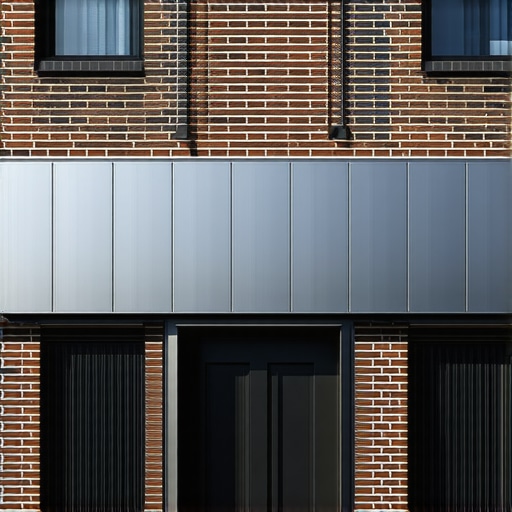
The Forensic Scene: When Modern Aesthetics Meet Decaying Foundations
The developer called me to an aging 1920s textile mill that was being converted into ‘luxury lofts.’ The vision was bold: matte black steel accents and metallic panels clashing against century-old common brick. The homeowner and the architect thought it was just a matter of aesthetics, maybe a few hairline cracks to patch. But when I slid my fiber-optic scope into a weeping joint behind a bulging soldier course, the truth was grim. The original structural steel lintels weren’t just rusted; they had oxidized into a brittle, flaky mess of ferrous oxide that occupied three times its original volume. This ‘rust jacking’ was slowly detonating the masonry from the inside out. They wanted to talk about metallic finishes, but first, we had to talk about the physics of collapse. This is the reality of professional masonry restoration: you cannot modernize what you haven’t first stabilized.
“Water penetration is the single greatest threat to masonry durability.” – BIA Technical Note 7
The Physics of the Pore: Why Breathability is Non-Negotiable
Before we even touch a ‘metallic finish,’ we have to understand the chemistry of the wall. Old commercial buildings use a multi-wythe system of solid clay brick. These bricks are ‘thirsty.’ They have a high initial rate of absorption, or ‘suction’ as we call it on the wall. They were designed to take on water during a storm and breathe it out when the sun hit. When you introduce modern metallic elements—whether it is ACM panels or steel trim—you are fundamentally changing the thermal and vapor profile of that wall. If you trap moisture behind a non-breathable metallic skin, you trigger the freeze-thaw damage restoration nightmare. In Northern climates, that trapped water expands 9% when it turns to ice. That internal pressure will pop the vitrified face off a hundred-year-old brick like a bottle cap. This is why tuckpointing brick walls with the correct ‘mud’—a soft, lime-based Type O or Type N mortar—is vital. If you use a high-strength Portland cement, the brick becomes the weakest link and shatters. The mortar must be the sacrificial lamb.
The Lintel Crisis: Structural Steel and Metallic Modernization
You cannot talk about modernizing an old building without addressing brick lintel replacement. In the forensic inspection of commercial facades, the lintels are the most common point of failure. These horizontal steel members carry the weight of the masonry over windows and doors. Over decades, moisture seeps through the head joints, sits on the steel, and starts the oxidation process. To modernize these buildings with a metallic aesthetic, we often replace these hidden, failing members with galvanized or stainless steel. It involves ‘toothing out’ the brick, shoring up the masonry above, and installing a new member with proper flashing. Without a dript edge and functional weep holes, that new metallic finish you love will be stained by ‘efflorescence’—that white, salty bleed—within six months. We aren’t just ‘fixing’ things; we are managing the movement of water and heat.
The Art of the Mud: Tuckpointing and Parging for Longevity
When we are preparing a building for a modern facelift, the ‘mud’ work is what dictates the next fifty years of its life. Chimney interior parging is a prime example. On many old commercial sites, the chimney is the most exposed element. Parging it with a smooth coat of hydraulic lime mortar protects the interior flue from the corrosive byproducts of combustion. On the exterior, tuckpointing brick walls isn’t just about ‘making it look pretty.’ It’s about restoring the structural ‘tooth’ between the units. A master mason uses a ‘hawk’ to hold the mud and a ‘slicker’ or jointer to compress the mortar into the joint. This compression is key; it forces the mortar into the nooks and crannies of the brick, creating a watertight seal that still allows vapor to escape. If you’re planning to add metallic panels or accents, your masonry substrate must be 100% sound, or you are simply burying a structural corpse behind a shiny shroud.
“The moisture content of the masonry must be in equilibrium with its environment before any protective coatings or decorative elements are applied.” – ASTM C67/C67M
Modern Technology: AI Masonry Assessment and Disaster Rescue
We are no longer just relying on a hammer and a keen ear. AI masonry assessment is changing how we handle commercial masonry maintenance. By using high-resolution drone thermography and machine-learning algorithms, we can identify heat signatures that indicate moisture trapped behind the brick before it ever shows a crack. This is critical for masonry rescue after disaster. After a major storm or seismic event, a building might look fine to the naked eye, but the internal ties—the ‘nails’ that hold the brick skin to the structural frame—could be snapped. In stone facade restoration, this tech allows us to map every individual stone’s movement. When we modernize with metallic finishes, we use this data to determine where to place expansion joints. Metal expands and contracts at a much higher rate than clay or stone. If you don’t account for that delta, the metal will literally rip the masonry anchors out of the wall.
The Process: Professional Masonry Restoration for Modern Use
Integrating a modern metallic look requires a surgical approach. First, the masonry water damage repair must be absolute. This means grinding out every failing joint to a depth of at least twice its width. We ‘butter’ the joints with a mortar that matches the original’s compressive strength—not modern concrete. Second, we address the ‘cold joints’ where different materials meet. When you transition from a historic brick soldier course to a modern aluminum panel, the sealant must be high-grade silicone or urethane with a backer rod to allow for the ‘bellows’ movement of the building. This isn’t a ‘handyman special.’ This is forensic engineering performed with a trowel. Do it once, and do it right, or you’ll be paying me to tear it all down in five years when the mold starts growing behind your expensive new metal facade.