
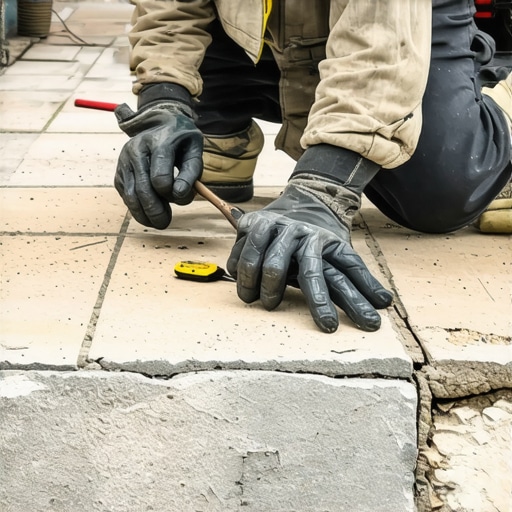
The Anatomy of a Silent Killer: Why Hairline Cracks Matter
You see a hairline crack on your stone coping and think it is an aesthetic nuisance. I see a ticking time bomb. As a third-generation mason, I have spent decades watching these ‘minor’ fissures transform into $100,000 structural nightmares. In the world of structural masonry inspection, we do not look at the surface; we look at the physics of what lies beneath. Coping stones are the sentinels of your wall system. They are the primary defense against the sky, tasked with shedding water away from the core of the masonry. When that defense is breached by even a fraction of a millimeter, the clock starts ticking on your building’s lifespan.
“Properly designed and installed coping is the first line of defense against moisture penetration into the wall assembly.” – BIA Technical Note 36A
The homeowner in a case I investigated last November thought it was just a hairline crack. But when I put my scope inside the void beneath the limestone cap, I saw the structural steel was rusted to dust. The water had been traveling through a three-inch fissure for five winters, slowly oxidizing the I-beam until the masonry began to heave. This is the reality of masonry damage assessment: the most dangerous threats are often invisible to the untrained eye. If you ignore the ‘tooth’ of the stone and the integrity of the joint, you are inviting a catastrophic failure into your home.
The Physics of the Freeze-Thaw Cycle and Capillary Suction
In regions where the mercury dips below freezing, a hairline crack is not just a gap; it is a straw. Through capillary suction, the stone draws moisture deep into its sedimentary layers. Now, consider the math of the freeze-thaw cycle. When water turns to ice, it expands by approximately 9% in volume. Within the confined space of a stone’s pore structure or a mortar joint, that expansion generates thousands of pounds of pressure per square inch. This is the force that causes ‘spalling’—where the face of the stone literally pops off, leaving the soft interior exposed to the elements. This is why structural repointing is a necessity, not an option.
Micro-zooming into the chemistry of the bond, we have to talk about the sustainable tuckpointing mortars we use today. Modern Portland cement is often too hard for historic stone coping. If you use a mortar that is harder than the stone, the stone will be the one to break when the wall shifts. We call this the ‘sacrificial principle.’ The mortar must be the weakest link so that it can be replaced without destroying the masonry units. When we perform a masonry rescue after disaster, we often find that ‘handyman specials’ used high-strength concrete patches that accelerated the decay of the original stone by trapping moisture and preventing ‘breathability.’
The Professional Repair Protocol: Beyond the ‘Butter’
Fixing a crack in stone coping requires more than just slapping some ‘mud’ over the gap. First, we perform a deep facade cleaning to remove biological growth and pollutants that prevent the new mortar from biting. Using a slicker or a specialized jointer tool, we must grind out the failed material to a depth of at least twice the width of the joint. This is not about aesthetics; it is about creating a mechanical bond. If you just ‘butter’ the surface, the patch will fail within one season due to lack of depth. We call this a ‘cold joint,’ and it is the hallmark of a hack job.
“The mortar shall be weaker than the masonry units so that any cracks will occur in the mortar joints where they can be easily repaired.” – ASTM C270
In high-end BIM masonry projects, we now use digital modeling to predict how thermal expansion affects these joints. Stone expands and contracts as it bakes in the sun. Without proper relief or the use of flexible sealants in specific transition points—especially near metallic masonry finishes like lead or copper flashing—the stone will inevitably crack again. This is where tuckpointing brick walls and stone coping becomes an art form. You have to understand the ‘suction’ of the dry brick and how to properly hydrate the substrate before the ‘mud’ hits the stone to prevent ‘flash setting,’ which leaves the mortar brittle and useless.
Estimating the Cost of Neglect
When clients ask for a tuckpointing cost estimation, I tell them they have two choices: pay for the maintenance now or pay for the demolition later. A simple repointing of a stone coping run might cost a few thousand dollars. Replacing the entire parapet because the structural steel has rotted can cost fifty times that. We are talking about scaffolding, engineering permits, and the replacement of custom-cut stone. Do not be fooled by cheap quotes that ignore the underlying moisture issues. A real forensic mason looks for the source of the crack—be it foundation settlement, hydrostatic pressure, or thermal shock—before they ever reach for their hawk and trowel. If you see a crack, the time for ‘wait and see’ has already passed. You are no longer just looking at a stone; you are looking at the health of your entire structural envelope.