Fix Flaking Tile Grouts on Masonry with 3 Pro 2026 Tips
The Anatomy of a Failing Joint
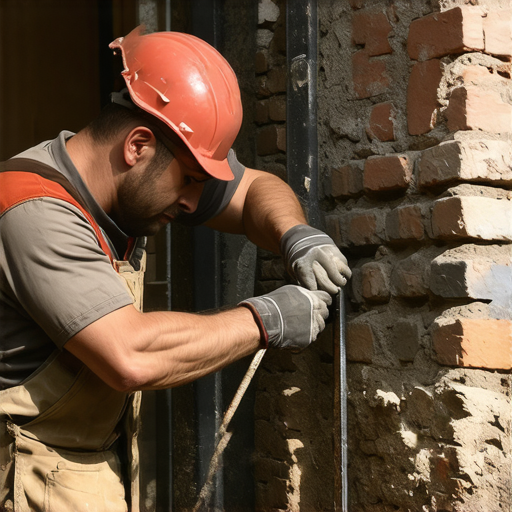
You can smell a failing foundation before you see the cracks. It is the scent of wet mineral dust and the stale dampness of trapped moisture that never found its way out. I have walked onto countless job sites where a homeowner is staring at an outdoor kitchen masonry build or a brick patio restoration project, wondering why their expensive grout is shedding like a molting snake. They call it ‘flaking.’ I call it a forensic failure of chemistry. Most of these guys today—these ‘handyman specials’—they think masonry is like Legos. Just stack them up and smear some gray goop in the gaps. They do not understand the tooth of the stone or the hydration curve of the mud.
My grandfather used to say that if you want to know if a brick is worth its weight, you tap it with the edge of your trowel. If it does not ‘ring’ like a high-pitched bell, it is a soft, under-baked sponge that will suck the life out of your mortar before it has a chance to set. This is exactly what happens with flaking grout. You have a brick veneer installation or a stone veneer over brick project where the substrate is thirsty. It drinks the water out of the grout so fast that the cementitious bond never actually forms. You are left with a dusty, brittle shell that pops off the moment the first frost hits. Here is how we stop the rot before it starts.
“Water penetration is the single greatest threat to masonry durability, leading to efflorescence, spalling, and the eventual disintegration of the joint matrix.” – BIA Technical Note 7
1. The Hydration Logic: Avoiding the ‘Flash Set’
The biggest mistake in modern tuck pointing services is failing to manage suction. If you are working in the heat or even in a dry, windy environment, the masonry units act like a desiccant. They pull the moisture from your grout ‘mud’ instantly. In the trade, we call this a ‘burned’ joint. The chemistry is simple but unforgiving: Portland cement requires water to grow microscopic crystals that interlock with the pores of the brick. If that water is stolen by the brick, the crystals never grow. They just sit there as a powder.
To fix this, you must pre-wet the substrate. I am not talking about a light mist. I am talking about saturating the joints until they reach a ‘saturated surface dry’ state. When you apply your grout, it needs to sit on a hawk and stay creamy. If it stiffens in five minutes, you have lost the battle. For commercial parapet wall repair, where the wind-driven rain and sun exposure are extreme, this hydration control is the difference between a 30-year fix and a 2-year failure. You need to understand the ‘suction’ of your specific material—be it a dense granite or a porous reclaimed brick.
2. Matching the Modulus: Why Harder Isn’t Better
People love to over-engineer things. They think that if a grout is flaking, they should just use the strongest, hardest cement possible. That is a death sentence for your wall. In brick infill panel repair and historic tuckpointing weatherproofing, we live by the sacrificial principle. The grout must be softer than the surrounding masonry. Why? Because buildings move. They breathe. They expand and contract with the thermal cycles of the sun.
If you put a high-strength, rigid grout into a wall of soft, hand-molded bricks, the grout won’t move, but the bricks will. The result? The bricks crack, or the grout face shears off because it has nowhere to go. We see this constantly with stone veneer over brick. The installer uses a high-PSI thin-set that is essentially glass. When the wall shifts 1/16th of an inch, that rigid bond snaps. For 2026, the pro tip is moving back to Type O or Type N mortars for restoration, or using advanced masonry adhesives that have a degree of lateral flexibility built into the polymer chain. You want a joint that can absorb the stress, not fight it.
“Mortar should be designed to be weaker than the masonry units so that any stress-induced cracking occurs in the joints, which are easier to repair than the units themselves.” – ASTM C270 Standard
3. The Physics of the Freeze-Thaw Cycle
In the North, water is a jackhammer. When water enters a hairline crack in your foundation or brick patio restoration, and the temperature drops, that water expands by 9% in volume. That expansion generates thousands of pounds of pressure per square inch. If your grout is ‘lick-and-stick’—meaning it is just sitting on the surface without being ‘buttered’ into the joint with a slicker—it will pop.
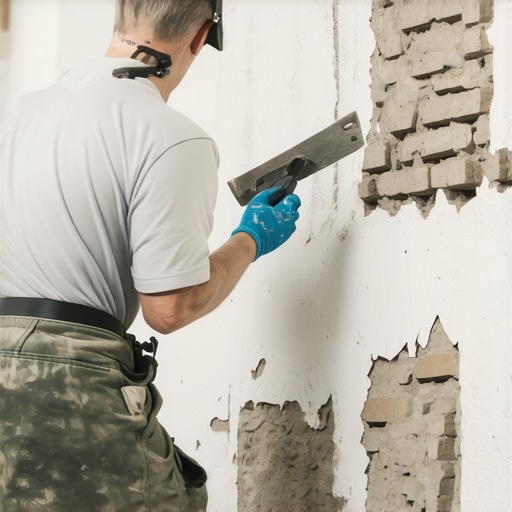
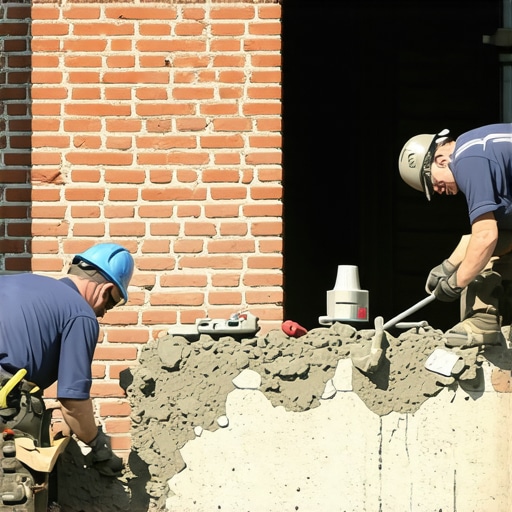
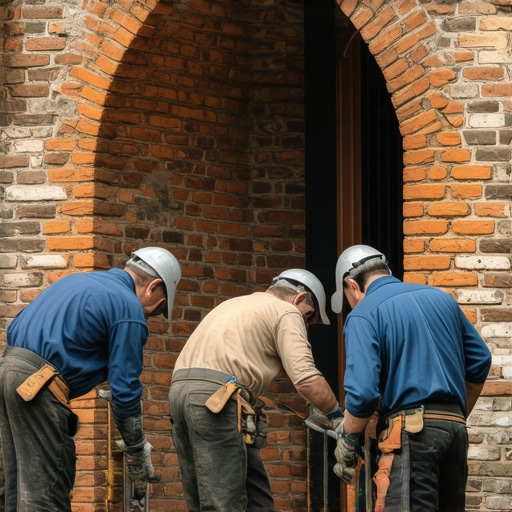
Proper tuck pointing services require grinding out the old, failing material to a depth of at least 3/4 of an inch. You cannot just ‘skim coat’ over old grout. It won’t have the ‘tooth’ to hold. You need to create a mechanical key. When we do a commercial parapet wall repair, we ensure the joint is square-cut, not V-cut. A square cut provides more surface area for the ‘mud’ to grip. Then, you pack it in layers. Do not try to fill a deep void in one pass. Pack it, let it ‘thumb-print’ hard, and then strike the final joint. This compacts the molecules and forces the air out, creating a weather-tight seal that can actually handle the expansion of ice.
The Hardscape Reality: Do It Once or Do It Twice
I have seen enough ‘wavy’ driveways and crumbling outdoor kitchen masonry builds to know that the base is where the story begins, but the grout is where it ends. If you are seeing flaking now, it is a symptom of a deeper sickness. Either your foundation is heaving, or your material selection was a mismatch for the climate. Don’t let a ‘tailgate contractor’ tell you that a quick spray of sealer will fix a flaking joint. Sealer on top of bad grout just traps the moisture inside, accelerating the spalling. You have to cut it out, respect the hydration, and use the right mud for the job. Real masonry isn’t about looking good on day one; it’s about looking the same on day ten thousand. If you can’t hear the ring in the brick, you’re just playing in the dirt. [[IMAGE_PLACEHOLDER]]
![3 Sustainable Block Cutting Tactics to Cut Project Waste [2026]](https://masonryrescue.com/wp-content/uploads/2026/02/3-Sustainable-Block-Cutting-Tactics-to-Cut-Project-Waste-2026.jpeg)