![3 Foundation Underpinning Costs Homeowners Usually Forget [2026]](https://masonryrescue.com/wp-content/uploads/2026/03/3-Foundation-Underpinning-Costs-Homeowners-Usually-Forget-2026.jpeg)
3 Foundation Underpinning Costs Homeowners Usually Forget [2026]
The Forensic Scene: When a Hairline Crack Becomes a Structural Grave
I recall a 1920s Tudor-style estate I inspected last autumn. The homeowner pointed to a thin, vertical fissure running from the grade up to the second-story windowsill. ‘Just a bit of settling, right?’ he asked, hoping for a cheap fix. I didn’t answer. I pulled out my borescope and threaded it through a weep hole. What I saw on the monitor wasn’t just ‘settling.’ The internal structural steel lintels were rusted to a fine, orange dust, and the original corrugated wall ties had snapped like dry twigs under the tension of a shifting foundation. The house wasn’t just moving; the veneer was physically detaching from the frame. This is the reality of forensic masonry. When you talk about foundation underpinning, most folks look at the price of the helical piers and think they’ve seen the whole bill. They haven’t. They forget the ‘hidden’ physics that occur when you try to move 50 tons of brick back into alignment.
The Physics of the Lift: Why Soil Doesn’t Always Cooperate
Before we talk about the money, you have to understand the hydrostatic pressure and soil heaving that got you here. In regions with expansive clay, the ground acts like a sponge. When it’s wet, it pushes; when it’s dry, it shrinks away, leaving your footings suspended in mid-air. Underpinning—the process of driving steel piers down to load-bearing strata—is the cure, but the process of self-leveling masonry lifts introduces new stresses to an old structure. As we jack the house back to level, every joint in that brickwork is under a microscope. If the mortar is too brittle, it won’t flex; it will shatter.
“Water penetration is the single greatest threat to masonry durability, often exacerbated by differential settlement that opens hidden pathways for moisture ingress.” – BIA Technical Note 7
1. Structural Brick Ties Replacement and Lateral Stability
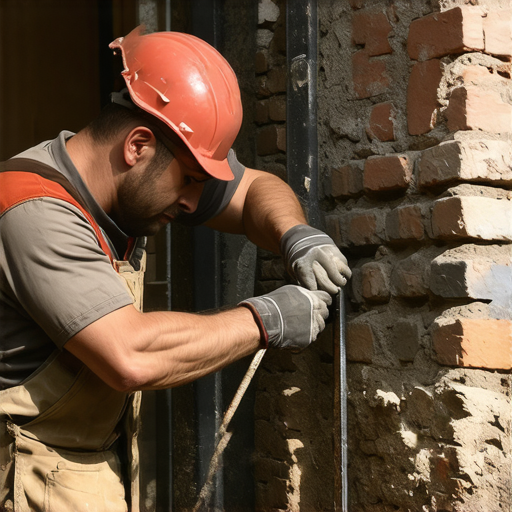
The first cost everyone forgets is the structural brick ties replacement. In many older homes, the brick you see is a veneer—a single wythe of masonry held to the wooden or steel studs by metal ties. Over sixty or seventy years, moisture seeps into the cavity, causing these ties to oxidize. When a foundation specialist performs a lift to stabilize the home, the vertical movement can snap those remaining, brittle ties. Suddenly, you have a foundation that is stable, but a brick wall that is free-standing and ready to peel off the house like a scab. You aren’t just paying for the piers under the ground; you’re paying for the stainless steel helical ties that must be ‘stitched’ back through the mortar joints into the studs to ensure the house stays in one piece. This isn’t a ‘handyman special’ fix; it requires precision drilling and epoxy anchoring to restore the lateral integrity of the facade.
2. Historic Mortar Analysis and Chemical Compatibility
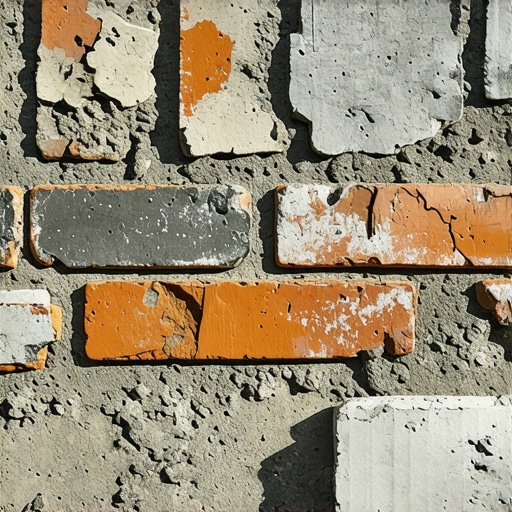
If your home was built before the mid-1940s, your biggest enemy isn’t the crack—it’s modern cement. This is where historic mortar analysis becomes a non-negotiable cost. Old-world masons used lime-based ‘mud’ that was softer than the brick itself. This was intentional. The mortar acted as a sacrificial lamb, absorbing moisture and movement while the brick remained intact. If you underpin a historic home and then try to patch the cracks with modern Type S Portland cement, you are signing a death warrant for your masonry. The cement is too hard; it has no ‘give.’ When the seasons change and the wall undergoes thermal expansion, the hard cement will stay rigid, and the pressure will cause brick spalling—where the face of the brick literally pops off because it has nowhere else to go. A proper brick wall restoration requires a laboratory to analyze the sand-to-lime ratio of your original mortar so a matching, breathable ‘mud’ can be mixed. You’re paying for the chemistry, not just the labor.
“Mortar should always be weaker than the masonry units it binds, ensuring that stresses are relieved through the joints rather than the units themselves.” – ASTM C270 Standard Specification
3. Commercial-Grade Parapet Repair and Drainage Logic
The third forgotten cost is what happens at the top of the wall. In many residential and commercial structures, foundation failure is actually a drainage failure. I’ve seen commercial parapet wall repair bills skyrocket because the roof drainage was dumping water directly into the wall cavity, softening the soil at the footer. When you underpin, you must also address the commercial masonry maintenance issues that caused the settlement. This often means replacing the lead flashings or the coping stones on the parapet to ensure that ‘bulk water’ isn’t infiltrating the system. If you fix the bottom (the foundation) but leave the top (the parapet) leaking, you’re just pouring money into a hole in the ground. You have to think about the entire vertical plane—from the brick paver driveway repair that ensures water flows away from the house, to the tuckpointing cost estimation for the entire chimney stack.
The ‘Band-Aid’ vs. The Cure
Many homeowners are tempted by the ‘Band-Aid’—a quick epoxy injection into a crack. To a forensic inspector, that’s like putting a piece of tape over a check-engine light. Epoxy has its place in concrete, but in a brick wall, it’s a ‘cold joint’ waiting to fail. It doesn’t breathe, and it doesn’t move. The ‘Cure’ involves a holistic approach: self-leveling masonry lifts to stabilize the weight, followed by brick patio restoration to fix the grade, and finally, a skilled mason who knows how to ‘butter’ a brick properly. When we ‘butter’ the head joints and the bed joints, we are ensuring 100% coverage, leaving no voids for water to hide. We use a slicker or a jointer tool to ‘strike’ the joint, compacting the mortar to create a weather-tight seal with the ‘tooth’ of the stone or brick.
When to Panic (And When to Plan)
If you see a stair-step crack following the mortar joints, that is usually a sign of standard settlement. You should plan, but don’t panic. However, if you see a horizontal crack—especially one that is wider at the top than the bottom—that is a sign of hydrostatic pressure pushing your wall inward. That is a structural emergency. In these cases, brick spalling prevention is no longer the goal; the goal is preventing a total collapse of the foundation wall. In 2026, the cost of materials like air-entrained concrete and specialized lime putties is only going up. The ‘asphalt gypsies’ will tell you they can fix it with a bucket of tar and some leftover bricks. Ignore them. Real masonry is about the long game. It’s about understanding that a house is a living, breathing thing that expands in the sun and huddles in the cold. Do it once, do it right, or you’ll be doing it again in five years when the next freeze-thaw cycle hits and pops your cheap repairs right out of the wall.
![Fix Shifting Blocks: 4 Signs Your 2026 Foundation Needs Help [2026]](https://masonryrescue.com/wp-content/uploads/2026/02/Fix-Shifting-Blocks-4-Signs-Your-2026-Foundation-Needs-Help-2026.jpeg)