Expert Tuckpointing & Foundation Restoration for Long-Lasting Stability
The Critical Role of Tuckpointing in Preserving Masonry Longevity
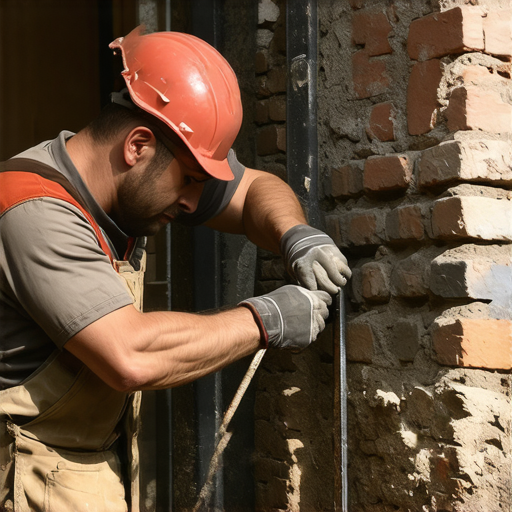
In the realm of historic and contemporary masonry restoration, proper tuckpointing serves as a foundational strategy to prevent water ingress and structural deterioration. Skilled tuckpointing not only enhances aesthetic appeal but also fortifies the mortar joints against environmental stressors, making it an indispensable aspect of facade maintenance for property owners and restoration professionals alike.
Deciphering the Nuances of Effective Facade Cleaning Techniques
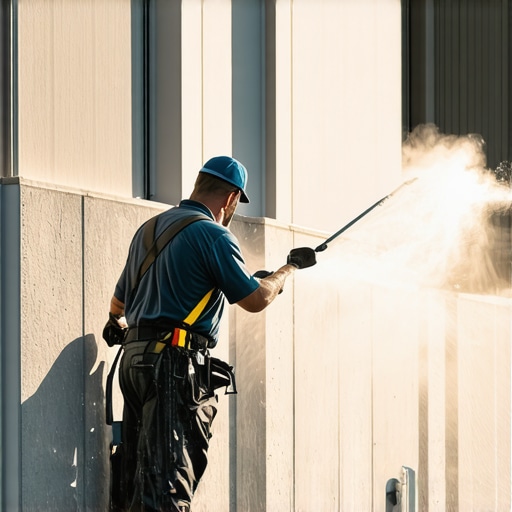
Facade cleaning transcends superficial aesthetics; it is a deliberate process aimed at preserving the structural integrity of masonry surfaces. Advanced techniques such as low-pressure washing combined with specialized chemical treatments remove harmful pollutants and biological growth, extending the lifespan of the masonry while respecting its historical fabric. For in-depth strategies, visit our Facade Cleaning Restoration Guide.
Foundations: The Bedrock of Structural Resilience
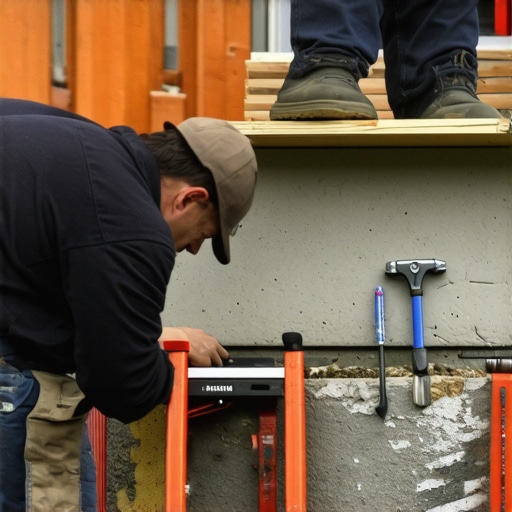
A stable foundation undergirds every durable structure. Foundation repair and reinforcement involve precise assessments of soil conditions, load capacities, and existing vulnerabilities. Expert interventions, such as underpinning with concrete piering or slab stabilization, are critical when addressing issues like settlement or cracking. Refer to Foundation Repair Strategies for comprehensive insights.
The Art of Concrete Patching: Enhancing Structural Durability
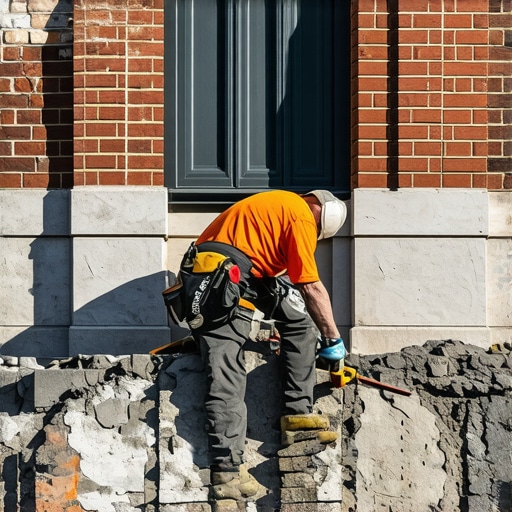
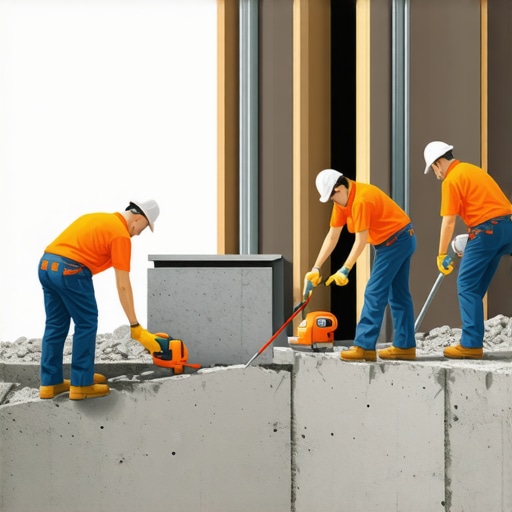
Concrete patching is an intricate process requiring material compatibility, surface preparation, and application techniques that promote long-term adhesion. Modern patching compounds infused with polymer modifiers offer superior bonding and crack resistance. Proper execution ensures restored load-bearing capabilities and aesthetic uniformity. For expert recommendations, explore Concrete Patch and Foundation Restoration.
What Are the Best Practices for Underpinning Historic Masonry to Ensure Future Stability?
Addressing this complex question involves evaluating soil conditions, load distributions, and the monument’s historical significance. Techniques such as micropile underpinning or soil stabilization with chemical grouts are effective, provided they are carefully designed and implemented to minimize aesthetic and structural disruption. Consulting with experienced restoration specialists can maximize stability while preserving historical integrity.
For more expert-level insights on masonry longevity, visit our Ultimate Masonry Restoration Guide. Your contribution of field-tested techniques enriches the collective knowledge essential for pushing the boundaries of durable masonry preservation.
Maximizing the Lifespan of Facade Restoration Efforts
To ensure that facade cleaning and restoration deliver enduring results, utilizing surface sealants tailored for masonry surfaces can be transformative. These penetrating or coating sealants act as barriers against moisture infiltration and biological growth, significantly reducing deterioration risks over time. Integrating sealants into your maintenance routine, especially after effective cleaning, prolongs the aesthetics and structural integrity of masonry. For comprehensive guidance on choosing the right products, consult our Facade Cleaning Restoration Tips.
Innovative Masonry Repair Materials That Outperform传统 Methods
Modern masonry repair compounds, especially those infused with nanotechnology or advanced polymers, offer superior bonding and flexibility compared to traditional mortar or patching materials. These innovations accommodate structural movements and environmental stresses, minimising cracking and failure. Employing these high-tech solutions requires an understanding of their compatibility with existing materials, making expert consultation invaluable. Discover more about practical application and material choices by reviewing our Masonry Repair Techniques.
How Can Integrating Smart Technologies Revolutionize Masonry Maintenance?
Emerging innovations like embedded sensors and IoT devices in masonry structures enable real-time monitoring of material health, detecting issues like moisture intrusion, structural shifts, or temperature fluctuations before they evolve into costly repairs. Such proactive maintenance strategies are gaining momentum in preserving historic and modern masonry alike. Incorporating these technologies, however, demands a nuanced understanding of structural behavior and data interpretation. Experts believe that blending traditional craftsmanship with digital tools can set a new standard in durable masonry preservation.
Stay ahead in the field by exploring cutting-edge techniques and products at our Expert Masonry Restoration Portal. Sharing insights and experiences within the community enriches collective expertise and pushes the boundaries of masonry durability.
Pioneering Moisture Management Strategies for Long-Lasting Masonry Preservation
One of the most challenging facets in masonry restoration is controlling moisture movement within the substrate. Modern solutions advocate for integrated vapor-impermeable membranes paired with breathable water-resistant coatings, which collectively prevent water ingress while allowing trapped internal moisture to escape. This dual barrier approach mitigates efflorescence, freeze-thaw damage, and biological deterioration, ensuring the longevity of facade integrity. For comprehensive methodologies, refer to authoritative standards outlined by the Brick Industry Association’s technical guidelines.
Enhancing Structural Resilience Through Material Innovation and Structural Engineering Collaboration
Collaborative efforts between structural engineers and material scientists have birthed breakthroughs such as ultra-high-performance concrete (UHPC) and engineered mortars with exceptional tensile strength and flexibility. These materials accommodate complex loading scenarios and structural movements without cracking or delamination. Integrating these advanced composites demands meticulous assessment of compatibility, which calls for cross-disciplinary expertise, detailed finite element analysis, and pilot testing to validate performance parameters under environmental stressors.
How Can we Optimize the Integration of Smart, Self-Healing Masonry Materials for Heritage Structures?
Self-healing masonry units, imbued with microcapsules containing repair agents like epoxy or calcium carbonate, activate in response to cracks, autonomously restoring integrity. Optimizing their performance for historic structures involves balancing preservation with functional enhancement; this includes selecting compatible healing agents that do not alter the aesthetic or chemical makeup of original materials. Moreover, embedding sensors within these units signals ongoing healing processes, enabling proactive maintenance. Consultations with researchers like those from the Fraunhofer Institute for Organic Electronics, Electron Beam and Plasma Technology elucidate potential applications for large-scale heritage restoration projects.
To stay at the forefront of masonry innovation, engage with specialized forums and conferences dedicated to supermaterials and digital fabrication. These platforms facilitate knowledge exchange crucial for evolving preservation practices.
Leveraging Digital Twins for Predictive Maintenance in Masonry Conservation
The advent of digital twin technology, which creates a real-time virtual replica of a masonry structure, opens unprecedented avenues for predictive analysis and maintenance planning. By integrating sensor data—such as strain gauges, humidity monitors, and thermal imaging—into a dynamic model, engineers can simulate future deterioration scenarios. This proactive approach enhances decision-making, allows targeted interventions, and extends maintenance intervals. Notably, recent studies published in the Journal of Cultural Heritage demonstrate successful case studies where digital twins reduced repair costs by up to 30%, emphasizing their transformative potential.
What Challenges Must Be Overcome to Implement Digital Twin Solutions in Heritage Masonry Projects?
Challenges encompass data integration from heterogeneous sources, ensuring sensor durability within harsh environments, and establishing robust algorithms capable of accurate prediction amid complex, evolving conditions. Additionally, there exists a need for specialized training of conservation personnel to interpret digital twin outputs effectively. Developing universally accepted standards and protocols for digital twin deployment will be critical for broad adoption across heritage sites and modern constructions alike.
Interested stakeholders should consider collaborative initiatives with tech developers and heritage organizations, fostering innovation that respects historical integrity while harnessing cutting-edge predictive capabilities. Dive deeper into pioneering case studies and technical frameworks at the Digital Heritage Conservation Consortium.
Harnessing Data Analytics for Predictive Masonry Maintenance
In the evolving landscape of historic masonry preservation, integrating data analytics offers a paradigm shift from reactive repairs to proactive management. By deploying sensors that monitor moisture levels, structural shifts, and environmental conditions, practitioners can forge comprehensive datasets. Analyzing this data through machine learning algorithms enables predicting deterioration patterns, thus optimizing maintenance schedules and resource allocation. Experts refer to this as the ‘digital stewardship’ approach—combining traditional craftsmanship with cutting-edge analytics for unprecedented preservation accuracy.
Eliciting Stakeholder Collaboration in Complex Restoration Projects
Securing justifiable budgets for high-stakes masonry projects hinges critically on strategic stakeholder engagement. Facilitating robust communication channels among architects, conservationists, community representatives, and funding agencies fosters consensus and shared vision. Employing visual modeling tools and augmented reality walkthroughs can concretize project benefits, aligning diverse interests around common preservation goals. The literature underscores that stakeholder buy-in not only accelerates approval processes but also enhances custodial commitment, ensuring enduring project success.
What Are the Most Effective Money-Saving Measures Without Compromising Quality?
Cutting-edge techniques like in-situ material testing and non-destructive evaluation allow precise identification of structural vulnerabilities, avoiding unnecessary interventions. Additionally, employing durable, reversible repair materials—such as engineered mortars with tailored elasticity—can extend repair lifespan, reducing lifecycle costs. Establishing phased restoration plans prioritizing critical issues minimizes initial expenditure while maintaining structural integrity, proven effective in multiple high-profile conservation initiatives. For comprehensive guidance, consult the Journal of Architectural Conservation’s latest special issue on cost-efficient preservation techniques.
Expert Insights & Advanced Considerations
Prioritize Material Compatibility for Long-Term Success
Ensuring that repair and restoration materials are compatible with existing masonry is crucial for the durability of heritage structures. Incompatible materials can lead to stress concentrations, cracking, or deterioration over time, undermining the integrity of the restoration efforts.
Embrace Innovative Technologies for Predictive Maintenance
Integrating smart sensors and digital twin models allows for real-time monitoring of masonry health, enabling proactive interventions before visible damage occurs. These advancements elevate traditional preservation into a strategic, data-driven process.
Focus on Moisture Management Strategies
Effective moisture control through vapor barriers and breathable coatings is vital to prevent freeze-thaw damage and biological growth. A comprehensive approach to moisture mitigation significantly extends the life of masonry facades.
Leverage Material Science Breakthroughs
The development of nanotechnology-infused mortar and self-healing materials opens new pathways for resilience. These materials can adapt to environmental stresses, self-repair cracks, and maintain structural integrity over decades.
Engage Stakeholders Early and Often
Successful masonry preservation depends on collaboration among conservators, engineers, architects, and clients. Open communication ensures alignment of goals, budget, and methods, resulting in more resilient outcomes.
Curated Expert Resources
- International Masonry Society Publications: Offers peer-reviewed research on advanced materials and techniques in masonry conservation.
- National Institute of Standards and Technology (NIST) Reports: Provides guidelines on structural monitoring technologies and material testing standards.
- Journal of Cultural Heritage: Features case studies on digital twins, smart sensors, and innovative conservation methodologies.
- Fraunhofer Institute for Organic Electronics, Electron Beam and Plasma Technology: Leading research in self-healing and nano-enhanced mortar applications.
- Brick Industry Association Technical Guidelines: Essential standards for moisture management and material compatibility in masonry repairs.
The Future of Masonry Restoration Commences Now
In the continually evolving realm of masonry preservation, the integration of pioneering materials and cutting-edge technologies propels the discipline into a new era of durability and aesthetic excellence. Strategic stakeholder collaboration and proactive maintenance strategies not only safeguard our architectural heritage but also set a benchmark for sustainable practices. By engaging with expert insights and authoritative resources, professionals and enthusiasts alike can contribute meaningfully to extending the lifespan of masonry structures. Your expertise and observations can influence this vital field—don’t hesitate to share your experiences or explore further advanced strategies to elevate your projects to unparalleled standards.

![Fix Shifting Blocks: 4 Signs Your 2026 Foundation Needs Help [2026]](https://masonryrescue.com/wp-content/uploads/2026/02/Fix-Shifting-Blocks-4-Signs-Your-2026-Foundation-Needs-Help-2026.jpeg)