
The Day the Fire-Skin Died
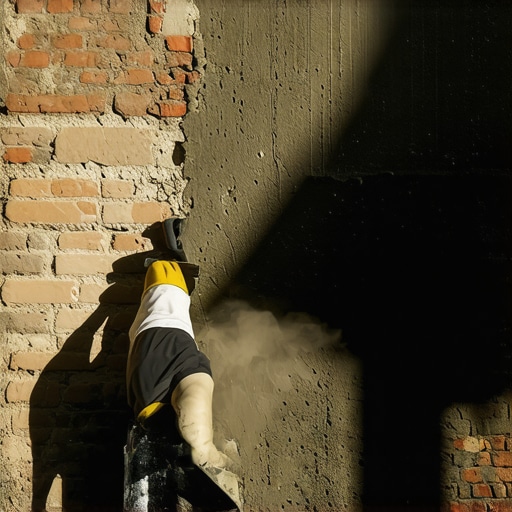
My old mentor, a man whose hands were so calloused they felt like 40-grit sandpaper, once stopped me from aiming a high-pressure nozzle at a 19th-century warehouse facade. He didn’t just tell me to stop; he grabbed the wand and pointed to a single red brick. “You see that sheen? That’s the fire-skin,” he growled. “You blast that off, and you’ve turned a 100-year-old wall into a giant sponge. You’re not cleaning history; you’re committing a slow-motion demolition.” That lesson stayed with me through three decades of professional masonry restoration. Most people see dirt and want it gone. They don’t realize that in the world of historic masonry, the ‘dirt’ is often a protective carbon crust, and the ‘clean’ surface underneath is a fragile, porous heart that was never meant to face the elements without its vitrified armor.
“Water penetration is the single greatest threat to masonry durability, and the removal of the protective outer surface of a brick through abrasive cleaning accelerates this decay exponentially.” – BIA Technical Note 20
The Micro-Physics of the Kiln-Fired Surface
To understand why you can’t just ‘scrub’ a historic brick, you have to zoom into the molecular level of the firing process. When those old clay units were baked in a coal-fired kiln a century ago, the intense heat caused the surface minerals to undergo vitrification. This creates a dense, glass-like ‘fire-skin’ that is significantly less permeable than the interior of the brick. This skin is your primary defense against the freeze-thaw cycle. In northern climates, water expands by 9% when it turns to ice. If you’ve stripped the fire-skin through aggressive abrasive blasting, water enters the pore structure of the brick. When it freezes, it doesn’t just sit there—it exerts massive internal pressure, causing the face of the brick to pop off in a process we call spalling. Once the face is gone, the brick’s structural integrity is compromised, leading to the need for cracked brick wall repair or even emergency masonry repair if the load-bearing capacity is lost.
The Chemistry of Damage: Why Acids and Pressure are Your Enemies
I’ve seen ‘handyman specials’ where someone tried to clean old brick with raw muriatic acid. It makes me sick. On a historic site, that acid doesn’t just eat the dirt; it reacts with the calcium carbonate in the lime-based tile grouts on masonry and the historic mortar. This reaction produces soluble salts that get trapped behind the surface. This is called subflorescence. You won’t see it today, but in six months, the brick will start to crumble from the inside out. When we conduct a structural masonry inspection, we aren’t just looking for cracks; we’re looking for signs of chemical ‘burn’ from improper cleaning. Modern Portland-based mortars are too hard for these old units. If you combine a hard mortar with a stripped brick face, you’ve created a recipe for total facade failure. This is why we advocate for soft lime-putty mortars and pH-neutral cleaners during any professional masonry restoration project.
“The cleaning of historic masonry should be undertaken with the gentlest means possible. Abrasive cleaning methods, such as sandblasting, should never be used on historic masonry.” – Department of the Interior, Preservation Brief 1
The Forensic Approach to Cleaning: A Step-by-Step Methodology
Before you even think about touching the ‘mud’ or grabbing a slicker for repointing, you must test. We start with a simple low-pressure water soak. Sometimes, all a building needs is a ‘long shower’ to soften atmospheric pollutants. If the dirt is stubborn, we move to non-ionic detergents that don’t leave behind metallic salts. For high-rise structures or complex chimneys, we often employ drone chimney inspections to map out areas of heavy carbon buildup or biological growth before a single technician leaves the ground. This allows us to target our cleaning without over-processing the entire stack. If we find heavy soot at the top, we might use a peelable latex mask that pulls the soot out of the pores without any water at all. This is critical for chimney repair services where water intrusion could damage the flue liner or the interior fireplace assembly.
Integrating Structural Health with Aesthetic Preservation
Cleaning isn’t just about looks; it’s about identifying underlying issues. Often, when the grime comes off, we find a commercial parapet wall repair is desperately needed because the hidden joints have turned to dust. Or, we might realize that the dampness on the interior isn’t from the brick being ‘dirty,’ but from a lack of foundation waterproofing or a failed retaining wall drainage upgrade nearby. Hydrostatic pressure in the soil can push moisture up into the brick through capillary action, carrying salts that look like dirt but are actually efflorescence. If you don’t fix the drainage, the ‘dirt’ will be back in a month. When we butter a new joint during restoration, we ensure the new mortar is ‘sacrificial’—it must be softer and more permeable than the brick itself, so that moisture escapes through the mortar, not the brick face. This is the ‘Sacrificial Principle,’ and it’s the law of the land for any Master Mason worth his hawk and trowel.
The Final Word: Preservation vs. Destruction
At the end of the day, a historic building should look its age, but it should look healthy. Stripping a brick to make it look ‘new’ is like sanding a vintage violin to make the wood look bright—you’re destroying the very thing that gives it value. Whether you are dealing with a small cracked brick wall repair or a massive commercial parapet wall repair, the goal is always the same: keep the water out, let the building breathe, and for heaven’s sake, keep the pressure washer in the truck. Done right, your masonry will stand for another century. Done wrong, and you’re just paying for a slow-motion demolition. If you see a contractor showing up with a bucket of acid and a high-PSI rig, tell them to get off the site before they skin your history alive.