
The Forensic Reality of the ‘Hairline’ Fracture
I was standing on a hydraulic lift four stories up against a commercial facade last November, looking at what the property manager called ‘a bit of cosmetic cracking.’ To the untrained eye, it was just a spiderweb of grey lines tracing the brick quoin repair done the previous summer. But when I inserted the fiber-optic scope into a 1/8-inch gap where the new mortar met the old clay, the truth was laid bare. The structural steel lintels behind the veneer weren’t just rusted; they had expanded to twice their original thickness through oxide jacking, literally pushing the building’s face off its frame. The ‘patch’ that the previous contractor applied was nothing more than a shroud for a corpse. This is the reality of forensic masonry: what you see on the surface is rarely the problem, but it is always the symptom.
The Physics of the Freeze-Thaw Kill Zone
In the harsh freeze-thaw cycles of northern climates, masonry is a battlefield of fluid dynamics and thermal expansion. When the temperature drops, the moisture trapped within a brick or a mortar joint undergoes a phase change. Water expands by approximately 9% in volume when it turns to ice. If your masonry doesn’t have the requisite ‘breathability’—the ability to transport water vapor through its pores—that 9% expansion exerts internal pressure that can exceed 30,000 psi. No brick, no matter how well-fired, can withstand that. This is why commercial masonry facade maintenance is not a luxury; it is a survival strategy for the structure.
“Water penetration is the single greatest threat to masonry durability, leading to efflorescence, spalling, and the eventual failure of the structural bond.” – BIA Technical Note 7
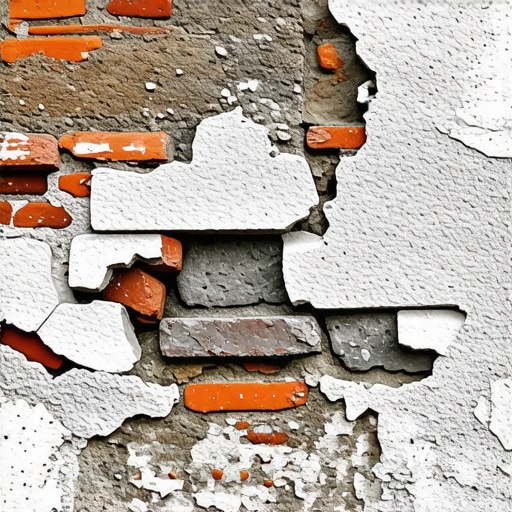
Most failed patches occur because the ‘handyman’ uses a high-strength Portland cement (Type M or S) to fix a building that was originally laid with lime-based mortar. The new, hard mortar creates a ‘cold joint.’ It doesn’t bond at the molecular level with the old, softer substrate. Instead, it acts like a plug. When the wall shifts or the temperature changes, the soft brick is crushed against the hard cement ‘mud.’ This leads to spalling, where the face of the brick simply pops off, leaving a raw, orange wound exposed to the elements. This is why structural repointing must always prioritize the ‘sacrificial’ principle: the mortar must be softer and more permeable than the brick it surrounds.
Micro-Zooming into the Hydration of Lime and Carbonation
To understand why commercial tuckpointing fails, you have to look at the chemistry of the bond. In a historic restoration context, we are often dealing with lime putty. Unlike modern hydraulic cements that set through a chemical reaction with water (hydration), traditional lime mortar sets through carbonation. It absorbs CO2 from the atmosphere over decades, slowly reverting to calcium carbonate—essentially becoming a breathable limestone bridge between the bricks. When a technician ‘butters’ a joint with a modern, non-breathable mix, they are essentially suffocating the wall. The moisture becomes trapped, the salts (efflorescence) crystallize behind the patch, and the resulting sub-fluorescence shreds the brick’s internal matrix.
The Engineering of Modern Fixes: Adhesives and Robotics
We are entering a new era where robotic masonry repair is becoming feasible for high-rise commercial smokestack repair and inaccessible facades. These systems can map the thermal signature of a wall to find hidden voids before they become collapses. However, even with high-tech tools, the fundamentals remain. We now utilize advanced masonry adhesives for specific anchoring tasks, particularly when tying a veneer back to a concrete block foundation. These aren’t your hardware store glues; they are two-part epoxies designed to handle the shear forces of a multi-ton wall moving under wind loads. In concrete block foundation repair, we often see failures where hydrostatic pressure from saturated soil has bowed the wall. A simple patch won’t fix a 15-degree lean. You need to address the drainage and potentially use carbon fiber straps or helical piers to arrest the movement.
Chimneys, Smokestacks, and Thermal Shock
Nowhere is the masonry environment more hostile than in a chimney or a commercial smokestack. You have a constant battle between the 1000-degree internal gases and the sub-zero exterior air. This is why chimney flue liner installation is so critical. Without a properly isolated liner, the thermal shock will crack the outer masonry shell in a single season. The ‘ring’ of a healthy brick is lost, replaced by a dull thud that tells me the internal structure is ‘honeycombing’—turning into a porous, crumbly mess. In commercial smokestack repair, we often have to deal with acid rain condensation that eats the mortar from the inside out. We use acid-resistant cements and specialized ‘slicker’ tools to ensure the joints are compacted to a glass-like finish, shedding water instantly.
“Mortar should be weaker than the masonry units so that any stress-induced cracking occurs in the mortar joints rather than in the units themselves.” – ASTM C270
The Integration of Green Tech and Masonry
As we move toward sustainable architecture, green roofing masonry integration has become a significant forensic challenge. When you put a garden on top of a building, you change the moisture profile of the entire parapet. The flashing must be perfect, or the constant dampness will lead to the ‘wicking’ effect, where water is pulled down through the brickwork via capillary action. This can cause the soldier course at the top of the wall to heave and separate. Proper maintenance requires a deep understanding of how these new systems interact with old-world materials. If you’re not checking the ‘tooth’ of the stone before applying a new membrane, you’re just waiting for a disaster.
How to Properly Execute Structural Repointing
To do it right, you don’t just slap some mud in a crack. You start by grinding out the failed joints to a depth of at least 1 inch—or twice the width of the joint—using a dust-shrouded vacuum system to prevent silica exposure. You wash the joints to remove any loose material and to satisfy the ‘suction’ of the brick. If the brick is dry, it will suck the water out of your mortar too fast, causing it to ‘flash set’ and crumble. You mix your mortar to a ‘thumbprint’ hardness, then pack it into the joint in 1/4-inch lifts, allowing each layer to firm up before the next is added. Finally, you ‘strike’ the joint with a jointer or slicker to compress the face and create a weather-tight seal. Anything less is just a ‘handyman special’ that will fall off before the snow melts. In this trade, you either do it once, or you do it twice—and the second time always costs ten times as much.