The Forensic Scene: When a Hairline Crack Becomes a Liability
I stood on a cherry picker, forty feet above a sidewalk where thousands of people pass every hour, looking at what the building manager called a ‘beauty mark.’ It was a vertical crack running through a soldier course, barely wide enough to fit a credit card. But when I slid my borescope through a half-clogged weep hole, the reality was grim. The internal steel wall ties were gone—corroded into a pile of orange dust. The entire outer wythe of masonry was leaning two inches toward the street, held up by nothing but the ghost of friction and a bit of gravity. The manager wanted to know if we had to shut down the sidewalk and build a scaffold ‘tunnel’ for three months. I told him we could save the building without ever blocking a single pedestrian, provided he understood the physics of what was actually happening behind that brick.
Most modern contractors see a bowing wall and want to tear it down. They don’t understand the ‘tooth’ of the material or how to work with the building’s existing skeleton. When you’re dealing with foundation wall bowing repair or facade stabilization on a commercial scale, you aren’t just moving bricks; you are managing lateral loads and thermal movement. The goal is to re-establish a mechanical connection between the facade and the structural backup, whether that’s CMU, steel, or heavy timber, without the invasive footprint of traditional masonry teardowns.
The Physics of the ‘Breathing’ Wall
Every masonry structure is a living thing. It expands in the heat and contracts in the cold. In a high-traffic commercial environment, this movement is compounded by vibration. If your mortar is too hard—if some ‘handyman’ used a high-strength Portland mix for full repointing services on a building that needed a softer touch—you’ve essentially turned your facade into a brittle sheet of glass. When the building moves, it doesn’t flex; it snaps. This is where brick spalling prevention starts. If the moisture can’t escape through the mortar joint because the ‘mud’ is too dense, it will force its way out through the face of the brick, popping it off like a scab. We call this the sacrificial principle: the mortar must always be weaker than the masonry unit.
“Water penetration is the single greatest threat to masonry durability. Proper moisture management through the use of flashing and compatible mortar is essential for long-term structural integrity.” – BIA Technical Note 7
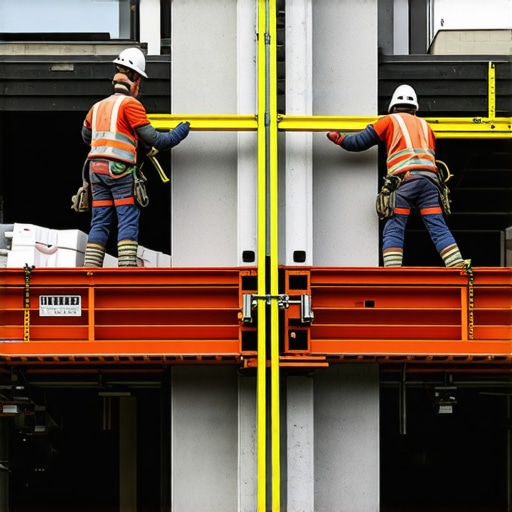
To stabilize a facade without closing the sidewalk, we utilize helical stabilization systems. This involves drilling micro-pilot holes through the mortar joints—never the brick—and driving stainless steel anchors into the backup material. This creates a mechanical tie that ‘pins’ the facade back to the building. It’s fast, it’s surgical, and it requires zero scaffolding. We work from an aerial lift that can be moved at the end of every shift, keeping the sidewalk clear and the business open. This isn’t just a repair; it’s a forensic intervention.
The Chemistry of Mortar Matching Services
You can’t just grab a bag of Type S from a big-box store and start buttering joints. If you’re working on a historic commercial facade, you need mortar matching services that look at the sand gradation and the lime-to-cement ratio. In my grandfather’s day, they didn’t have fancy lab tests; they knew the mix by the way it ‘hung’ on the trowel. If the suction of the brick was too high, they’d wet the wall down to prevent the brick from sucking the moisture out of the mud too fast, which causes a ‘flash set’ and a weak bond. Today, we use historic pointing styles like a struck joint or a weathered joint to ensure shed-water physics are working in our favor. If you use a flush joint on a building designed for a concave strike, you’re just inviting water to sit on the ledge and start the freeze-thaw cycle.
Micro-Zooming into Hydrostatic Pressure and Geogrids
When the problem isn’t the facade but the ground beneath it, we shift from masonry chemistry to geotechnical physics. I’ve seen stone wall repair jobs where the wall was leaning four inches because the original builder forgot about drainage. Behind every failing retaining wall is hydrostatic pressure—water weight that turns soil into a liquid battering ram. This is where retaining wall geogrid installation becomes the hero. A geogrid isn’t just a plastic mesh; it’s a structural reinforcement that uses the weight of the soil against itself. By layering these grids and ensuring a proper ‘clear heart’ gravel backfill, we eliminate the pressure that causes the wall to bow in the first place.
“The stability of a masonry assembly is dependent upon the compatible interaction of its components, including the units, mortar, and reinforcement, under environmental loads.” – ASTM C270 Standards
For buildings with green initiatives, green roofing masonry integration adds another layer of complexity. You’re adding thousands of pounds of wet soil and organic matter to the top of a structural system. The parapet walls and chimneys need chimney interior parging and specialized waterproofing to handle the constant moisture. If the parging—that smooth coat of mortar inside the flue or on the back of a wall—is honeycombing or cracking, you’re leaking moisture into the core of the building. We treat these as forensic puzzles, solving the moisture migration path before we ever pick up a slicker tool.
The ‘Band-Aid’ vs. The Cure
I’ve seen too many ‘proposals’ that suggest a quick smear of epoxy for masonry joint sand repair or a thick coat of waterproof paint. That’s not a repair; it’s a death sentence for the brick. Paint traps moisture. Epoxy creates a cold joint where the two materials meet, and eventually, the thermal expansion will cause the masonry to shear. The real cure involves understanding the load paths. If you have foundation wall bowing repair needs, we look at the soil’s expansive properties. If you have a failing facade, we look at the lintels and the wall ties. It’s about restoring the original structural intent with modern, low-impact technology.
We can stabilize a 10-story facade using lateral restraints and blind-side anchors while pedestrians walk five feet below us. By using specialized rigs and dust-collection systems, we eliminate the mess and the liability. We are effectively ‘sewing’ the building back together. This approach saves the owner the $200,000 cost of a sidewalk bridge and months of ‘rented’ space, while actually solving the structural failure instead of just hiding it behind a fresh layer of buttered mud. It takes a master’s eye to see the difference between a settling crack and a structural failure, but once you find it, the physics of the fix are undeniable. Do it right once, or you’ll be paying for my forensic report every five years until the wall finally gives up the ghost.