Full Repointing vs. Spot Repairs: 3 Ways to Decide in 2026
The Forensic Reality: A Flashlight and a False Hope
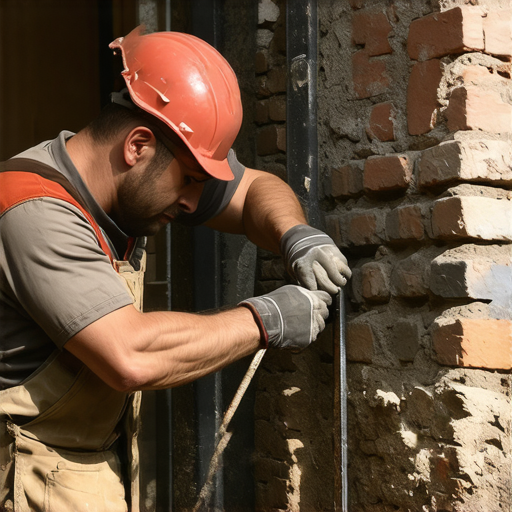
I was standing in the crawlspace of a 1922 colonial in Providence last March, the kind of place where the air smells like wet coal and forgotten history. The homeowner pointed to a vertical hairline crack and told me he just wanted a quick patch—a bit of ‘mud’ to hide the blemish. But when I slid my bore-scope into the wythe, the truth was ugly. The internal structural steel lintel had oxidized so severely it had expanded to twice its original thickness, pushing the masonry outward like a slow-motion explosion. This wasn’t a case for a quick fix; the entire facade was ‘smiling’ because the internal bones were rotting. This is the reality of masonry damage assessment in 2026: what you see on the surface is rarely the whole story. Whether you are looking at a historic chimney or a sagging foundation, the choice between a spot repair and a full repointing is the difference between a bandage and a cure.
“Mortar should be weaker than the masonry units so that any cracks occur in the mortar joints where they can be easily repaired, rather than through the units themselves.” — ASTM C270 Standard Specification
The Physics of the ‘Tooth’ and why Mortar Fails
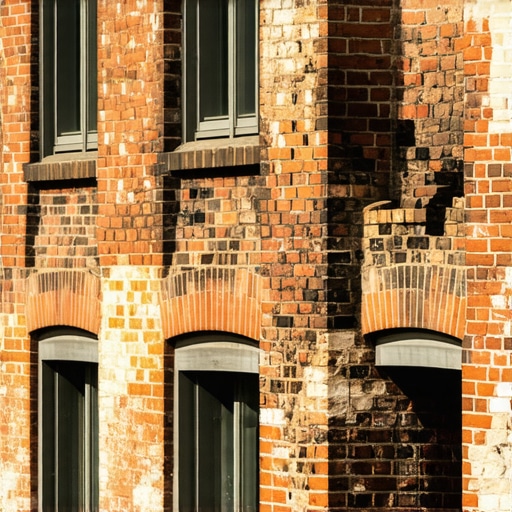
Masonry isn’t a static wall; it is a breathing, moving lung of clay and lime. When we talk about the ‘tooth’ of a brick, we are talking about its capillary suction. A proper mortar joint doesn’t just sit there; it forms a chemical and mechanical bond by pulling the hydration into the pores of the brick. If you use a modern, high-portland ‘Type S’ mortar on a soft, pre-1940s brick, you are signing a death warrant for that wall. The mortar will be harder than the brick. When the house shifts or the temperature swings, the mortar won’t give—the brick will. This leads to spalling, where the face of the brick literally pops off, leaving the soft interior exposed to the elements. This is why sustainable block cutting and the reclamation of old materials have become so vital; we need to match the density of the replacement units to the original 19th-century fabric.
Way 1: The ‘Ring’ Test and the 50 Percent Rule
Before you decide on a chimney structural repair or a facade refresh, you need to use your ears. I take a small masonry hammer and tap the joints. A healthy joint has a dull thud. A failing joint, one that has lost its bond through sulfate attack or simple carbonation, will sound hollow or ‘crunchy.’ If more than 50% of the joints in a given elevation sound hollow, spot repairing is a waste of time. You’ll be chasing cracks for the next decade. Full repointing allows for a uniform hydration cycle across the entire wall, ensuring that the metallic masonry finishes or breathable sealants applied later bond correctly. Chimney interior parging often fails because people try to patch the smoke chamber without realizing the flue tiles themselves have shifted, creating a ‘cold joint’ where smoke and creosote can migrate into the house walls.
Way 2: The Digital Twin Masonry Projects of 2026
We’ve moved past the era of ‘eyeballing it.’ In 2026, we utilize digital twin masonry projects to map the thermal expansion of a building over a 48-hour cycle. By using LiDAR and infrared sensors, we can see exactly where the stress is concentrating. If the stress is localized—say, around a settling corner—then foundation crack repair combined with foundation slab jacking might solve the root cause, allowing for a localized spot repair. However, if the digital twin shows a systemic failure of the mortar’s lime matrix across the entire south-facing wall due to UV degradation and thermal shock, then a full repointing is the only professional path forward. You aren’t just replacing sand; you are resetting the building’s structural clock.
“Water penetration is the single greatest threat to masonry durability, and the integrity of the mortar joint is the first line of defense.” — BIA Technical Note 7
Way 3: The Breathability Audit and Chemical Compatibility
Most ‘handyman specials’ involve grabbing a bag of premix from a big-box store and ‘buttering’ over the old joints. This is a crime. In chimney crown repair, for instance, if you use a non-flexible portland mix over an old lime base, the two materials will fight. The new mortar will ‘burn’—drying too fast and shrinking—leaving a microscopic gap that invites water in. This water then undergoes the freeze-thaw cycle, expanding by 9% and shattering the joint from the inside out. For a brick paver driveway repair, the physics change; you’re dealing with compressive loads and hydrostatic pressure from below. If the base isn’t compacted to 98% Proctor density, no amount of ‘mud’ in the joints will keep those pavers level. You do it once, or you do it twice. A full repointing ensures that the ‘suction’ is uniform, preventing the ‘patchwork quilt’ look that devalues high-end properties.
The Process: Striking the Joint with a Hawk and Slicker
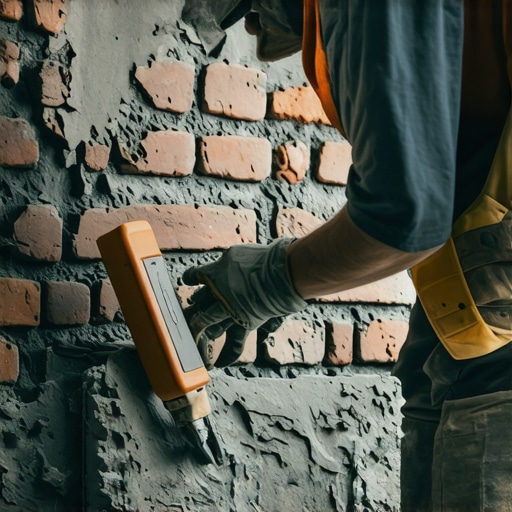
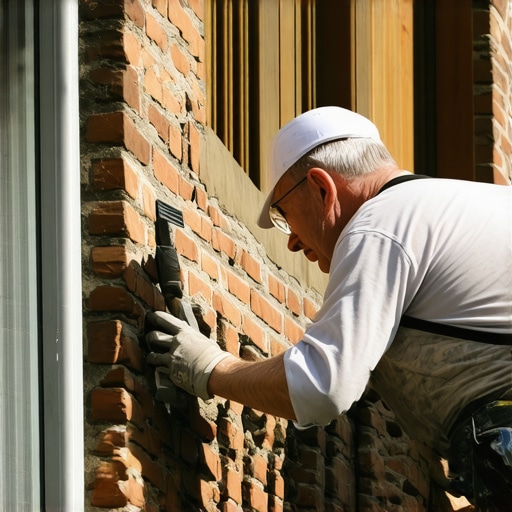
When we do a full repointing, we don’t just scratch the surface. We grind out the old joints to a depth of at least 3/4 of an inch, or until we hit sound mortar. We use a ‘hawk’ to hold our mud—a lime-putty mix that has been ‘knocked up’ to the perfect consistency of peanut butter. We ‘butter’ the joints, packing them tight to eliminate voids or ‘honeycombing.’ Then comes the ‘slicker’ or jointer tool. Striking the joint isn’t just about aesthetics; it’s about compressing the mortar to seal the edges against the brick. This compaction is what creates the weather-shield. In 2026, we are also seeing a return to traditional carbonation—where the lime absorbs CO2 from the air to turn back into stone over a century, a process much more sustainable than the high-carbon footprint of modern cement manufacturing.