
4 Concrete Pump Masonry Mixes for Faster 2026 Structural Repairs
The Autopsy of a Failing Facade
The homeowner thought it was just a hairline crack. But when I put my scope inside that cavity, I saw the structural steel was rusted to dust, shedding orange flakes like a dying cedar. This wasn’t just a cosmetic issue; it was a slow-motion collapse. In the forensic masonry world, we don’t look at what is visible; we look at the chemistry of the void. That ‘hairline’ was actually the result of 15 years of hydrostatic pressure screaming for a way out. When you are dealing with an outdoor fireplace rebuild or a commercial smokestack repair, the physics of the mix is your only shield against the inevitable pull of gravity. I’ve seen enough honeycombing in cheap pours to know that if the mud doesn’t flow correctly through the pump, the structural integrity of your foundation underpinning is a lie.
“Water penetration is the single greatest threat to masonry durability.” – BIA Technical Note 7
The Physics of the Pump and the 2026 Standard
By 2026, the industry is shifting toward high-velocity placement for brick veneer installation and structural stabilization. The ‘old way’ of bucketing mud up a scaffold is dead. But pumping masonry grout isn’t as simple as thinning it out with a garden hose. If you add too much water to increase flow, you kill the compressive strength. You’re left with a brittle, porous mess that will spall the moment the first hard freeze hits. We are talking about the ‘tooth’ of the mix—how it bites into the existing substrate. For BIM masonry projects, we now calculate the exact rheology of the grout to ensure it fills every nook without segregating. If the aggregate separates from the cement paste during the pump cycle, you get a ‘plug,’ and your crew stands around for three hours while you disassemble 200 feet of hose. It’s a nightmare I wouldn’t wish on a drywaller.
1. The High-Flow Micro-Grout for Stone Veneer Repair
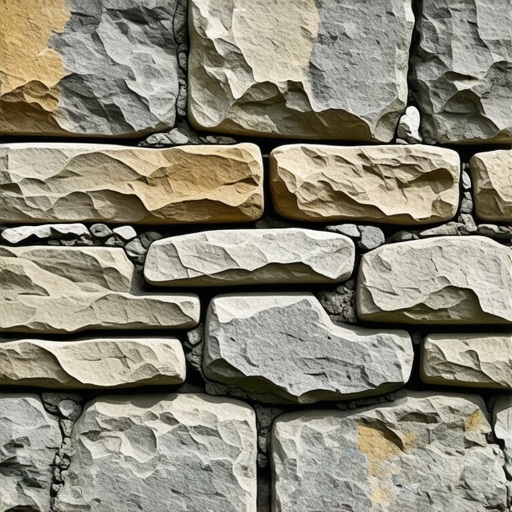
When performing a stone veneer repair, you often have a narrow cavity between the decorative stone and the backup wall. You can’t reach in there with a trowel to butter the back of the stone. You need a mix that behaves like a liquid but cures like a rock. This 2026-spec mix uses superplasticizers—long-chain polymers that wrap around cement particles and give them a negative charge. They repel each other, keeping the mix fluid with a fraction of the water. This allows for a flush pointing services finish that actually bonds to the lath. The suction of a dry substrate can pull the water out of your mix instantly; these modern mixes use water-retention agents to keep the hydration process alive for the full 28-day cure.
2. Sulfate-Resistant Mixes for Foundation Underpinning
In the world of foundation underpinning, the enemy is the soil itself. Groundwater often carries salts and sulfates that eat through standard Portland cement like acid. The 2026 structural mix for underpinning uses Type V cement or high-reactivity metakaolin. This isn’t just about strength; it’s about density. By closing the capillary pores within the concrete, we prevent the ‘wicking’ effect that leads to efflorescence and internal rot. When we pump this mud under a sinking footing, we are looking for a ‘cold joint’—or rather, the total avoidance of one. We need the new pour to chemically fuse with the old, rough-hewn concrete. Using a hawk and a slicker to finish the edges is fine, but the real work happens in the molecular bonding of the slurry.
3. The Lightweight Thermal Mix for Commercial Smokestack Repair
Working on a commercial smokestack repair involves extreme thermal cycling. The interior might be 400 degrees while the exterior is sub-zero. A standard rigid mix will shatter. The 2026 approach involves air-entrained, lightweight aggregates like expanded shale. Air entrainment is the process of creating millions of microscopic bubbles—think of them as tiny shock absorbers. When water gets into the masonry and freezes, it expands by 9%. These bubbles give the ice somewhere to go so it doesn’t pop the face off your retaining wall capstone replacement. It’s the difference between a wall that lasts a decade and one that lasts a century.
“Masonry units and mortar must work as a composite system to redistribute stresses.” – ASTM C270 Standard
4. The Breathable Hybrid for Tuckpointing Brick Walls
If you are tuckpointing brick walls on a building from the 1920s, you cannot use modern, hard concrete. If the mortar is harder than the brick, the brick will lose. I have seen countless historic facades destroyed by ‘handymen’ using Type S mortar on soft, hand-molded bricks. The face of the brick just shears off. Our 2026 pumpable mud for historic work uses a lime-putty base with just enough white cement to allow it to be pumped. It’s a ‘sacrificial’ material. It stays softer than the brick, allowing the building to breathe and move. After the repair, masonry staining can be used to match the weathered patina of the original wall, but the structural repair must remain vapor-permeable. Moisture must be able to escape the wall as a vapor, or it will turn to ice and blow the brick apart from the inside out.
[image_placeholder]
The Art of the Soldier Course and Capstone
Whether you’re finishing a retaining wall capstone replacement or setting a soldier course above a window lintel, the final strike of the joint is where the master shows his hand. A ‘weathered joint’ sheds water; a ‘recessed joint’ invites it to sit and soak. In the 2026 repair cycle, we aren’t just slapping mud. We are using BIM masonry projects data to predict where water will shed and where it will pool. We use slickers to compress the surface of the joint, closing the pores and creating a ‘skin’ that resists the elements. If you see a guy ‘shaving’ his joints with a trowel and leaving them open and grainy, fire him. He’s building a sponge, not a wall.
The Final Toll: Do It Once or Do It Twice
Masonry isn’t a trade of shortcuts. It is a trade of consequences. When you choose a pump mix for a brick veneer installation or an outdoor fireplace rebuild, you are choosing how long that structure will stand after you’ve packed your tools. Cheap mixes lead to honeycombing, cold joints, and eventually, another forensic inspection from someone like me. Invest in the chemistry, respect the physics of the freeze-thaw cycle, and for heaven’s sake, make sure your drainage is clear before you pump a single drop of mud. A wall is only as strong as the water it can move away from itself.