4 Smokestack Repair Signs to Prevent a 2026 Plant Shutdown
The Forensic Reality of the 200-Foot Fissure
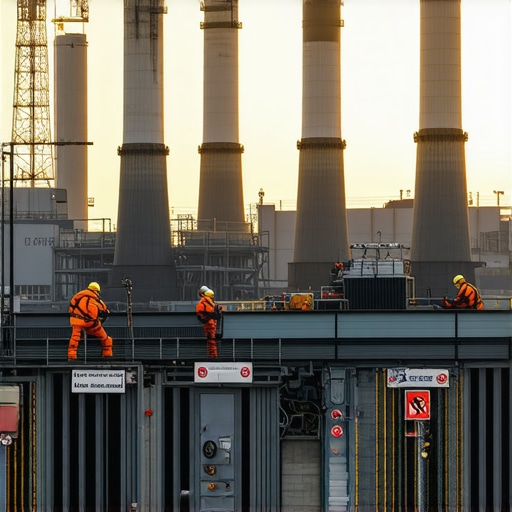
The facility manager at the manufacturing plant pointed toward the sky, his finger tracing a line he thought was just a ‘weathering’ mark. He believed a simple coat of paint or some cheap brickwork sealants application would buy him five years. I didn’t even need my ladder to know he was wrong. I slid my high-resolution fiber-optic scope into a weeping joint near the thirty-foot mark and saw the nightmare: the inner refractory lining was delaminating, and the structural steel reinforcement hoops were being consumed by sulfuric acid condensate. It wasn’t just a crack; it was a chimney gasping its last breath. If that stack isn’t addressed, the 2026 production schedule won’t just be delayed—it will be buried under five hundred tons of industrial debris.
The Physics of Thermal Exhaustion
Industrial smokestacks are not static pillars of brick; they are living, breathing thermal engines. Every time a furnace cycles, the masonry undergoes a brutal expansion-contraction dance. We call this ‘thermal cycling,’ and it is the primary killer of industrial masonry. When you are dealing with a fire-rated masonry installation, you aren’t just slapping mud between bricks. You are managing the coefficient of thermal expansion. Standard Portland-based mortar is a death sentence in these environments because it lacks the ‘give’ required. When the stack heats to 800 degrees, the bricks expand. If the mortar is too rigid, the bricks have nowhere to go but out, leading to ‘hoop stress’ failures. This is where we see vertical splitting that looks like a lightning bolt frozen in clay.
“Water penetration is the single greatest threat to masonry durability, but in industrial chimneys, the combination of moisture and combustion byproducts creates a corrosive slurry that dissolves mortar from the inside out.” – BIA Technical Note 34
Sign 1: The ‘Salt Sweat’ and Chemical De-bonding
If you see a white, crusty substance or a metallic-tinted sheen on the exterior of your stack, do not ignore it. This is efflorescence on steroids. In the industrial sector, we often see this alongside metallic brick colors application gone wrong, where the minerals in the clay react with flue gases. When moisture enters the masonry through hairline fractures, it reacts with the sulfur in the exhaust. This creates sulfuric acid, which eats the calcium hydroxide—the ‘glue’—out of your mortar. I’ve seen 40-year-old ‘mud’ that you could scrape out with a thumbnail because the chemistry had been neutralized. This is where AI masonry assessment becomes a lifesaver. Using thermal imaging and drone-mounted LiDAR, we can map the ‘cool spots’ on a stack that indicate where the internal lining has collapsed, allowing heat to cook the outer wythe of brick.
Sign 2: The Soldier Course Shift and Batter Distortion
A chimney’s ‘batter’—the subtle inward slope that provides stability—is a masterpiece of engineering. When I see a stack that looks ‘pregnant’ or has a slight bulge, I know the internal structural integrity is shot. This often occurs when the horizontal reinforcement bands have rusted and snapped. The masonry begins to settle unevenly. To fix this, we don’t just patch the holes. We look at retaining wall batter correction principles applied vertically. We might implement self-leveling masonry lifts or structural shoring to stabilize the load before the stack undergoes a ‘cold joint’ failure, where the top half of the chimney essentially slides off the bottom half during a seismic event or high wind load.
Sign 3: Foundation Heave and the Leaning Giant
Every structural forensic investigation starts at the mudline. If the concrete pad of the smokestack is cracking or showing signs of honeycombing, the entire 2026 shutdown plan is at risk. Soil hydrologics in heavy industrial zones are often compromised by poor drainage. If the stack is leaning even one degree, it places massive eccentric loads on the masonry. We solve this by foundation helical pier installation, driving steel shafts deep into the load-bearing strata to arrest the tilt. I’ve seen plant owners try to ‘wait it out,’ only to find that a 2-inch lean at the base becomes a 12-foot lean at the crown. We also look for self-healing concrete foundations technologies for new builds, but for a 1970s stack, it’s about mechanical stabilization or retaining wall reinforcement of the base plinth.
“The stability of a masonry chimney is dependent upon the integrity of its bond and the maintenance of its vertical alignment within a tolerance of 1/10th of an inch per 10 feet of height.” – ASTM C1298 Guide for Design and Construction of Refractory Lining Systems
Sign 4: Crown Failure and the Chimney Sweep’s Warning
The top ten feet of a stack take the most abuse. It’s where the hottest gases meet the coldest air. If your chimney sweep and repair crew reports ‘spalling’—where the faces of the bricks are popping off—you are witnessing the freeze-thaw cycle in its most violent form. When water gets behind the brick face and freezes, it expands by 9%, literally exploding the clay. If the crown cap is cracked, water pours down the interior cavity. This is where high-performance brickwork sealants application is non-negotiable, but it must be a breathable silane-siloxane sealer. If you use a ‘lick-and-stick’ non-breathable coating, you will trap the moisture and turn your stack into a ticking time bomb.
Executing the 2026 Preservation Plan
To avoid a total plant shutdown, you need to stop thinking about masonry as a ‘cosmetic’ issue. It is a structural mandate. Start with an AI masonry assessment to get a baseline. If the core is sound but the exterior is ‘burning’ (the trade term for mortar that has dehydrated and turned to dust), we use a slicker to deeply repoint the joints with a lime-heavy mud that can handle the stack’s movement. We use a hawk and trowel to butter the joints, ensuring there are no air pockets or honeycombing that could hold water. Do it once, do it right, and that stack will be standing long after the current machinery is obsolete. Keep your eye on the batter, listen for the ‘ring’ of the brick, and never trust a contractor who doesn’t know the difference between a soldier course and a header.
![4 Geogrid Mistakes Ruining Retaining Walls [2026 Checklist]](https://masonryrescue.com/wp-content/uploads/2026/02/4-Geogrid-Mistakes-Ruining-Retaining-Walls-2026-Checklist.jpeg)
![5 Retaining Wall Geogrid Installation Mistakes to Avoid [2026]](https://masonryrescue.com/wp-content/uploads/2026/04/5-Retaining-Wall-Geogrid-Installation-Mistakes-to-Avoid-2026.jpeg)