3 Metallic Masonry Finishes for High-End 2026 Curb Appeal
The Living Metal: A Lesson from the Old Guard
My father’s mentor, a man named Silas who had hands like weathered granite and a nose for bad lime, once showed me a relic of a forgotten era. It was a copper-infused mortar joint on a 1920s bank vault. While the rest of the neighborhood’s masonry was crumbling under the assault of acid rain and urban decay, those joints lived. They had patinated into a deep, regal green, protecting the substrate with a natural oxide layer that no modern sealant could replicate. He told me, ‘Masonry isn’t a wall; it’s a lung. If you clog it with cheap plastic, it dies. If you feed it metal, it endures.’ That lesson is more relevant today than ever as we look toward 2026, where the intersection of high-end aesthetics and structural forensic science is bringing metallic finishes back to the forefront of curb appeal. But beware: if you don’t understand the physics of the foundation or the chemistry of the mud, you’re just putting lipstick on a sinking ship.
The Physics of the Metallic Face: Why 2026 Demands More Than Aesthetics
Modern ‘lick-and-stick’ veneers are the bane of my existence. I’ve performed a structural masonry inspection on enough failing suburban ‘palaces’ to know that when you trap moisture behind a non-breathable metallic coating, you’re inviting a catastrophe. In the blistering heat of the South, where the sun beats down on a soldier course until the units hit 140 degrees Fahrenheit, thermal expansion becomes your primary antagonist. The physics is simple but brutal: metallic elements and cementitious bodies have vastly different coefficients of expansion. If your concrete pump masonry mixes aren’t calibrated for this, the metallic finish will delaminate faster than a cheap suit in a rainstorm. We are seeing a shift toward finishes that integrate the metal into the molecular structure of the masonry itself, rather than just sitting on top of it.
“Water penetration is the single greatest threat to masonry durability.” – BIA Technical Note 7
1. Sintered Iron-Oxide Slurries: The Industrial Patina
The first finish dominating the 2026 forecast is the sintered iron-oxide slurry. This isn’t just rust in a bucket. We’re talking about a microscopic fusion of iron particles within a high-performance concrete masonry unit restoration project. By applying these slurries during the hydration phase of the cement—the period where the calcium silicate hydrate (C-S-H) gel is still forming—the iron becomes part of the crystalline matrix. As the wall cures, we use a slicker to compress the surface, forcing the metallic ions to the face. The result is a deep, iridescent charcoal that bleeds into a burnt orange over time. For high-end curb appeal, this provides a ‘living’ facade that changes with the humidity. However, from a forensic perspective, you must ensure chimney leak detection is performed before application. If internal moisture is present, the iron will oxidize too rapidly, leading to ‘weeping’ that can stain your brick patio restoration below.
2. Mica-Infused Reflective Pointing: The Glimmer Joint
If you want a property to stand out, you stop looking at the brick and start looking at the ‘mud.’ Mortar repointing services are traditionally about matching the old, but for 2026, we are seeing the rise of refractive mica-infused mortars. This involves a historic mortar analysis to determine the original lime content and then ‘buttering’ the joints with a mix containing varying grades of muscovite mica. The ‘micro-zoom’ on this is fascinating: the mica flakes act as tiny mirrors, scattering light across the facade. When a mason ‘strikes’ the joint correctly, those flakes align. If the mason is lazy and doesn’t use a hawk and trowel with precision, you get honeycombing—small voids where water can sit and freeze. In hot climates, this mica also helps reflect UV radiation, slightly reducing the thermal load on the foundation. It turns a standard wall into a shimmering tapestry of light without sacrificing the breathability required for long-term structural health.
3. Vapor-Permeable Copper Stucco: The Sovereign Look
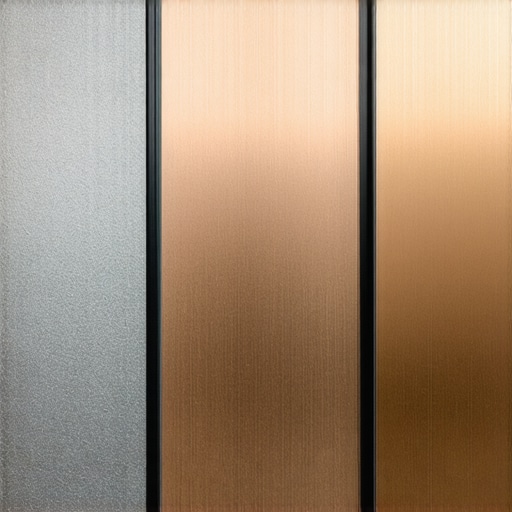
The third finish is the most technical: vapor-permeable copper stucco. This isn’t a paint; it’s a metallic suspension in a lime-based carrier. The beauty of lime is its ‘self-healing’ property. When a hairline crack forms due to minor settlement, the lime carbonizes and fills the void. By suspending copper particles in this mix, the 2026 high-end home achieves a finish that transitions from a bright penny to a sophisticated statuary bronze. This is critical for masonry repair services because it allows the wall to ‘breathe’ out internal moisture while the metallic surface sheds bulk water. If you’re dealing with a retaining wall batter correction, using a metallic finish like this requires an obsessive focus on drainage. If the ‘batter’ or the inward slope isn’t perfect, water will pool against the metallic surface, causing uneven calcification and ruining the aesthetic.
“Mortar should be designed to be weaker than the masonry units it binds, ensuring that stresses are relieved through the joints rather than the units themselves.” – ASTM C270
The Forensic Reality Check: Don’t Build on Sand
I’ve seen homeowners spend six figures on these metallic finishes only to watch them crack down the middle because they ignored a stair-step crack in the corner of the house. Before you even think about 2026 curb appeal, you need a structural masonry inspection. If your foundation is settling or if you have a cold joint from a previous botched repair, the movement will telegraph through your expensive metallic finish. In the heat of the South, ‘flash setting’ is your enemy. If you’re buttering a brick that is bone-dry, it will suck the moisture out of your metallic mortar before it can properly hydrate, leaving you with a brittle, dusty mess that won’t hold the weight of its own ambition. Always wet the substrate. Always respect the suction. And for heaven’s sake, stop hiring handymen for master-level chemistry. Do it once, do it right, and let the metal tell the story of a wall built to last a century.