5 Critical Brick Quoin Repair Fixes for Shifting 2026 Homes
The Forensic Scene: When Veneer Lies and Structure Dies
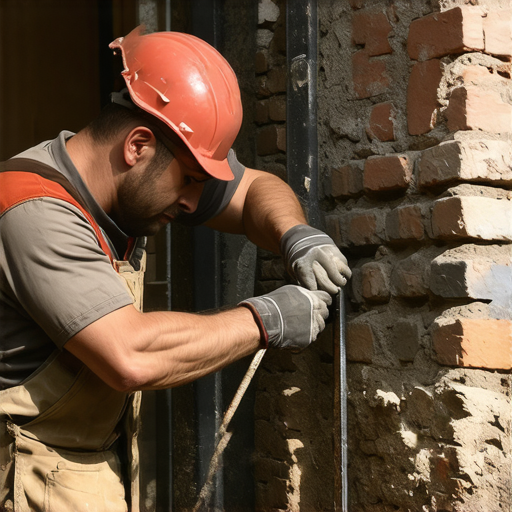
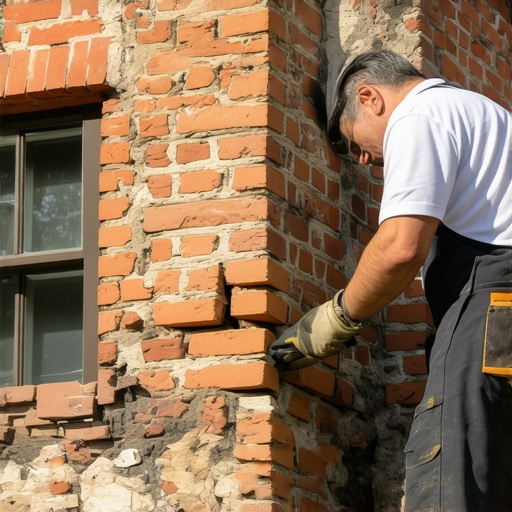
The homeowner stood on the manicured lawn of his 2026 ‘Neo-Traditional’ build, pointing at a hairline fracture that traced a jagged path through the decorative cornerstones. ‘It is just a settlement crack, right?’ he asked, hope masking his anxiety. I did not answer. I do not guess; I diagnose. I took my fiber-optic scope and threaded it into a 3/8-inch weep hole at the base of the corner. On the high-definition monitor, the truth was ugly. The structural steel ties, meant to marry the brick facade to the inner frame, were nothing but orange flakes of rusted dust. The quoin—those heavy-looking decorative blocks at the corner—was essentially floating, held up by nothing but gravity and a prayer. This was not a minor settlement; this was a structural divorce. Modern ‘lick-and-stick’ masonry often ignores the fundamental physics of load-bearing corners, and by 2026, the shortcuts of the last decade are beginning to scream for mercy.
The Geophysics of the Quoin: Why Corners Fail First
In the masonry world, quoins are the skeleton’s knuckles. They are supposed to provide lateral stability, but in contemporary construction, they are often just aesthetic ‘infill panel’ work that lacks a true mechanical bond. When the soil shifts—whether due to the increasingly erratic freeze-thaw cycles of our northern winters or the hydrostatic pressure of a poorly drained lot—the corners take the brunt of the rotational force. In the North, we deal with the 9% expansion of water. When moisture enters the micro-fissures of a dense, modern mortar and hits that 32-degree mark, it exerts thousands of pounds of pressure. If your mortar is harder than your brick, the face of the brick will ‘spall’ or pop off like a scab.
“Water penetration is the single greatest threat to masonry durability, specifically at structural transitions like quoins where differential movement is most pronounced.” – BIA Technical Note 7
1. Foundation Helical Pier Installation: Stabilizing the Unstable
When I see a stair-step crack migrating from the quoin toward the windows, I know the ‘mud’ is not the problem—the ground is. For 2026 homes built on expansive clay or ‘fill’ dirt, the only permanent cure is a foundation helical pier installation. We are talking about driving giant steel screws deep into the earth until they hit competent load-bearing strata—sometimes 30 feet down. We do not just ‘jack up’ the house. We use hydraulic torque motors to monitor the resistance, ensuring each pier can handle the specific tonnage of that corner. This bypasses the ‘active zone’ of the soil that heaves and sinks with the seasons. Without this, any ‘tuckpointing weatherproofing’ you do is just putting lipstick on a corpse.
2. High-Performance Mortar Mixes and Historic Pointing Styles
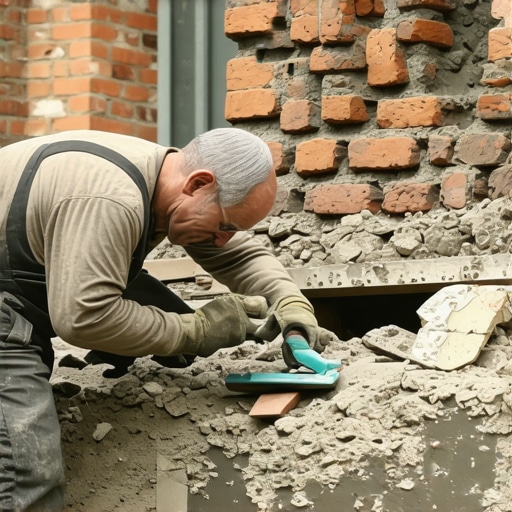
I have a burning hatred for the bag-mix Portland cement sold at big-box stores. It is too rigid. For a lasting quoin repair, we need high-performance mortar mixes that respect the ‘sacrificial principle.’ The mortar must be slightly softer than the brick. If the house moves—and it will—the mortar should develop the hairline crack, not the brick. In 2026, we are seeing a return to historic pointing styles, like the grapevine or the weathered joint, because they actually shed water better than the flush joints used by ‘handyman’ crews. When we ‘butter’ a brick, we are looking for ‘suction.’ If the brick is too dry, it sucks the water out of the mud too fast, leading to ‘flash setting’ and a weak bond. We use Type N or O mixes with lime to allow the building to ‘breathe,’ preventing the trapped moisture that leads to spalling.
3. Foundation Waterproofing and the Hydrostatic Fight
You can fix the bricks all day, but if you have a failing retaining wall repair or a saturated foundation, you are wasting your time. Foundation waterproofing in 2026 involves more than just a coat of tar. We are talking about dimple-board membranes and bentonite clay mats that react with water to form an impenetrable seal. We have to address the ‘hydrostatic head’—the weight of the water in the soil pushing against the basement or crawlspace walls. If that water has nowhere to go, it will find its way into the masonry joints of your quoins. We install dedicated drainage systems to move that water away from the ‘tooth’ of the corner, ensuring the soil density remains constant.
4. Brick Infill Panel Repair and Mechanical Stitching
When the quoins have actually detached from the backup wall, we use a technique called ‘stitching.’ We drill through the brick and into the substrate, inserting helical stainless steel anchors that act as new ‘connective tissue.’ This is critical for brick infill panel repair. We then ‘mud’ over the entry points using a custom-tinted mortar to hide the surgery. This re-establishes the lateral tie that was lost to rust or poor initial construction. We see this often in homes that have attempted green roofing masonry integration; the extra weight of a living roof increases the ‘downward and outward’ pressure on the corners, requiring a much higher density of mechanical ties than standard code usually dictates.
5. Tuckpointing Weatherproofing and Joint Sand Repair
The final layer of defense is the ‘finish.’ Tuckpointing weatherproofing is not just about aesthetics; it is about ‘compacting’ the joint. We use a ‘slicker’—a specialized metal tool—to strike the joint and compress the mortar. This closes the ‘honeycombing’ (small air pockets) where water likes to hide. For the horizontal surfaces, like those on a retaining wall block replacement or a patio edge, masonry joint sand repair is vital. We use polymeric sands that set up hard but remain flexible, preventing weed growth and, more importantly, preventing water from undermining the base.
“The selection of mortar should be based on the properties of the masonry unit… A mortar that is too strong can cause the masonry units to crack or spall during thermal expansion or moisture movement.” – ASTM C270 Standard Specification for Mortar
The Hard Reality of Masonry Longevity
In my thirty years of smelling damp lime and hauling a ‘hawk’ full of mud, I have learned that gravity never sleeps. The quoins of your home are the first line of defense against the elements, and if they are shifting, the clock is ticking. You can hire a guy with a bucket of caulk to smear over the cracks, or you can do it right. Doing it right means understanding the ‘carbonation’ of lime, the ‘osmotic migration’ of salts (efflorescence), and the ‘soil torque’ of a pier. Don’t let a ‘handyman special’ turn your biggest investment into a ‘soldier course’ of failures. Fix the base, fix the bond, and let the stone ring like a bell when you tap it. That is the only way to ensure your home survives to 2050, let alone 2026.
![Why Your 2026 Chimney Needs a Heat Shield [Safety Update]](https://masonryrescue.com/wp-content/uploads/2026/04/Why-Your-2026-Chimney-Needs-a-Heat-Shield-Safety-Update.jpeg)
Reading this detailed breakdown really underscores the importance of not just patching up masonry issues but addressing the root causes. I’ve seen many homes where surface repairs only delayed the inevitable, especially when foundation settling or water infiltration was ignored. The point about helical piers resonated with me, as I recently worked on a project where stabilizing the foundation was crucial to prevent further damage. It’s fascinating how modern repair techniques, like stainless steel stitching and advanced waterproofing, can extend the lifespan of these structures. I wonder, in climates with extreme weather fluctuations, what additional steps are most effective in preserving masonry integrity? Also, has anyone here tried combining green roofing with reinforcement techniques, and how has that impacted long-term stability? I believe understanding the full picture—balancing structural stability with water management—is key to maintaining older homes in our changing environment.
This post really highlights how crucial it is to look beyond cosmetic fixes when addressing masonry issues, especially in homes built on challenging soils or with aging materials. I’ve seen situations where even a well-done tuckpointing failed rapidly because the foundation wasn’t stabilized properly or water management was neglected. It’s fascinating how the integration of stainless steel stitching and advanced waterproofing techniques can really make the difference in prolonging a structure’s life. I’m particularly interested in the ongoing challenges of green roofing systems on historic facades—while they add environmental benefits, they also increase the load and stress on masonry. Has anyone experienced long-term stability issues with green roofs in combination with these reinforcement methods? I would love to hear insights on balancing such features without compromising structural integrity over time.