Stop Parapet Decay with AI Masonry Assessment Scans in 2026
The Forensic Scene: When a Hairline Crack Becomes a Deadfall
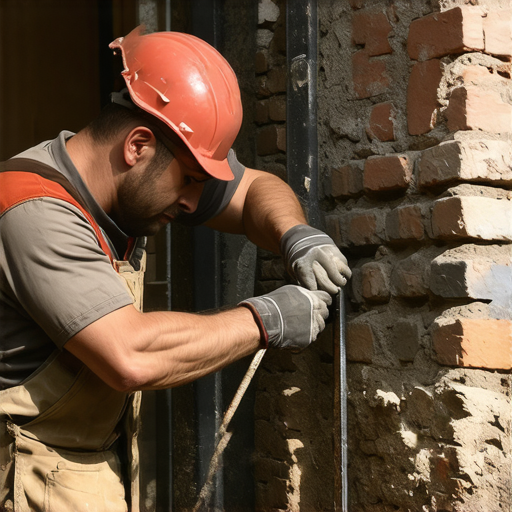
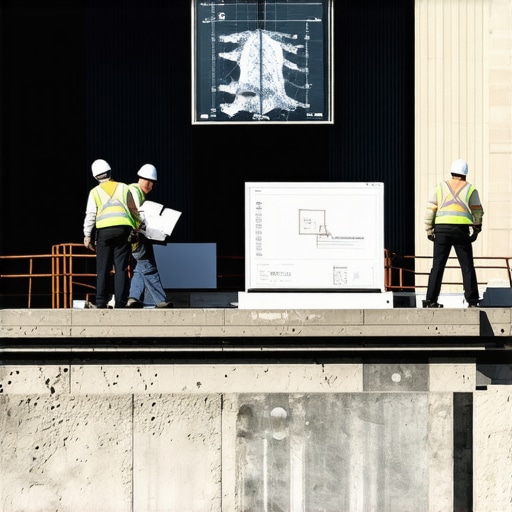
The homeowner thought it was just a hairline crack, a silver-thin thread snaking through the mortar joints of a high-side parapet wall. But when I put my scope inside the cavity and pulled the thermal data from the AI-driven drone scan, I saw the structural steel was rusted to dust. The AI didn’t just see the crack; it calculated the thermal bridging where the moisture was huddling like a thief in the night. That ‘minor’ crack was the only thing holding back a three-thousand-pound section of masonry from a freefall to the sidewalk. I’ve spent forty years smelling the damp rot of failing foundations, and I’m telling you, the naked eye is a liar. By 2026, if you aren’t using high-resolution masonry assessment scans to peer into the guts of your building, you’re just guessing—and in the masonry trade, a bad guess costs a fortune.
The Micro-Physics of Parapet Decay
Parapets are the most abused structural elements on any building. They are exposed on three sides to the wind, the sun, and the driving rain. They lack the thermal protection of the building’s interior, making them ground zero for the freeze-thaw cycle. When water penetrates a parapet—whether through a failed coping stone or a microscopic fissure in the tuckpointing—it begins a chemical war. If you live in a freeze-thaw climate like the Northeast or Chicago, that water expands by 9% the moment the temperature drops. That expansion exerts thousands of pounds of pressure per square inch against the internal ‘web’ of the brick. Over time, this results in spalling, where the face of the brick literally pops off, leaving the soft, porous interior exposed to even faster degradation.
“Water penetration is the single greatest threat to masonry durability, particularly in exposed elements like parapets where drainage is often overlooked.” – BIA Technical Note 7
In the old days, we’d wait for brick efflorescence removal calls to find the leaks. You’d see those white, chalky salts blooming on the surface—the ‘cry of the brick’—telling you that moisture was leaching minerals out of the mud. But by the time you see salt, the internal structure is already compromised. Today’s stone facade restoration relies on AI to detect these moisture plumes before they reach the surface, identifying the specific hydrostatic pressure points where the wall is literally drowning from the inside out.
The Chemistry of Sustainable Tuckpointing Mortars
One of the biggest sins I see is the use of modern Portland cement on historic bricks. It’s a death sentence. Old bricks, fired in kilns a century ago, are relatively soft and breathable. Modern Type S mortar is hard as a diamond and completely impermeable. When the wall shifts—and all walls shift—the sustainable tuckpointing mortars must be the ‘sacrificial’ element. If the mortar is harder than the brick, the brick will crack. If the mortar is softer, the mortar takes the stress. We call it the sacrificial joint. In 2026, we are seeing a return to lime-based mortars that allow for ‘autogenous healing,’ where the lime actually migrates into small cracks and reseals them over time through carbonation.
Micro-Zoom: The Carbonation Process
To understand why tuckpointing fails, you have to look at the carbonation of the mud. When we mix lime, sand, and water, we create calcium hydroxide. As it sits in the wall, it absorbs carbon dioxide from the air, slowly turning back into calcium carbonate—essentially, man-made limestone. If this process happens too fast—what we call ‘flash setting’ in hot climates—the bond is weak and brittle. A master mason knows to ‘butter’ the ends of the brick with just enough suction to ensure the bond isn’t robbed of its hydration by a thirsty, dry brick. This is why we pre-wet the masonry in the summer; we want that hydration to last as long as possible to create a dense, crystalline structure within the joint.
Structural Stability: Retaining Wall Batter Correction
It isn’t just parapets. I’ve seen retaining wall batter correction jobs where the entire wall was ‘walking’ downhill because the contractor didn’t understand soil physics. A wall needs to lean back into the hill—that’s the ‘batter.’ Without a 1-to-6 ratio of lean and a robust drainage system, the weight of the water-saturated soil behind the wall becomes an unstoppable force. We use mortarless masonry systems in these scenarios sometimes, allowing the wall to flex and weep naturally, rather than fighting the earth with rigid, unyielding concrete that eventually cracks under the strain.
“The selection of mortar should be based on the properties of the masonry unit and the environmental exposure of the structure.” – ASTM C270 Standard Specification
The Reality of Commercial Smokestack Repair
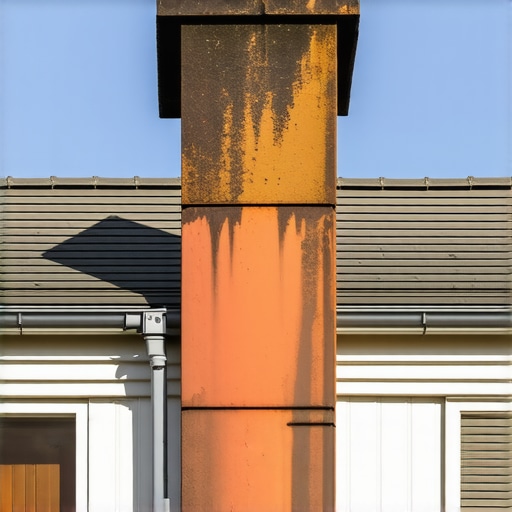
When you get into commercial smokestack repair, the stakes are even higher. These structures deal with massive thermal gradients—blistering heat on the inside and freezing winds on the outside. The honeycombing of the concrete or the degradation of the soldier course bricks at the crown can lead to catastrophic failure. We use AI scans here to look for ‘cold joints’—places where a new pour of concrete didn’t properly bond to the old one, creating a hidden seam of weakness that a slicker or hawk can’t fix after the fact.
Advanced Masonry Cleaning and Restoration
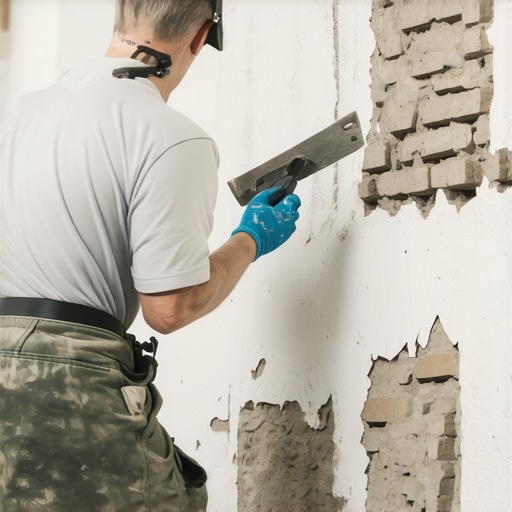
Proper masonry cleaning isn’t about blasting the wall with a power washer. That’s how you ruin the ‘fire-skin’ of the brick and ensure it fails within a decade. It’s about chemical sensitivity. We use masonry water damage repair techniques that involve low-pressure mists and specific surfactants that lift the carbon and pollutants without scouring the face of the stone. Whether it’s chimney repair services or a full stone facade restoration, the goal is always to preserve the integrity of the original material while providing a modern barrier against the elements.
The Future of Maintenance in 2026
In the end, masonry is a game of management. You aren’t stopping the elements; you’re managing how the building reacts to them. Using AI scans to monitor the ‘pulse’ of your parapets means you catch the efflorescence before it’s a symptom of a collapsing lintel. It means you apply tuckpointing where it’s actually needed, not just where it looks ‘ugly.’ Don’t wait for the pile of rubble. Respect the physics, use the right mud, and listen to what the stone is telling you. If you treat a building like a living thing, it’ll stand for two hundred years. Treat it like a ‘handyman special,’ and you’ll be looking at a lawsuit before the next frost.
![Is Your Chimney Flue Flaking? 3 Interior Parging Fixes [2026]](https://masonryrescue.com/wp-content/uploads/2026/03/Is-Your-Chimney-Flue-Flaking-3-Interior-Parging-Fixes-2026.jpeg)