Expert Facade Cleaning & Restoration for Lasting Curb Appeal
Elevating Structural Integrity and Aesthetic Appeal in Masonry Restoration
The process of restoring building exteriors demands a nuanced understanding of material resilience, environmental factors, and advanced repair techniques. In particular, the integration of precise concrete patching and meticulous facade cleaning practices forms the cornerstone of preserving and enhancing property longevity. This article delves into the sophisticated strategies architects and restoration specialists employ to optimize masonry durability, especially when addressing foundational cracks and surface degradation.
Deciphering the Complex Dynamics of Foundation Repairs and Surface Veneer Integrity
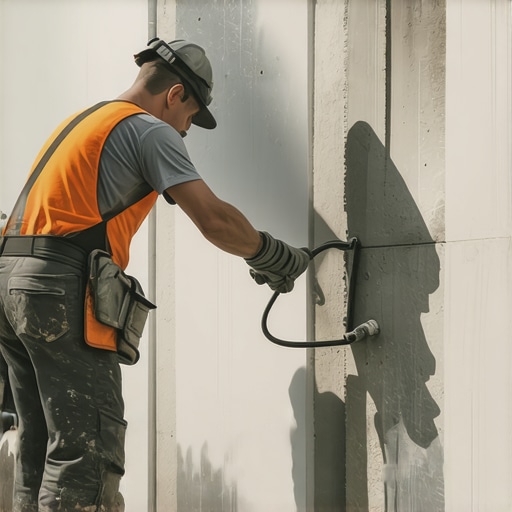
Foundation vulnerabilities often manifest as visible fissures, which if left unaddressed, compromise the structural soundness and safety of the edifice. Modern concrete patching techniques utilize high-performance materials that bond seamlessly with existing substrates, restoring load-bearing capacity without intrusive demolition. Meanwhile, the importance of proper facade cleaning extends beyond aesthetics. It removes deleterious contaminants and biological growth that accelerate deterioration, thus preserving the masonry’s innate strength and appearance.
The Subtleties of Tuckpointing and Its Role in Sustainability
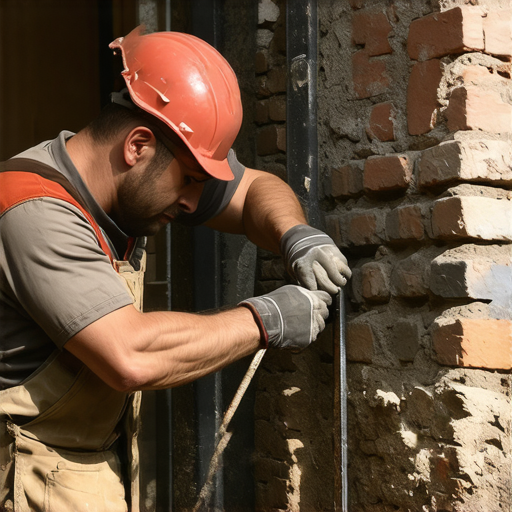
In the realm of aesthetic and structural masonry repair, tuckpointing emerges as a critical process that addresses mortar joint degradation. Advanced tuckpointing not only revitalizes visual uniformity but also enhances water resistance, reducing the risk of freeze-thaw cycles that cause spalling and erosion. This act of precision re-mortaring, often overlooked, underpins the durability of the entire façade.
How can professional tackle persistent mortar erosion amidst fluctuating climate conditions?
Professionals leverage high-grade, elastic mortar mixes, combined with atmospheric condition monitoring, to adapt repair strategies dynamically. Such meticulous approaches safeguard against future deterioration and extend the lifespan of entire masonry systems.
The Interplay Between Surface Cleaning and Concrete Patching for Optimal Preservation
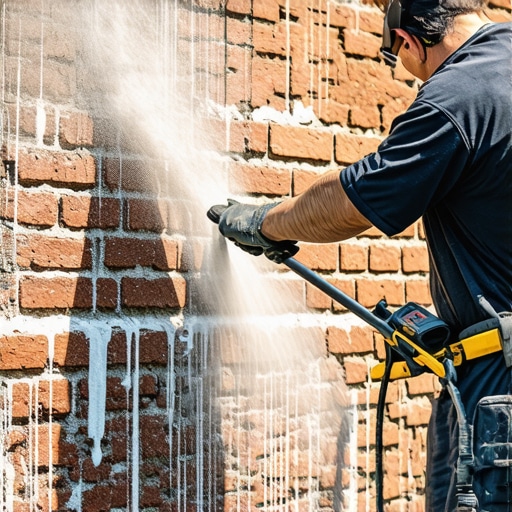
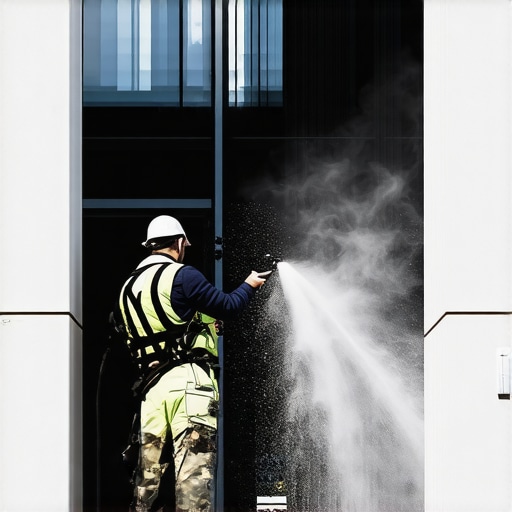
Synergy between surface cleaning and concrete patching operations maximizes the durability and visual appeal of masonry structures. Effective cleaning involves low-pressure techniques that prevent surface damage, preparing the substrate for subsequent patching or sealing. When concrete patches are applied on clean, properly prepared surfaces, adhesion improves significantly, ensuring lasting repair results.
Embracing Innovation: The Future of Masonry Maintenance and Repair
Emerging technologies, such as nanotechnology-infused sealers and laser cleaning devices, promise to revolutionize facade restoration practices. These innovations enable more precise, less invasive interventions that extend the lifecycle of masonry assets. As sustainable practices gain prominence, selecting repair materials with low environmental impact without compromising performance becomes paramount.
Professionals seeking comprehensive insights and advanced techniques are encouraged to explore our expert-guided resources on facade enhancement. Engaging with industry peers through forums and shared case studies further enhances mastery in this specialized field.
Harnessing Cutting-Edge Materials for Superior Masonry Repairs
In the pursuit of enduring masonry integrity, selecting innovative materials is crucial. Modern repair compounds infused with polymers and nanotechnology offer unparalleled adhesion and durability, even in harsh environmental conditions. These advanced materials not only extend the lifespan of repairs but also resist moisture infiltration and freeze-thaw cycles, which are common culprits of masonry deterioration.
Reimagining Surface Preparation for Maximum Bonding Efficacy
Meticulous surface prep is often underestimated but remains pivotal in ensuring long-lasting repairs. Techniques such as abrasive blasting and chemical cleaning carefully remove contaminants, loose mortar, and biological growth, creating an optimal bonding surface. When combined with innovative cleaning technologies, contractors can significantly improve patch adhesion and surface resilience, reducing future maintenance needs.
What Is the Next Evolution in Masonry Repair Methodologies?
Emerging trends like robotic-assisted masonry work and AI-driven structural assessments hold promise for refining repair precision and predicting deterioration patterns. Integrating IoT sensors into masonry structures can facilitate real-time monitoring, enabling proactive interventions before visible damage manifests. Are current industry standards keeping pace with these innovations to ensure optimal building longevity?
Prioritizing Sustainability in Restoration Strategies
Construction and repair sectors are increasingly adopting eco-friendly materials and methods. Replacing traditional mortars with lime-based or recycled-content products reduces environmental impact while maintaining compatibility with historic materials. For downtream benefits, exploring sustainable facade cleaning options not only preserves architectural heritage but also enhances property value over time.
Connect and Grow with Expert-Led Resources
To elevate your masonry restoration skills, consider exploring specialized guides on foundation and masonry repairs. Engaging in ongoing education and community forums enriches practical knowledge, keeping you at the forefront of industry advancements.
Smart Material Integration to Revolutionize Masonry Preservation
Incorporating cutting-edge materials such as fiber-reinforced polymers (FRPs) and self-healing concretes signifies a paradigm shift in masonry restoration. These materials enable structures to adapt dynamically to environmental stresses, reducing maintenance frequency and enhancing resilience. For instance,FRPs are increasingly utilized for wrapping and reinforcing cracked columns and walls, providing superior tensile strength without adding significant bulk. Meanwhile,self-healing concrete incorporates microcapsules that release repairing agents upon crack formation, proactively mitigating deterioration processes. This marriage of innovation and traditional masonry practices demands a nuanced understanding of material science and structural mechanics, emphasizing the importance of interdisciplinary expertise in restoration projects.
Addressing the Nuances of Moisture Management in Historic Masonry
Moisture intrusion remains one of the leading causes of masonry failure, often exacerbated by climate variability and urban pollution. Advanced moisture management strategies focus on vetting and deploying breathable, vapor-permeable sealers and membrane systems that allow moisture within walls to escape without compromising thermal insulation. Moreover, deploying infrared thermography and moisture meters provides real-time data, enabling targeted interventions. Proper management networked within a comprehensive maintenance plan can significantly limit efflorescence, biological growth, and freeze-thaw damage, thereby safeguarding the historic fabric of masonry structures. Understanding the precise moisture flux through a variety of conditions is central to selecting suitable repair and protection measures.
What specific testing methods best predict long-term moisture behavior in diverse climates?
To answer this, professionals rely on a combination of in-situ monitoring techniques such as relative humidity sensors and dynamic vapor diffusion tests, which simulate different environmental scenarios. The integration of sensor data with building information modeling (BIM) allows for predictive analysis, enabling contractors to tailor interventions precisely. Keeping abreast of emerging research from institutions like the National Institute of Building Sciences can inform these practices, ensuring adaptive solutions are rooted in proven scientific methodology.
The Future of Epoxy Injections and Crack Repair Technologies
Epoxy injection remains a cornerstone in structural crack repair, but recent advancements push the boundaries towards more environmentally friendly and flexible solutions. Innovations include low-viscosity, UV-curing epoxies that allow for rapid, minimally invasive applications, even in complex crack geometries. Additionally, hybrid systems combining epoxy resins with bio-derived polymers promise not only immediate structural stabilization but also enhanced compatibility with historic materials. A critical aspect of these technologies lies in their application precision, which is achieved through robotic-assisted injection systems—significantly reducing human error and enabling access to hard-to-reach areas.
Enhancing Repair Durability through Surface Preparation Optimization
Surface prep techniques have evolved from rudimentary cleaning to sophisticated methodologies incorporating plasma treatments and laser ablation. These methods effectively remove contaminants, biofilms, and paint residues, exposing pristine bonding surfaces necessary for high-quality repairs. Proper surface activation improves adhesion strength for patching compounds and sealers, directly extending the lifespan of renovation efforts. The understanding of micro-adhesion phenomena and interface mechanics continues to inform innovations in surface preparation, positioning it as a vital component for achieving sustainable restoration outcomes.
Reimagining Heritage Preservation with Digital Technologies
Emerging digital tools like 3D scanning, augmented reality (AR), and digital twin modeling introduce unprecedented accuracy and efficiency into masonry restoration. By capturing detailed structural data, specialists can simulate various repair scenarios, assess material compatibility, and predict long-term performance. Digital documentation also facilitates ongoing maintenance planning and provides invaluable records for future conservation efforts. As industry standards incorporate these innovations, professionals must develop digital literacy to leverage these tools effectively. How might integrating real-time structural health monitoring systems further refine preservation strategies?
Advancing beyond traditional methodologies, these innovative approaches underscore the importance of a holistic, technology-integrated perspective in masonry restoration—ultimately fostering structures that stand resilient amidst environmental and temporal challenges. For a deeper exploration of these forward-looking practices, consult our comprehensive resources or connect with industry pioneers pioneering this exciting frontier.
Unlocking the Potential of Hybrid Materials for Long-Lasting Masonry Solutions
The evolving landscape of masonry restoration increasingly hinges on the integration of hybrid materials, blending traditional compounds with advanced polymers and nanomaterials to address complex structural challenges. Employing fiber-reinforced polymers (FRPs) for structural reinforcement provides unparalleled tensile strength while maintaining material compatibility with historic edifices. Concurrently, self-healing concretes infused with microcapsules of repairing agents proactively combat crack propagation, dramatically reducing maintenance frequency. These innovative materials require a deep understanding of their mechanical properties and interface behavior to optimize performance across diverse environmental conditions.
Harnessing Digital Twin Technology to Predict Masonry Deterioration
Digital twin modeling represents a quantum leap in predictive maintenance, enabling practitioners to simulate the structural health of masonry assemblies in real-time. By integrating sensor data—such as humidity, strain, and temperature—into sophisticated BIM platforms, engineers can identify potential failure points before visible damage manifests. This proactive approach is particularly vital in heritage conservation, where intrusive inspections are undesirable. Industry leaders advocate for adopting these virtual models, supported by empirical data from comprehensive field sensors, to refine repair timelines and material selections.

Enhancing Moisture Control with Advanced Vapor Management Solutions
Moisture infiltration remains a perennial foe of masonry integrity, especially under fluctuating climates. Cutting-edge vapor-permeable membranes and breathable sealers facilitate the outward escape of internal moisture while blocking external water ingress. When complemented with infrared thermography and moisture sensors, this strategy enables a nuanced understanding of vapor flux within walls, guiding targeted interventions. Precise moisture management, leveraging both innovative materials and diagnostic technologies, significantly extends the lifespan of historical and contemporary masonry structures alike.
What are the most effective methods for long-term moisture flux assessment across heterogeneous environmental contexts?
Professionals increasingly rely on combined in-situ monitoring systems—such as datalogging moisture sensors, hygrothermal measurements, and dynamic vapor diffusion tests—to generate comprehensive profiles of moisture behavior over seasons. Integrating these data points with machine learning algorithms facilitates predictive analytics, enabling tailored barrier and drainage solutions aligned with specific climatic conditions. Such sophisticated methodologies are well documented in standards set forth by the International Masonry Society, which emphasizes the importance of fabric-specific testing protocols.
Transforming Crack Repair with Robotics and Material Innovation
The advent of robotic-assisted injection systems and UV-curing epoxies has revolutionized crack remediation, especially in sensitive or hard-to-access areas. Autonomous robots equipped with precision pumps ensure uniform resin distribution, minimizing human error, while rapid-curing materials enable immediate load transfer. Progress in bio-inspired polymers—mimicking natural self-healing mechanisms—offers unprecedented durability, reducing repeat interventions. Mastery of these technologies demands interdisciplinary collaboration between material scientists, robotics engineers, and structural specialists.
Crafting Tomorrow’s Masonry with Sustainable Practices
Sustainable restoration now emphasizes not only environmentally friendly materials—such as lime-based mortars and recycled aggregates—but also energy-efficient processes. Incorporating low-impact cleaning technologies, like ozone-based treatments or acoustic cleaning, preserves surface integrity while reducing chemical usage. Furthermore, adopting green procurement policies and lifecycle assessments ensures that masonry interventions contribute positively to both ecological health and structural resilience.
Connect with Pioneers Shaping Next-Gen Masonry Repair
To stay at the cutting edge, practitioners should delve into pioneering research papers and case studies published by institutions such as the American Society of Civil Engineers. Engaging with industry-specific webinars and workshops facilitates knowledge exchange, fostering solutions tailored to complex restoration scenarios. Embracing these resources empowers specialists to lead transformative projects that set new standards in durability and craftsmanship.
}
Expert Insights & Advanced Considerations
Leverage Cutting-Edge Materials for Enhanced Durability
Integrating innovative materials like fiber-reinforced polymers and self-healing concretes can significantly extend the lifespan of masonry structures. These materials respond actively to environmental stresses, providing resilience and reducing maintenance costs over time.
Prioritize Precision in Surface Preparation
Advanced surface activation techniques such as plasma treatments and laser ablation ensure superior bonding adhesion for repairs, ultimately enhancing repair longevity and structural integrity.
Embrace Digital Twin Technologies for Predictive Care
Utilizing digital twin models powered by real-time sensor data allows experts to simulate structural health over time, enabling proactive maintenance and targeted interventions that prevent costly failures.
Implement Sustainable Practices for Long-Term Impact
Adopting eco-friendly materials and methods, including lime-based mortars and recycled aggregates, not only conserves resources but also aligns with modern sustainability standards, fostering community trust and heritage preservation.
Integrate Robotics for Precise Repairs
Robotic systems equipped with precision injection and curing capabilities are transforming crack repair, offering consistent quality and access to challenging areas, thus improving overall repair outcomes.
Curated Expert Resources
- American Society of Civil Engineers Publications: Offers comprehensive guidelines and cutting-edge research on advanced masonry repair methodologies, essential for staying current in the field.
- Building Research Establishment (BRE) Reports: Provides insights into sustainable materials and environmentally conscious repair practices, highlighting innovations applicable to heritage and modern structures.
- Digital Twin Technology Case Studies (NIST): Demonstrates successful implementation of predictive modeling for structural health monitoring, underscoring practical applications and benefits.
- IJER Special Issue on Nanotechnology in Construction: Explores the latest advancements in nanomaterials and their role in durable, self-healing construction solutions, guiding material selection choices.
- U.S. Green Building Council Resources: Details sustainable renovation standards and best practices, aligning structural repair with environmental goals fostering responsible stewardship.
Final Perspective on Advancing Masonry Restoration
The evolution of masonry repair emphasizes a synergy between innovative materials, digital tools, and sustainable strategies—pivotal for achieving resilient, long-lasting structures. By embracing these expert insights and continually expanding your resource library, you position yourself at the forefront of this specialized field. Compact yet comprehensive, mastering these principles transforms restoration challenges into opportunities for excellence. Engage with our resources and community, and lead the way in pioneering next-generation masonry repair—giving your projects enduring strength and timeless appeal.