
The Forensic Reality of the ‘Lick-and-Stick’ Disaster
I stood on a scaffold last November, peeling back a section of stone veneer that had literally buckled off a commercial facade. The homeowner thought it was just a hairline crack near the corner. But when I put my scope inside the cavity, I saw the structural steel was rusted to dust. The culprit wasn’t the stone itself, but a fundamental failure in geometry and moisture management at the corners. Most modern installers treat stone like wallpaper; they slap it on with a prayer and some cheap thin-set. But real masonry—the kind that survives a century of freeze-thaw cycles—requires an understanding of the birdsmouth cut. This isn’t just an aesthetic choice; it’s a mechanical necessity for anyone serious about commercial masonry facade maintenance or historic masonry preservation.
The Physics of the Birdsmouth vs. the Miter
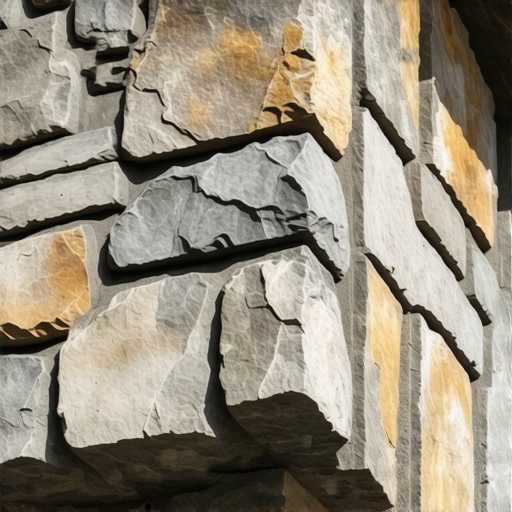
When you join two pieces of stone at a 90-degree corner, the instinct for a carpenter is to cut two 45-degree miters. In masonry, that’s a death sentence. A mitered joint creates a razor-thin edge that is prone to ‘spalling’—the technical term for when the face of the stone pops off due to internal pressure. Natural stone is an anisotropic material; it has grains and bedding planes. When you miter it, you’re exposing the weakest part of the structure to the elements. The birdsmouth cut, or a notched return, allows one stone to overlap the other. This creates a ‘tooth’—a mechanical interlock that provides more surface area for the ‘mud’ (mortar) to grab onto. Without this, thermal expansion will eventually pull those miters apart, creating a vertical highway for water. In the North, where water expands 9% upon freezing, that tiny gap becomes a hydraulic jack that will rip your facade right off the substrate.
“Adhered masonry veneer systems must be designed to accommodate the differential movement between the veneer and the backing.” – BIA Technical Note 18
Micro-Zooming into the Chemistry of Adhesion
To get a birdsmouth cut right, you have to understand the ‘suction’ of the stone. If you’re working with a high-density granite, the stone won’t pull the moisture out of your mortar. If you’re using a porous limestone, it’ll suck the mud dry before you can even set the stone. This ‘flash setting’ leads to a weak bond. When I’m prepping for a retaining wall installation or a complex concrete masonry unit restoration, I’m looking at the hydration process at a molecular level. We’re not just drying; we’re curing. The calcium silicate hydrate (C-S-H) crystals need time to grow into the pores of the stone. This is why we use sustainable tuckpointing mortars with high lime content for historic work—they are ‘self-healing.’ If a micro-crack forms, the lime can actually re-precipitate into the gap. Modern Portland-heavy mixes are too brittle; they don’t breathe, and they don’t move. They’re like putting a glass suit on a person—eventually, someone’s going to break.
The Execution: From the Hawk to the Slicker
To perform a proper birdsmouth, you need your ‘hawk’—that square board you hold your mud on—and a steady hand with a diamond blade. You’re not just cutting a notch; you’re back-buttering the stone to ensure 100% coverage. I see ‘honeycombing’ all the time in forensic inspections—pockets of air behind the stone where water sits and rots the lath. You ‘butter’ the back of that notched stone like you’re spreading cold butter on burnt toast—thick and even. Then, you use a ‘slicker’ or a jointer tool to strike the joint. For a retaining wall capstone replacement, the birdsmouth is even more critical because the cap takes the brunt of the rain. If that corner isn’t locked, the chimney cap replacement you did last year will be the next thing to fail as the stone starts to migrate away from the flue.
The Forensic Analysis of Mortar and 3D Repairs
In the world of historic mortar analysis, we see the ghosts of masons past. We’re now even looking at 3D printed masonry repairs to replicate complex birdsmouth geometries in stone that no longer exists in quarries. But whether it’s 3D printed or hand-cut, the rules of green roofing masonry integration and moisture management remain. You need a drainage plane. You need weep holes. If you’re doing commercial masonry facade maintenance, you’re looking for ‘efflorescence’—that white salty crust. That’s the stone’s way of screaming that it’s drowning. If your corners aren’t birdsmouthed, that salt is crystallizing inside your joints, acting like a slow-motion explosion.
“Water penetration is the single greatest threat to masonry durability.” – BIA Technical Note 7
Summary of the Mason’s Code
Don’t be a ‘handyman special’ hack. If you’re laying a soldier course or finishing a retaining wall installation, treat the corners with the respect they deserve. A birdsmouth cut takes three times longer than a miter, but it lasts ten times as long. It’s the difference between a facade that stands for a century and a pile of rubble that ends up in a forensic report like mine. Real masonry is about fighting gravity and water with nothing but stone, sand, and lime. Do it once, or do it twice—the choice is yours, but the physics won’t change for anyone. Check your ‘cold joints,’ watch for ‘honeycombing,’ and for the love of the craft, stop mitering your stone corners.