
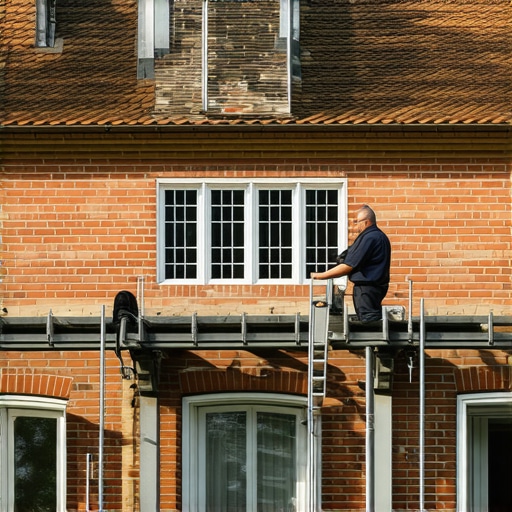
I was standing on a rusted-out scaffold in the humid air of a late-October morning when I first saw the ‘shadow.’ The homeowner of this 1922 Colonial thought it was just a minor cosmetic flaw, a slight ripple in the Flemish bond pattern near the second-story eaves. But when I pulled my borescope from my kit and fed it through a small weep hole, the reality was much grimmer. The original mild-steel corrugated ties, meant to hold the brick veneer to the heavy timber frame, had practically vanished. In their place was a trail of orange-red dust—the iron oxide remains of structural integrity. The wall wasn’t just bulging; it was breathing, moving nearly a quarter-inch with every gust of wind. This is the reality of the 100-year-old home: the bones are often great, but the ‘connective tissue’ is rotting away. This forensic scene is common because of a fundamental misunderstanding of how moisture interacts with old masonry. Modern contractors often suggest a simple patch, but a patch on a floating wall is a death sentence for the building. This is where we move past the handyman specials and into the chemistry of restoration. To understand why these ties fail, you have to look at the ‘oxide jacking’ process. When iron or mild steel oxidizes, the resulting rust occupies up to ten times the volume of the original metal. This expansion doesn’t just eat the tie; it actually pushes the brick wythe away from the structure, creating those characteristic bulges.
“Corrosion of metal ties and anchors can lead to a significant reduction in the lateral load capacity of a masonry wall, often resulting in sudden and catastrophic failure during high-wind events.” – BIA Technical Note 44B
Repairing these failures requires more than just tuckpointing brick walls to hide the cracks; it requires a surgical intervention using remedial helical ties. These are typically 316-grade stainless steel, designed to be driven through the mortar joint and into the backup material—whether that’s old-growth fir, common brick, or even terracotta block. The physics of the helical tie is beautiful: it creates a mechanical connection without the need for expansion anchors that could burst the old, brittle brick. While performing these re-pointing services, I often see the damage caused by the wrong ‘mud.’ In the early 20th century, we used lime-rich mortars. These were flexible. They breathed. They allowed moisture to migrate out. But when a modern crew comes in and slaps Type S Portland cement over it, they trap that moisture. The wall can no longer dry inward or outward effectively, and the water stays trapped against those hidden steel ties, accelerating the rot. This is why we insist on historic pointing styles that utilize NHL (Natural Hydraulic Lime) or a lime putty mix that mimics the original ‘suction’ of the brick. If you are dealing with specialized corners, we might even need to execute masonry birdsmouth cuts to ensure the new structural reinforcements are hidden perfectly within the aesthetic lines of the building. This level of detail extends to every part of the envelope. I’ve seen chimney sweep and repair jobs where the technician ignored the tie-ins at the roofline, leading to a chimney that literally tilted away from the house over a decade. It’s the same principle as outdoor masonry fountain restoration; if the internal anchors are gone, the ‘skin’ is just waiting for gravity to take over. During these forensic inspections, we also look at the fire-rated masonry installation within the interior hearths and firewall separations. If the ties are gone there, the fire rating is compromised because the wall will collapse long before it burns through.
“Mortar is intended to be a sacrificial element of the wall system. It must be weaker than the masonry units to ensure that movement is absorbed by the joints rather than the masonry itself.” – ASTM C270 Standard Specification for Mortar
When we talk about protecting the work after the ties are replaced, we have to talk about porous stone sealers. Most off-the-shelf sealers are ‘film-formers’—they are basically plastic wrap for your house. That’s a mistake. You need a silane-siloxane penetrating sealer that is vapor-permeable. It keeps the liquid water out but lets the vapor escape. If you don’t use the right sealer, you’re just trapping the enemy inside with your new stainless steel ties. This same philosophy of ‘doing it once or doing it twice’ applies to the ground level too. We often see brick paver driveway repair projects where the homeowner thinks the bricks are the problem. It’s never the bricks; it’s the lack of compaction in the sub-base and the failure of the edge restraints. It’s all one system. Whether it’s a flush pointing services job on a commercial warehouse or a delicate restoration of a residential facade, the goal is the same: mechanical stability and moisture management. We don’t just ‘butter’ the brick and move on. We analyze the grain of the sand, the calcium content of the lime, and the tensile strength of the stainless ties. We avoid ‘cold joints’ like the plague by ensuring our pours and our lifts are timed perfectly with the ambient temperature and humidity. If it’s too hot, the mud ‘burns’ and you get honeycombing. If it’s too cold, the hydration stops and the bond is shot. In the world of forensic masonry, we don’t guess. We measure the bulge, we test the mortar hardness with a Mohs scale, and we install the ties that will last another century. This is the difference between a ‘lick-and-stick’ repair and true craftsmanship. It’s about respecting the physics of the stone and the history of the hands that laid it. Every time I strike a joint with my slicker, I’m thinking about the guy who stood there in 1920. He did his job; now it’s my job to make sure his work doesn’t fall into the street because of a few cents worth of rusted steel.