The Forensic Reality of the Cracking Hearth
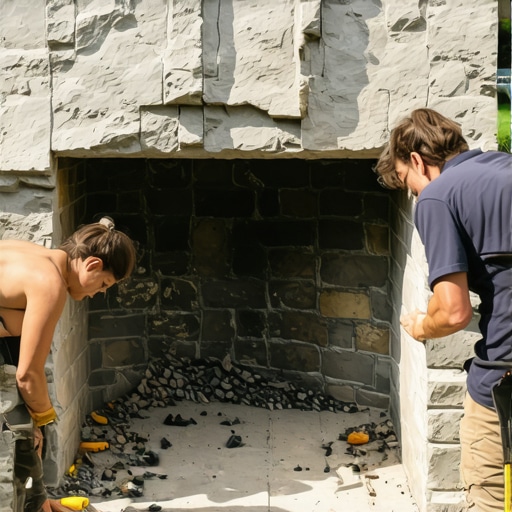
The homeowner stood on his patio, pointing a toe at a hairline fracture running through the center of his outdoor hearth. To him, it was a minor eyesore, something a tube of hardware-store caulk might hide. To me, after forty years of smelling wet lime and feeling the weight of a 24-ounce hammer, it looked like a warning shot. I pulled my fiber-optic scope from the truck and fed it through a separation in the firebrick. What we found wasn’t just a crack; the internal structural steel had oxidized so violently it had expanded to twice its original thickness, acting like a slow-motion wedge that was literally prying the masonry apart from the inside out. This is the reality of emergency masonry repair: what you see on the surface is rarely the full extent of the rot.
“Water penetration is the single greatest threat to masonry durability, especially when combined with the extreme thermal cycles of a fireplace environment.” – BIA Technical Note 7
The Physics of the Thermal Swing
An outdoor hearth lives a brutal life. In the winter, the masonry might sit at a bone-chilling ten degrees. You light a roaring fire of seasoned oak, and within forty-five minutes, the interior face of that brick is screaming at six hundred degrees. This creates a massive thermal gradient. The brick wants to grow, but if it is constrained by a rigid, high-Portland cement mortar, it has nowhere to go. It buckles. This is why we focus so heavily on brick spalling prevention. When the face of the brick starts popping off like a scab, the internal cell structure of the clay has already failed due to the 9% expansion of trapped water during a freeze-thaw cycle.
When a Patch is a Valid Strategy
Not every crack requires a total teardown. If the damage is localized to the crumbling mortar joint repair category, we can often perform a surgical strike. We use a slicker to push new mud into the joints, a process known as repointing. However, this isn’t just about slapping some gray goo into a hole. We have to match the compressive strength of the existing mortar. If I put a modern, rock-hard Type S mortar into a hearth built with softer, historic lime-based materials, the new mortar will stay put while the old bricks crumble around it. We call this a ‘sacrificial joint’ for a reason; the mortar is supposed to be the part that fails, not the stone.
The Science of Efflorescence and Moisture
You’ll often see a white, powdery crust on a failing hearth. This is where brick efflorescence removal becomes more than just a cosmetic chore. That white powder is a ghost—a crystalline deposit of salts left behind when water evaporates. It tells me exactly how the water is moving through the structure. If it’s concentrated near the base, your capillary break has failed, and the hearth is sucking moisture out of the ground like a straw. Before we even think about facade cleaning, we have to stop the source of the damp, or that salt will continue to recrystallize inside the pores of the brick, causing sub-florescence and internal structural shattering.
Advanced Diagnostics: Drones and Robots
We’ve moved past the days of just squinting at a chimney from the lawn. For complex outdoor kitchen stacks, drone chimney inspections allow us to see the ‘crown’—the concrete slab at the very top—without hauling a forty-foot ladder over your prize-winning rose bushes. If the crown is cracked, water is pouring down the internal flue, rotting the hearth from the top down. In extreme industrial or high-end residential cases, we are even seeing the rise of robotic masonry repair for lining flues, though nothing replaces the tactile feedback of a human hand ‘buttering’ a brick. When we do a soldier course—those bricks standing vertically on end—we have to ensure the hawk is loaded with just the right consistency of mortar so the suction of the brick grabs the mud instantly.
“Masonry units shall be laid with full head and bed joints, ensuring that no voids remain to collect water or allow for unintended thermal expansion.” – ASTM C270 Standard Specification
The Geometry of the Birdsmouth Cut
When rebuilding a hearth to fit around an existing porch pillar or a decorative stone wall, we utilize masonry birdsmouth cuts. This isn’t a job for a guy with a hammer and a prayer. It requires a wet saw and precision measurement to create a 90-degree ‘V’ notch that allows the brick to wrap around a corner without creating a cold joint. A cold joint is the masonry equivalent of a weak weld; it’s a point where two batches of concrete or mortar meet but don’t chemically bond, creating a natural fracture line for future failure.
When Replacement is Non-Negotiable
If you see a ‘stair-step’ crack that is wider than a quarter-inch, or if the hearth has shifted more than five degrees off-level, you are likely looking at a failing retaining wall repair scenario involving the foundation of the hearth itself. Patching a sinking hearth is like painting the deck of a ship that’s already hit the iceberg. We have to excavate, pour a proper footing below the frost line, and rebuild from the ground up. This is also the time for a full brick wall restoration. We look for honeycombing in the concrete base—pockets of air where the aggregate didn’t settle—which allows water to pool and freeze.
The Master’s Finish
The final stage of any rebuild isn’t the last brick laid; it’s the cleanup and the cure. You don’t just walk away from a fresh hearth. You have to ‘strike’ the joints with a jointer tool to compress the mortar and create a ‘weather-struck’ edge that sheds water. If the sun is beating down, we mist the bricks to prevent ‘flash setting,’ where the heat sucks the water out of the mortar before it can chemically hydrate. If the mud dries too fast, it turns to sand, and you’ll be calling me back in three years for another emergency masonry repair. Do it once, do it right, and that hearth will be there to warm your grandkids’ hands long after I’ve laid my last trowel to rest.