
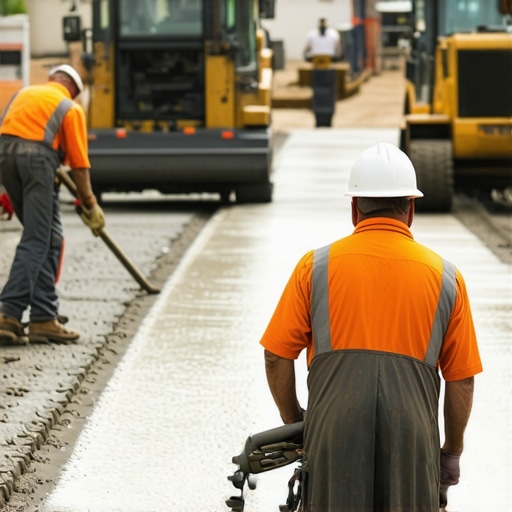
The Forensic Scene: The Empty Echo Under Ten Tons
The facility manager thought it was just a hairline crack, a minor cosmetic nuisance in a sprawling 40,000-square-foot warehouse. But when I knelt down and tapped the slab with a 2-pound ball-peen hammer, it didn’t give me the solid, high-frequency ‘clink’ of healthy concrete. Instead, it gave off a low, hollow thud—the sound of a drum. When I put my borescope through a 1/2-inch pilot hole, the reality was worse: the structural steel was rusted to flakes, and a four-inch void had opened up between the slab and the subgrade. This wasn’t a case for a bucket of patch; this was a total failure of the load-bearing assembly. For anyone planning on running heavy equipment—forklifts, CNC machines, or press brakes—on an uneven floor, understand this: the floor is the foundation of your entire production. If it fails, the machines fail. This is why a structural masonry inspection is the first step, not the last.
“Water penetration is the single greatest threat to masonry durability, and when it reaches the sub-base of a structural slab, the load-bearing capacity is effectively neutralized through hydrostatic erosion.” – BIA Technical Note 7
The Physics of the Load: Why Standard Flatwork Fails
When we talk about concrete flatwork services, most people think about driveways. But industrial floors for heavy equipment are a different beast entirely. A standard slab might be rated for 3,000 PSI, but that’s static strength. Heavy equipment introduces dynamic loads and point-loading. If your floor has a 1/8-inch dip over ten feet, a forklift carrying a 5,000-pound pallet hitting that dip creates a ‘hammer effect’ that can double the localized pressure on the concrete. Over time, this leads to honeycombing and internal fracturing. Micro-zooming into the chemistry, concrete is essentially a rigid sponge. If the moisture vapor transmission rate (MVTR) is too high, or if the surface is ‘dusting’ (laitance), no self-leveling compound will ever stick. You’ll end up with a cold joint that delaminates under the first turn of a hard-polyurethane wheel.
Phase 1: Substrate Stabilization and Foundation Slab Jacking
You cannot level what is moving. If my forensic inspection reveals those hollow voids I mentioned earlier, we start with foundation slab jacking. This isn’t just about ‘lifting’ the concrete; it’s about densifying the soil beneath it. We inject high-density structural polymers or a cementitious grout—often referred to as ‘mud’ in the trade—under the slab to fill every pocket of air. This restores the ‘tooth’ of the concrete-to-soil connection. While we’re at it, we often look at the perimeter. Often, the same settlement affecting the floor is causing the retaining wall capstone replacement needs outside, or even shifting the chimney structural repair requirements on the office wing. It’s all connected. If the exterior retaining wall geogrid installation was botched twenty years ago, water is likely migrating under your shop floor right now.
The Chemistry of High-Strength Self-Leveling Compounds
Modern self-leveling compounds are not just thin concrete. They are highly engineered, polymer-modified cementitious matrices. When we prepare to ‘butter’ a large floor, we are looking at the hydration curve. In a northern climate, we battle the ‘freeze-thaw’ logic even indoors if the facility isn’t climate-controlled. Water expands 9% when it freezes, and if that leveling compound hasn’t achieved at least 3,000 PSI before the first frost hits an unheated job site, the face will pop off just like a spalling brick. These compounds use ‘superplasticizers’ to reduce the water-to-cement ratio while maintaining a fluid state. This is critical for heavy equipment. We need a compressive strength that often exceeds 6,000 PSI—double what the original floor likely was. We don’t just pour it; we ‘rake’ it with a gauge rake and then use a spiked roller to release entrapped air. If you skip the spiked roller, those tiny bubbles become craters under the weight of a heavy lathe.
Integrating Structural Repointing and Perimeter Integrity
While the floor is being prepped, a master mason looks at the verticality of the structure. Is the wall-to-floor joint stable? This is where structural repointing comes into play. If the mortar joints at the base of your load-bearing walls are crumbling, that movement will telegraph right through your new level floor. We look at historic pointing styles if the building is a legacy industrial site, ensuring we aren’t putting hard Portland cement into a wall that needs the breathability of a lime-based mix. For specialized equipment mounting, we are even seeing the rise of 3D printed masonry repairs to create custom-molded vibration dampeners that integrate directly into the floor system. It’s a brave new world, but the old rules of ‘suction’ and ‘bond’ still apply.
“The compressive strength of the topping must always be compatible with the modulus of elasticity of the substrate to prevent shear failure at the interface.” – ASTM C1708 Standard
The Execution: Grinding, Priming, and Pouring
The ‘handyman special’ involves pouring leveler over a dirty floor. The forensic master’s way involves a diamond-head grinder. We need to open the ‘pores’ of the concrete. I want the substrate to be ‘thirsty.’ Once we’ve achieved a Concrete Surface Profile (CSP) of 3 or 4, we apply a high-solids epoxy primer. This acts as the bridge. If the primer isn’t ‘tacky’ when the leveler hits it, you’re just building a deck of cards. When we mix the mud, we use a high-shear mixer to ensure every particle of polymer is hydrated. We pour in ‘soldier courses’—long, continuous strips—to ensure the ‘wet edge’ is always maintained. If that edge dries, you get a cold joint, and that’s where the floor will eventually crack under a heavy load. It’s about rhythm, timing, and the ‘slicker’—the tool we use to feather the edges into perfection.
Why Maintenance and Mortar Repointing Services Matter
Once the floor is cured and the heavy equipment is bolted down, the job isn’t over. The vibrations of that machinery will find the weakest link in your building. This often manifests in the masonry envelope. Regular mortar repointing services are required to keep the vibration from shaking the bricks loose over time. I’ve seen 50-ton presses that literally vibrated the retaining wall geogrid installation loose fifty feet away because the floor wasn’t properly isolated. Don’t be the owner who spends $250,000 on a machine and $500 on a ‘quick fix’ for the floor. Do it once, do it right, and let the concrete ring like a bell when you walk on it.