
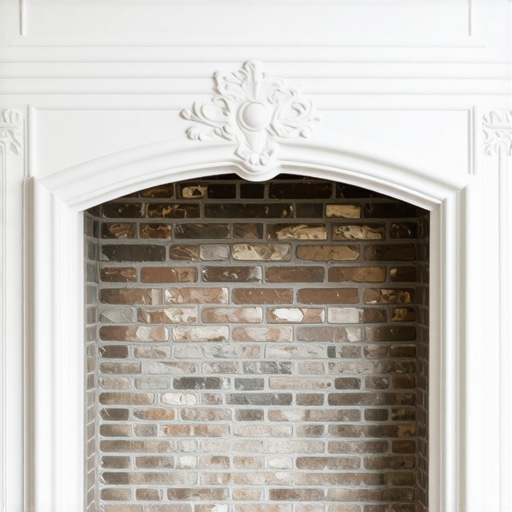
The Forensic Reality of the Hearth
The homeowner thought it was just a hairline crack, a minor cosmetic grievance on the face of a 1920s chimney breast. But when I put my scope inside that void, the truth was uglier than a bad batch of mud. I saw the structural steel was rusted to dust, the victim of decades of condensation and improper venting. This is where most weekend warriors and ‘lick-and-stick’ contractors fail. They see a surface to be decorated; I see a thermal engine that can either heat a home or burn it to the ground. Before we even talk about the aesthetics of metallic masonry finishes or the shimmer of a copper-dusted hearth, we have to talk about the ‘bones.’ If your chimney structural repair isn’t handled with the respect it deserves, you’re just putting lipstick on a corpse.
“Water penetration is the single greatest threat to masonry durability, leading to efflorescence, spalling, and the eventual degradation of the structural bond.” – BIA Technical Note 7
The Physics of the Foundation and the Flue
Most folks don’t realize that an interior fireplace is an extension of the home’s skeletal system. If you’re seeing stair-step cracks in the basement, you likely need concrete block foundation repair before you ever pick up a paintbrush. The chimney sits on a massive concrete footing, and if that footing settles even a fraction of an inch, the torque on the upper masonry is immense. We call this differential settlement. It shears the structural brick ties replacement right off the studs. When I perform a masonry damage assessment, I’m looking for the ‘why’ behind the ‘what.’ Is the soil heaving, or is the brick infill panel repair from twenty years ago failing because they used a hard Portland cement on soft, lime-based historic bricks?
When you use a mortar that is harder than the brick itself, you’ve signed a death warrant for the facade. The brick wants to breathe; it wants to expand and contract with the heat of the fire. If the mortar (the ‘mud’) doesn’t give, the brick face will pop—a process we call spalling. For interior work, especially fireplaces, the re-pointing services must utilize a Type N or Type O mortar, ensuring the mortar remains the sacrificial element of the wall. It’s better to replace a joint in thirty years than to replace a shattered brick in five.
Micro-Zooming: The Chemistry of Metallic Luster
Applying a metallic luster to interior brick isn’t about slapping on some metallic paint from a tin. We’re talking about a chemical marriage between the substrate and the pigment. Traditional brick is incredibly thirsty. If you don’t use porous stone sealers correctly, the brick will suck the moisture out of your finish before it has a chance to level, leaving you with a blotchy, amateur mess. We call this ‘burning’ the finish.
To get that deep, industrial glow, the surface must be prepped with the same intensity as a surgical suite. First, we address any chimney repair services needed to stop internal moisture. Then, we look at the self-leveling masonry lifts if the hearth has settled. The metallic finish itself often involves mica-based pigments suspended in a silicate binder. Unlike acrylics, which sit on top like a plastic film, silicate finishes petrify inside the pores of the brick. This allows for vapor permeability—the brick can still ‘exhale’—while creating a surface that reflects light like burnished steel. You want to butter the brick with thin, translucent layers, building the depth of color without hiding the natural ‘tooth’ of the masonry.
“Mortar shall be specified by either proportion or property specifications… to ensure compatibility with the masonry unit’s absorption characteristics.” – ASTM C270 Standard
The Execution: From Hawk to Hearth
When I’m on a job, I keep my hawk and slicker close. The hawk holds the mud, and the slicker (or jointer) is what packs it into the recessed joints. For a metallic finish to look right, the masonry joints must be crisp. If the joints are ‘honeycombing’—showing small voids and pits—the metallic pigment will pool in those holes and look like dirt rather than gold. I often suggest a soldier course at the top of the fireplace opening to give it a sense of structural authority. If those soldier bricks are loose, we have to integrate structural brick ties replacement to anchor them back to the framing, ensuring the whole assembly doesn’t lean into the room over time.
Don’t fall for the ‘handyman special’ where they suggest covering up cracks with a thick coat of paint. A crack is a symptom of a movement. If you have a cold joint—where new masonry meets old without a proper bond—no amount of metallic luster will hide the eventual separation. You need re-pointing services that understand the ‘suction’ of the brick. You have to dampen the old brick before applying new mud, or the old brick will steal the water from the new mortar, preventing the crystals from forming a tight bond. This is the hydration process at its most basic level: without water, there is no strength.
When to Call a Forensic Inspector
If you see a crack that you can fit a nickel into, or if you notice the chimney is pulling away from the house, put down the metallic finish and call a professional for chimney structural repair. You’re no longer in the realm of DIY. You’re dealing with lateral forces and gravity, and gravity never sleeps. A fireplace should be the heart of the home, a place of warmth and reflection. By respecting the material science of the brick and the physics of the structure, you ensure that your ‘metallic masterpiece’ isn’t just a mask for a crumbling ruin. Do it once, do it right, or don’t do it at all. That’s the code of the Master Mason.