
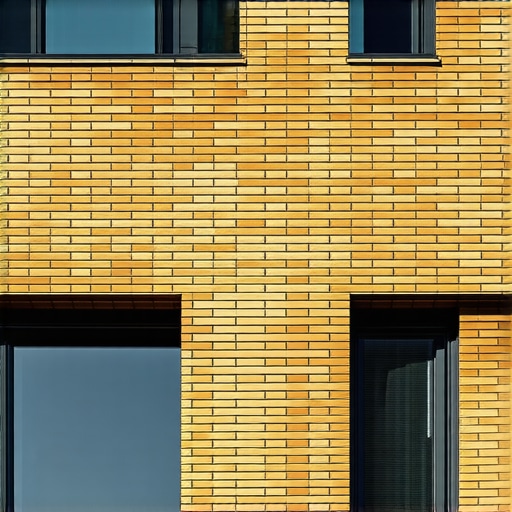
The facade looked like a million dollars from the curb—a shimmering, copper-toned masterpiece that caught the late afternoon sun. But when I pulled up in my truck and saw the white crust of efflorescence weeping through the metallic sheen, I knew the homeowner was in for a nightmare. The homeowner thought it was just a hairline crack in the finish. But when I put my scope inside the cavity through a weep hole, I saw the structural steel was rusted to dust. The metallic coating, a non-breathable polymer-heavy mess, had turned the wall into a terrarium. It’s a classic case of modern aesthetics murdering old-school physics. Professional masonry restoration isn’t just about making things look pretty; it’s about understanding the electrochemical war happening between the mud, the brick, and the atmosphere.
The Physics of the Fire-Skin and Vapor Permeability
Before you ever think about buttering a brick with metallic pigments, you have to respect the material science. A brick is not a static object; it’s a breathing, porous lung. During the kiln-firing process, clay undergoes a transformation where it develops a vitrified ‘fire-skin.’ This outer layer is the brick’s only defense against the elements. When you apply a metallic finish, you are introducing a film-forming substance that can either bond with that skin or suffocate it. Most modern ‘lick-and-stick’ metallic paints are acrylic-based, which is a death sentence for exterior masonry. These coatings have a low perm rating, meaning they trap moisture. When the sun hits that wall, the water behind the coating turns to vapor, expands, and exerts several hundred pounds of pressure per square inch. This is why the finish bubbles and the brick eventually spalls.
“Water penetration is the single greatest threat to masonry durability.” – BIA Technical Note 7
If you’re working on a historic facade, you need a historic mortar analysis before you even touch a brush. Old bricks, especially those laid before the 1940s, are significantly softer than the Portland-heavy mixes used in modern modular retaining walls. If you apply a hard, metallic-infused epoxy over a soft lime-based mortar, the coating will pull the face of the brick right off during the next thermal cycle. We call this a sacrificial failure. In my three decades on the hawk and trowel, I’ve seen more buildings ruined by ‘protective’ coatings than by the weather itself.
Preparation: The Art of Flush Pointing and Lintel Integrity
You can’t apply a metallic finish to a crumbling foundation. The first step in any masonry repair services contract involving finishes is a structural audit. Check the brick lintel replacement needs. If the steel over your windows is sagging, a metallic finish will only highlight the structural failure. We often use robotic masonry repair for high-reach precision work on commercial smokestack repair or commercial parapet wall repair, ensuring the substrate is monolithic before the aesthetic layer goes on. This includes flush pointing services where we grind out the old, failing mud and replace it with a mortar that matches the original’s compressive strength and color. If the joints are ‘starved’—meaning they weren’t packed tight—the metallic finish will pool in the recesses, creating uneven thermal absorption and premature cracking.
The Chemistry of Metallic Pigments and Silicate Bonds
To do this right, you move away from paints and toward potassium silicate stains. These don’t sit on top of the brick; they undergo a chemical reaction called silicification. The metallic particles—usually mica or aluminum flakes suspended in the silicate—actually become part of the brick’s molecular structure. This maintains the vapor permeability, allowing the brick to ‘exhale’ moisture while reflecting UV radiation. It’s the difference between wearing a plastic rain slicker and a breathable GORE-TEX jacket. When we handle professional masonry restoration, we micro-zoom into the ‘tooth’ of the brick. If the brick is too dense, we might need a mild acidic wash to open the pores, but you have to be careful. Too much acid and you destroy the bond between the brick and the mud, leading to patio stone realignment issues or wall instability.
“Masonry units and mortar must be compatible in terms of thermal expansion and vapor transmission to ensure longevity.” – ASTM International Standards
The Cold Joint and Thermal Expansion Realities
In hot climates like Arizona or Nevada, thermal expansion is your biggest enemy. A metallic finish increases the surface temperature of the brick by absorbing or reflecting heat differently than natural clay. This can lead to ‘flash setting’ if you apply the finish in direct sunlight. The mud dries too fast, the bond is never established, and you end up with a ‘honeycombing’ effect under the surface. I’ve seen soldier course bricks pop right out of the wall because the metallic coating caused the bricks to expand at a different rate than the underlying mortar. This is why control joints are non-negotiable. You’re not just a mason; you’re an engineer managing the expansion and contraction of an entire building’s skin.
The Process: Striking the Joint for the Metallic Luster
When you’re ready to apply the finish, you don’t just slap it on. We use a slicker or a jointer tool to ensure the mortar joints are struck perfectly. For metallic finishes, a concave joint is usually best as it disperses the light and prevents water from pooling on the edge of the brick. If you’re doing a soldier course or complex modular retaining walls, the consistency of the mud is critical. It has to be ‘short’ enough to stick but ‘fat’ enough to work. Once the masonry is cured—usually 28 days—we apply the silicate metallic base. We work in small sections to avoid cold joints, where one section of the finish dries before the next is applied, leaving a visible line that ruins the metallic effect. It’s a process of patience, not speed.
The Final Assessment: Preservation Over Vanity
At the end of the day, a metallic finish is a bold architectural choice, but it’s one that carries a heavy maintenance debt. Whether it’s a commercial smokestack repair or a patio stone realignment with a shimmer, the fundamentals of drainage and breathability never change. If you ignore the physics of the wall, you’re just putting lipstick on a pig that’s about to fall over. Do it once, do it right, or don’t do it at all. The ‘Old World’ way wasn’t about being slow; it was about building something that would outlast the man who laid the bricks.